
Taking Cash Abroad: Benefits of Declaration Over Transporting in Installments
Cost of services:
Reviews of our Clients
... our work on joint projects assured us of your high level of professionalism
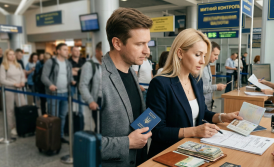
When it comes to taking cash abroad, many clients come up with the same idea: if amounts over 10,000 euros must be declared, then the easiest way to “stay within the limit” and avoid bureaucratic procedures is simply to transport the money over several trips. It often seems like a quick solution, with a plan already forming in their mind: 9,999 today, another 9,999 tomorrow, and no one will ask any questions.
At first glance, this may seem convenient. There is no need to prepare documents, confirm the origin of the funds, or deal with customs authorities. In reality, however, this strategy almost always creates problems later, especially when those funds need to be deposited into a bank account abroad or used to purchase real estate or make investments. That is when people face the real situation: the bank will not accept the money without explanations, the documents have to be collected all over again, and the time and stress involved are considerable.
In international financial practice, not only the origin of the funds matters, but also the way they were transported. That is why a proper declaration is often not a formality, but a key element of your financial security.
In this article, we will explain why trying to “split the amount” and transport cash in parts can create more risks than benefits, and why declaring the full amount at one time is usually the most sensible solution.
You might also like: Cash Transfers Across the Ukrainian Border: Common Issues and How to Avoid Them
What Is a Customs Declaration of Funds and What Limits Apply?
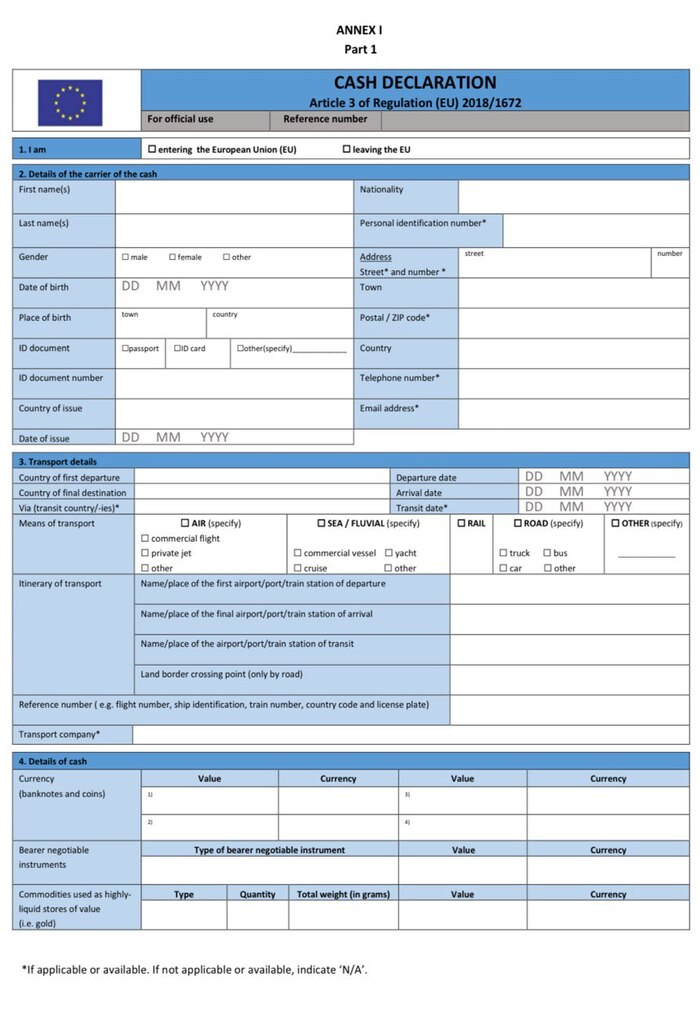
Ukrainian law provides that when cash is transported across the border in an amount equal to or exceeding the equivalent of 10,000 euros, a written declaration must be made. This means completing a customs declaration stating the amount of funds and information about the person transporting them, the means of transport, the route, and related details.
A key element is the ability to confirm the source of the funds. This may include, for example:
- a real estate sale agreement;
- business dividends;
- savings;
- entrepreneurial income;
- inheritance;
- other lawful sources.
At the border crossing itself, customs authorities will require bank documents confirming that the cash was withdrawn from an account. Clients often underestimate this stage, and that is when the first misunderstandings arise: one unconfirmed transaction may lead to questions that sometimes take weeks to answer.
It is important to understand that a customs declaration is not only a document for crossing the border. Later, it becomes one of the key pieces of evidence of the lawful movement of funds for banks abroad.
Risks of Smurfing: Why Foreign Banks Block Accounts for Small Cash Deposits
The main problem with transporting cash in parts without declaring it is the absence of a documented history of how the funds were moved.
As long as the money remains in cash, this may not create immediate difficulties. But as soon as you try to deposit it into a bank account, the situation changes. Foreign banks are required to verify not only the source of the funds, but also the way they were received and transported.
In such cases, a typical situation arises: you may be able to prove that the funds were obtained lawfully, for example, from the sale of an apartment, but you cannot explain exactly how they ended up in another country. The absence of a customs declaration leaves this part of the financial history unsupported. As a result, this often leads to lengthy conversations with the bank branch, requests for additional documents, and stressful waiting for a response.
For the bank, such a transaction may appear risky, and the consequences may include additional checks or refusal to accept the cash deposit into a bank account abroad. Even if the funds are entirely lawful, you may still be forced to spend time explaining the situation and collecting documents after the fact.
In addition, regular cash deposits in small amounts often attract more attention from financial monitoring systems than one large but transparent transaction.
Successful case: Transferring Funds from Ukraine to the USA and Their Legalization
Legal Advantages of a One-Time Declaration: How to Create a Clean Capital Trail
A one-time declaration of the full amount creates a logical and transparent chain of documents: source of funds, withdrawal from the account, movement across the border, and deposit into the bank.
This is exactly the kind of sequence that appears natural to a bank and removes most questions during the KYC, or Know Your Customer, procedure. In practical terms, this means that you can more easily:
- deposit the funds into an account;
- make an investment;
- purchase real estate;
- carry out an international transfer.
Even if the withdrawal of funds from the account takes place gradually because of banking limits, the subsequent one-time declaration of the full amount still creates a single legally coherent history of the funds.
In most cases, this is significantly easier and less costly than dealing with problems after a bank has already started an internal review. It is like taking a weight off your shoulders: one proper formalization, and you no longer have to worry about every trip.
Proof of the Source of Funds: How to Prepare a Document Package
Practice shows that document preparation is the most difficult stage for clients.
It is not enough to have just one document. What matters is that all supporting documents are consistent with one another: the amounts, dates, parties to the agreements, and banking transactions. If the funds were received from the sale of real estate, the bank will expect to see the sale agreement, proof of receipt of the funds, and confirmation of tax payment. If the funds are dividends, the bank will expect to see corporate documents and bank statements.
Translations of documents and their compliance with the requirements of the foreign bank are also of particular importance.
In real cases, we have seen how a single improperly prepared document caused a delay of several weeks in depositing funds. What is important is that in most such situations, the problem could have been foreseen even before crossing the border.
When documents are reviewed only under pressure from customs officers or in response to a bank request, the room for maneuver becomes much more limited. That is why preparing for the transfer of funds abroad and involving a lawyer at an early stage is a matter of maintaining control over the process, rather than reacting to a problem after it arises.
You might also like: How to Confirm the Source of Funds: When It Is Required and How to Do It
Legal Support for Taking Capital Abroad: End-to-End Protection of Your Finances
So, the most common mistake is contacting lawyers only after a bank has already stopped a transaction or refused to accept a cash deposit. It is far more effective to prepare for transferring funds abroad in advance. In projects of this kind, we help our clients build the correct sequence of actions, from analyzing the source of funds and preparing the documents to declaration and дальнейшее взаимодействие with the bank.
Legal support helps avoid a situation in which lawful funds effectively become “problematic” simply because there is no documentary proof of how they were moved.
That is why taking cash abroad is not only a matter of customs rules, but also part of financial planning. In most cases, one properly completed declaration is much safer than multiple trips with cash and no supporting documents.
Are you planning to take funds abroad and want to be sure that the bank will accept them without additional checks or delays? Contact the Pravova Dopomoha team. We will build a safe legal framework for declaration and support the movement of your funds so that there is not a single weak link in the process.
Learn more about the service here.
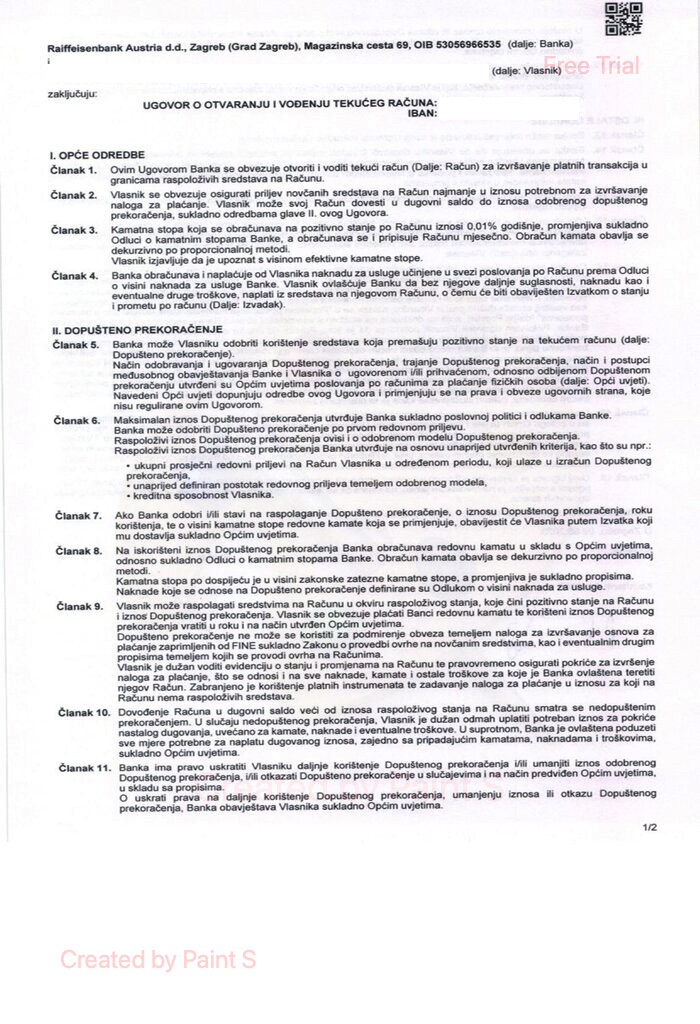
Need to open a bank account abroad? Learn more here.
Our clients