
Selling Medicines at Gas Stations: How to Legally Launch Medication Sales
Cost of services:
Reviews of our Clients
The format of gas stations has changed significantly. In addition to fuel, customers now expect a wide range of complementary goods and services. At the end of 2025, the state officially expanded the scope of permitted business activities in this segment by allowing the sale of over-the-counter medicines at gas stations. The relevant changes were specified in the Licensing Conditions for the retail trade of medicinal products.
For owners and managers of fuel station chains, this opens a new commercial direction without the need to establish a pharmacy at the gas station or a structural pharmacy unit, provided that the appropriate license is obtained. At the same time, this opportunity does not mean simplified or unrestricted sales of medicines. The state has clearly defined which medicines may be sold at gas stations, the storage conditions, personnel requirements, and has introduced mandatory licensing and inspections before operations begin.
That is why the first question businesses naturally ask is whether it is truly possible to sell medicines at gas stations legally and under what conditions. Below, we examine this in detail.
You might also like: How to Prepare for a State Medicines Service Inspection When Obtaining a Pharmacy License
Is It Legal to Sell Medicines at Gas Stations
The short answer is yes, but only within the rules established by the state.
It is important to understand that this does not mean operating a “pharmacy at a gas station” or freely selling medicines. The law clearly limits the format. Gas stations are allowed to sell only over-the-counter medicines and only as a separate type of licensed activity. Any broad or creative interpretation of these rules creates direct regulatory risks.
Therefore, the sale of medicines at gas stations is legal not by default, but only if the established procedure and regulatory requirements are fully observed. Correct understanding and implementation of these rules will determine whether this new business line becomes a stable source of revenue or a problem at the very first inspection.
Who Can Obtain a License to Sell Over-the-Counter Medicines at Gas Stations
The right to obtain a license for the retail sale of over-the-counter medicines at gas stations is granted to business entities that lawfully operate gas stations and comply with licensing requirements. This applies to both legal entities and self-employed entrepreneurs, provided that they are the actual operators of the gas station or have proper legal grounds to use the relevant premises.
Legislation does not limit license holders to large fuel chains only. Both major fuel operators and individual stations or regional networks may obtain a license to sell medicines at gas stations.
A key feature of this new format is that selling over the counter medicines at gas stations does not require establishing a pharmacy or a structural pharmacy unit. However, the business entity must ensure the operation of a medicinal product quality system and appoint an authorized person with appropriate pharmaceutical education who is responsible for this activity within a defined territory.
Which License a Gas Station Needs to Sell Medicines
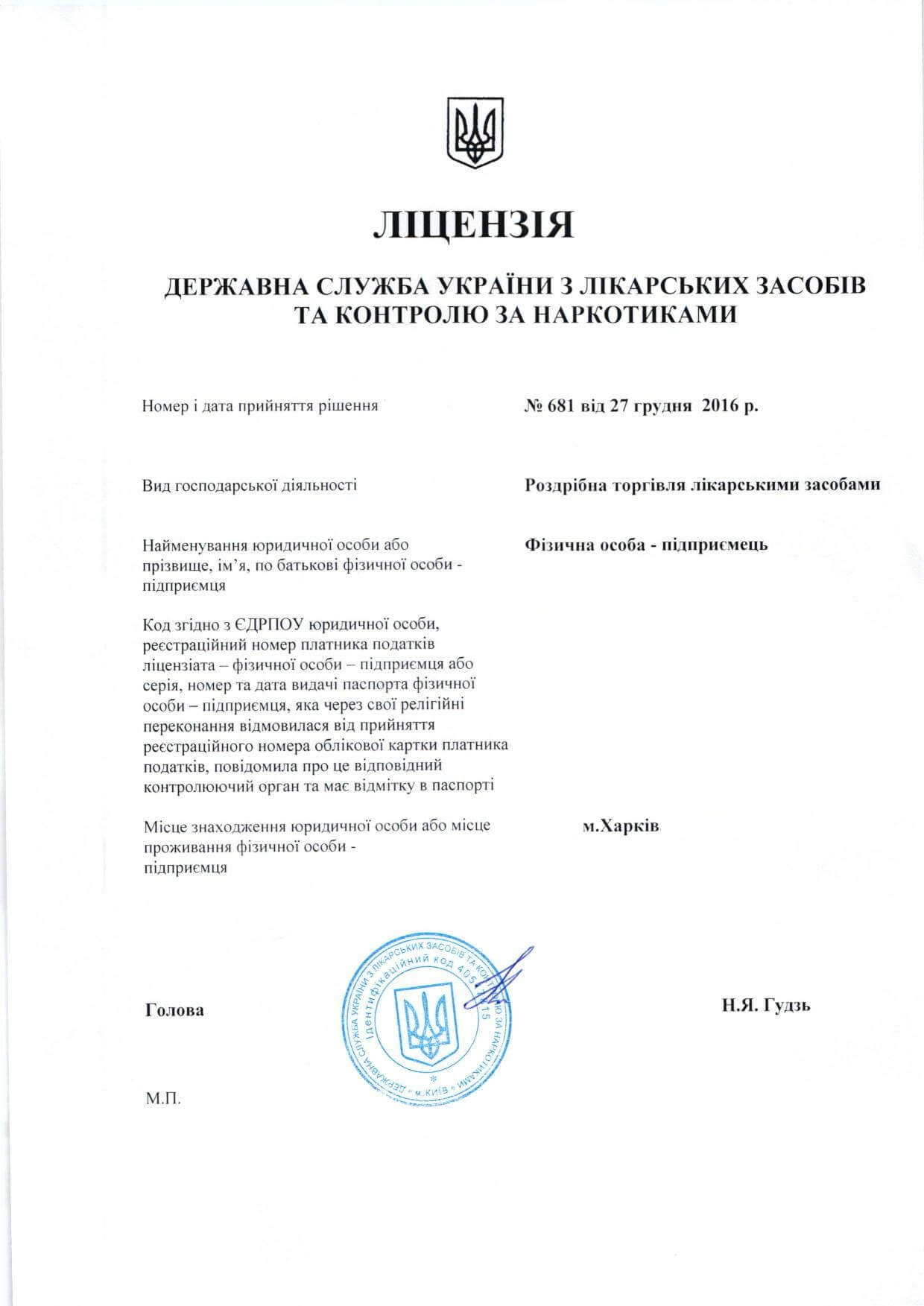
Despite the novelty of this format, from a legal perspective the state has not created a separate or special permit specifically for gas stations. To sell over-the-counter medicines on the premises of a gas station, the standard pharmaceutical license is used, namely a license for the retail trade of medicinal products.
At the same time, this license operates within clearly defined limits. It does not turn a gas station into a pharmacy and does not grant the right to sell prescription medicines. The law allows its use exclusively for the sale of over-the-counter medicines. That is why the correct formulation of the type of activity and sales model is critically important already at the document submission stage.
The license to sell medicines at gas stations is issued by the State Service of Ukraine on Medicines and Drugs Control. This authority not only makes the decision to issue the license, but also determines whether a specific gas station complies with legal requirements. Before sales begin, the State Medicines Service assesses the business entity’s readiness to work with medicinal products in the permitted format.
Documents to Be Submitted to the State Medicines Service to Obtain a License
In the licensing procedure for gas stations, the key documents are the application and the special information form under Appendix 25. Based on these documents, the State Medicines Service decides whether retail trade in over-the-counter medicines may be carried out.
At the same time, these documents do not exist in isolation. The information stated in the application and in the Appendix 25 data must be supported and logically connected with the internal orders and organizational documents of the business entity. This includes, in particular:
- Orders appointing the authorized person.
- Designation of persons responsible for the handling of medicinal products.
- Organization of the quality system, operating hours, and internal procedures.
For the State Medicines Service, it is essential not only that these internal documents exist, but also that all information is consistent. Data on personnel, premises, operating hours, and responsible persons must not contradict the information provided in the application and supporting statements.
Please note! Even formal discrepancies may serve as grounds for comments or suspension of document review.
Sale of Medicines at Gas Stations: Requirements for Premises, Storage, and Personnel
Premises requirements
A gas station must have a separately designated area for storing medicinal products, clearly separated from other goods. As noted above, the law does not require establishing a pharmacy or a structural pharmacy unit. However, storage conditions for medicines at a gas station must comply with the requirements set by the manufacturer of the respective medicinal products.
The gas station premises must also meet accessibility requirements for persons with disabilities and other groups with limited mobility. Compliance must be confirmed by the relevant documentation.
Requirements for the Storage of Medicinal Products
Medicinal products must be stored in compliance with the temperature and other conditions specified by the manufacturer. For this purpose, a gas station must be equipped with appropriate facilities, including:
- cabinets;
- shelving units;
- refrigerators, if required;
- technical devices for continuous monitoring of temperature and relative humidity.
In addition, the presence of clearly labeled cleaning equipment for different zones and a first aid kit for pre-medical assistance is required.
The law also explicitly allows the sale of over-the-counter medicines at gas stations through vending machines, provided the same conditions are met. These include compliance with temperature requirements, ensuring incoming quality control, and stocking medicinal products exclusively by an authorized person.
Personnel Requirements
The key role is played by the authorized person responsible for ensuring the proper functioning of the medicinal product quality system. For gas stations, legislation sets a specific requirement. Such a person must hold a higher education diploma at least at the initial (short cycle) level in the specialty “Pharmacy” or “Industrial Pharmacy,” with no work experience requirement. At the same time, the authorized person may perform their duties only within one administrative region, which must be reflected in internal orders.
At the same time, the direct sale of over-the-counter medicines may be carried out by gas station employees, provided that the entire system of storage, control, and accounting is organized in accordance with licensing requirements and under the supervision of the authorized person.
You might also like: Accessibility Report for People with Reduced Mobility: Why Is It Essential?
Pre-licensing Inspection of a Gas Station: How to Prepare for the Inspector’s Visit
Obtaining a license for the retail sale of over-the-counter medicines at a gas station is not limited to document review. Before making a decision, the State Medicines Service conducts an on-site inspection to verify whether the actual conditions match those declared in the documents. At this stage, it becomes clear whether the business is truly ready for licensed activity in practice, not just on paper.
During the inspection, the supervisory authority assesses whether the gas station has genuinely created the conditions required for the lawful sale of medicines. Inspectors verify the presence of a specifically designated storage area, whether the equipment corresponds to what was declared in the submitted information, compliance with storage conditions, and the organization of temperature and humidity control.
The State Medicines Service also pays special attention to the authorized person and the internal organization of processes. Inspectors check:
- the existence of orders assigning responsibilities;
- compliance of the authorized person’s education with statutory requirements;
- consistency between actual operations and the information submitted in the application and in Appendix 25.
If vending machines are used, the procedure for stocking them and performing incoming quality control is also reviewed.
The key point is that the inspection is not a formal exercise. The supervisory authority compares the declared business model with the real situation on the ground. Any discrepancies, from minor inaccuracies to the absence of required conditions, may result in comments, delays in license issuance, or refusal.
For this reason, the pre-licensing inspection should be viewed not as a final step, but as a logical continuation of the licensing preparation process, where every detail matters.
Risks and Common Mistakes When Launching Medicine Sales at Gas Stations
Despite the formal legality of selling over-the-counter medicines at gas stations, this area involves heightened regulatory risks. The reason is straightforward. The format is new, supervisory practice is still developing, and any inaccuracies immediately attract the attention of the State Medicines Service.
There are several key risks:
- A formal approach to licensing. Businesses may view the sale of medicines at gas stations as a simple expansion of the product range rather than a separate licensed activity. As a result, documents are prepared “for form’s sake” and do not reflect how the process will actually function in practice.
- Inconsistencies between documents. Information in the application, the Appendix 25 data, and internal orders may contradict one another. Different addresses, operating hours, responsible persons, or actual conditions that do not match what was declared almost inevitably raise questions during inspections.
- Underestimating storage requirements for medicinal products. Lack of proper temperature control, absence of a clearly designated storage area, or missing equipment may lead not only to refusal to issue a license but also to sanctions during subsequent inspections.
Issues often also arise with the authorized person. Improperly drafted orders, non-compliance of education requirements, or assigning responsibilities to one person across multiple regions creates a direct risk of a negative conclusion by the State Medicines Service.
Taken together, these mistakes lead to delays in the procedure, additional expenses, or complete refusal to issue the license.
Turnkey Legal Support and Launch of Medicine Sales at Gas Stations
Obtaining a license with the State Medicines Service for the sale of over-the-counter medicines at gas stations is not a standard licensing process or a template procedure. It requires proper legal structuring before documents are submitted, so that the new business line does not become a source of risk at the very first inspection.
We offer a comprehensive, end-to-end legal setup of this new business direction, ensuring a predictable and secure launch.
- Deep integration into the business model. We conduct a detailed analysis of your gas station’s operating model and determine how to correctly integrate the sale of medicines into the existing business structure in a way that is convenient for both staff and customers.
- Full bureaucratic support and Appendix 25. We take full responsibility for all bureaucratic processes. We prepare the application and the special information under Appendix 25, ensuring perfect alignment with the actual conditions at the site. Our knowledge of the internal procedures of the State Medicines Service allows us to complete the process on the first attempt, saving you months of waiting.
- Creation of a unified documentation system. We draft and coordinate internal orders and organizational documents so that they function as a single, coherent system rather than a set of formal papers. This ensures a successful completion of the pre-licensing inspection and smooth ongoing operations.
- License issuance as the final result. We do not simply provide advice. We secure a positive decision from the regulator. Learn more about our core service: License for the Retail Trade of Medicinal Products.
Your business is fuel and service. Our business is your legal compliance. Do not waste resources on bureaucratic experiments. Contact us, and we will turn the launch of medicine sales at gas stations into a clear and secure business process.
Our clients