
Registration of a Religious Organization in Ukraine: Procedure, DESS Checks, New Rules
Reviews of our Clients
... our work on joint projects assured us of your high level of professionalism
The status of a religious organization in Ukraine is not only a matter of faith, but above all a strategic choice of legal form. From the legal perspective, a religious community is a separate type of religious organization created by citizens who belong to the same denomination or religious tradition.
For such an organization to function fully, it must go through the procedure of state registration of its charter. Only after this does the community acquire the ability to act as a legal entity: own property, use land plots, open bank accounts, receive humanitarian aid, and carry out other activities within the legal framework.
Choosing Between a Religious Organization and a Public Association: What Is the Real Benefit?
Founders often face a choice: to register their activities as a religious organization or to establish a standard public association. However, religious organizations have a number of specific legal advantages that make this status more beneficial for religious activities. In particular, legislation provides them with:
- The possibility of obtaining land plots for permanent use. This is a unique privilege. Unlike leasing, where monthly payments at market rates can become a heavy burden for public associations, permanent use allows a community to build places of worship and auxiliary facilities without significant land-related costs.
- Separate tax benefits for real estate used for its intended purpose. This applies not only to places of worship, but also to Sunday schools, dining facilities, and workshops, provided they are properly documented.
- A simplified procedure for importing humanitarian aid of a religious nature, which helps avoid the complex bureaucratic processes typically faced by standard charitable foundations.
For this reason, foreign missions, church structures, and donors supporting religious projects in Ukraine most often choose the legal form of a religious organization.
New Legislative Changes and the DESS Factor
Special attention should be paid to the new legislative changes. After the adoption of Law No. 3894 IX in 2024, aimed at protecting the constitutional order in the field of religious organizations, the registration procedure has effectively become more complex. Currently, authorized bodies and the State Service of Ukraine for Ethnopolitics and Freedom of Conscience (DESS) conduct checks for possible links between a religious organization and centers of influence in the aggressor state.
Today, these checks are one of the most common practical challenges when registering religious communities. Therefore, proper preparation of the charter, founders’ documents, and legal support during the registration procedure are crucial to ensuring that the creation of a religious organization proceeds quickly and without additional risks.
Registration of a Religious Organization’s Charter and the Risk of Refusal in the USR
The registration procedure includes two consecutive stages:
- Registration of the charter.
- State registration of the legal entity.
However, the main difficulty often lies in this two-stage registration process. On the one hand, the regional state administration may approve the charter. On the other hand, at the next stage, the state registrar at the Administrative Services Center may refuse to enter the information into the Unified State Register.
This most often happens because the wording used meets the requirements of the regional state administration but does not align with the technical and legal criteria applied during state registration of legal entities. The key reason is that each stage involves a different scope of review.
When reviewing the charter, the regional state administration primarily focuses on whether the document complies with the specific legal requirements governing freedom of conscience and the activities of religious organizations. At the same time, the correctness of the wording from the perspective of tax registration, classification of activities, or subsequent registration of the legal entity in the Unified State Register is not actually checked.
What does this mean for you? There is a real risk that even an officially approved charter may block the final stage of registration. As a result, you may face refusals, be forced to revise documents, and lose valuable time.
That is why it is important to take into account the requirements of both authorities at the stage of drafting the charter of a religious organization. Involving a lawyer helps adapt the charter to meet both the expectations of the regional state administration and the rules applied by the state registrar, minimizing the risk of refusal and ensuring smooth entry of data into the Unified State Register.
You might also like: Rejection of Religious Organization Charter Registration: How to Navigate the Procedure Without Errors

Why It Is Important to Register a Religious Organization
In practice, a religious community may exist without state registration. However, only after completing registration does the community receive real legal rights and the ability to operate officially.
After registration, the organization:
- receives the status of a legal entity;
- has the right to acquire and use property;
- can open bank accounts. In practice, however, banks may block the accounts of religious organizations due to strict financial monitoring and difficulties in identifying beneficial owners. That is why we do not simply register a religious organization. We prepare the charter in a way that helps you avoid financial monitoring issues when opening an account for collecting donations;
- can enter into civil law agreements;
- can represent its interests before state authorities and in courts;
- can obtain the status of a non profit institution.
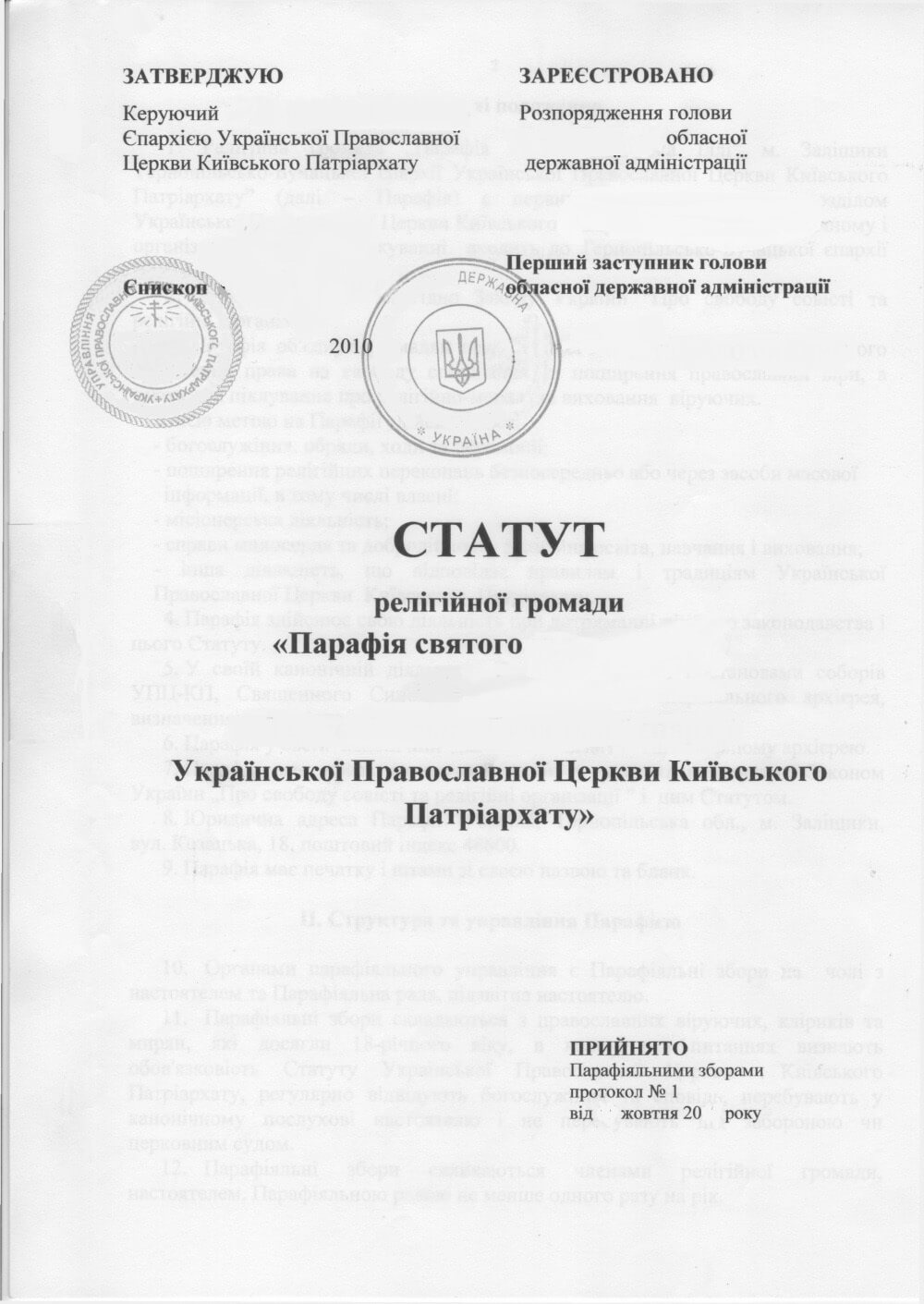
The registration procedure is defined by Article 14 of the Law of Ukraine “On Freedom of Conscience and Religious Organizations.” The fact of charter registration confirms the legitimacy of the creation and activities of a religious organization.
Legal Requirements for Establishing a Religious Organization
The process of establishing a religious organization is regulated by the Law of Ukraine “On Freedom of Conscience and Religious Organizations.” At least 10 adult citizens are required to establish one. This initiative group holds the first meetings, where it decides to create the organization, approves the wording of the charter, and determines the management structure.
The charter of a religious organization must be submitted in several copies and should contain provisions on:
- management structure;
- rights and obligations of members;
- settlement of property matters.
At the same time, practice shows that requirements may differ by region regarding the number of copies and the list of required documents. Therefore, it is advisable to clarify the requirements with the registration authority in advance.
Religious communities are registered by regional and city-state administrations. Religious centers, monasteries, brotherhoods, and missions are registered by the State Service of Ukraine for Ethnopolitics and Freedom of Conscience. The document review period is up to one month, and in complex cases, up to three months. The decision is communicated to the applicants in writing.
Documents for Registering the Charter of a Religious Organization and Entering Data into the USR
To register a religious organization, two separate sets of documents must be prepared.
For registration of the charter of a religious organization (the regional state administration or DESS stage), the following must be submitted:
- application for charter registration;
- charter in three copies;
- minutes of the founding meeting with the decision to establish the community, approve the charter, and elect governing bodies;
- document confirming the right to use or own the premises, or written consent of the owner;
- list of founders with passport details and signatures;
- written consent to personal data processing;
- documents confirming the spiritual rank of the head, if available;
- questionnaire on the community’s activities, if required by the registration authority.
Please note! If a new version of the charter is being registered, the protocol on amendments and the current version of the charter with a state registration mark must also be submitted. If the address changes, a document for the new premises must be provided.
For state registration of the legal entity (the Administrative Services Center stage):
- application for the registration action;
- original or notarized copy of the founders’ decision to establish the organization;
- charter;
- document confirming the representative’s authority, if the documents are not submitted personally by the head.
After the documents are submitted, the state registration authority reviews them and enters information about the organization into the Unified State Register of Legal Entities and into the Register of Non-Profit Institutions, provided the relevant mark is included in the application. This gives the organization official status and the right to carry out its activities.
Grounds for Refusal to Register the Charter and the Importance of Legal Support
Registration of a religious organization may be refused in the following cases:
- the name does not comply with legal requirements;
- the procedure for creating a legal entity has been violated;
- documents are submitted by an unauthorized person;
- the application is filed with the wrong registration authority;
- there is a court prohibition on registration actions;
- the documents do not comply with the Constitution and laws of Ukraine;
- the package of documents is incomplete;
- there are discrepancies in the information provided;
- a decision to terminate a legal entity through liquidation has already been registered in relation to the founder.
Most refusals are caused by technical mistakes or inaccuracies in the documents. That is why qualified legal support helps avoid unnecessary risks, reduce delays, and ensure successful completion of the procedure on the first attempt. A lawyer ensures that your documents are not passed back and forth between the regional state administration and the registrar because of a comma in the wrong place.
You might also like: Booking Clergy: Terms, Procedure, and Legal Support
Why Choose Pravova Dopomoga Law Firm for Registering a Religious Community
Our team has practical experience in supporting the registration of religious organizations, particularly in the city of Kyiv and the Odesa region, where we are currently working with charter approval procedures and interaction with authorized bodies.
Over many years of practice, we have assisted both in the creation of new religious communities and in making amendments to the charters of existing organizations. As part of this work, we:
- prepare charters of religious organizations in accordance with legal requirements and the position of registration authorities;
- draft minutes of founding meetings and other necessary documents;
- form a complete package of documents for submission;
- support the charter approval process and state registration;
- assist with entering data into the Unified State Register and obtaining non-profit status.
We also regularly handle matters that arise after the registration of religious organizations, including amendments to charters, changes of leadership, updates to registry data, and other legal procedures.
After the legislative changes introduced in 2024 and the strengthening of state checks on religious organizations, our lawyers closely monitor new requirements and how they are applied in practice. This allows us to prepare documents in line with current enforcement practice and reduce the risk of registration refusals.
Contact the lawyers of Pravova Dopomoga law firm and receive full legal support throughout the entire procedure for establishing a religious organization.
Services on the topic of this material
Our publications on this matter


Our clients