
5 Mistakes in Obtaining a Freon License: What Stops Your Imports
Reviews of our Clients
... our work on joint projects assured us of your high level of professionalism
You submitted what you believe is a flawless set of documents for licensing the import of freon to the Ministry of Economy, only to receive a rejection two weeks later. The reason given is “non-compliance of the technical specifications with environmental requirements.” Yet the contract is in order and the freon is properly certified. So what went wrong?
Even when the documentation appears flawless, the authorities carefully verify whether the goods, the UKT ZED code, and the terms of the contract comply with current requirements. If these elements are inconsistent with one another or do not meet the applicable rules, this may constitute grounds for refusal. Such situations are not uncommon.
Obtaining a freon import license on the first attempt can be challenging. A refusal may result in months of additional work, while your shipments remain held at the border. Keeping a single container at customs while waiting for a corrected license can sometimes cost thousands of hryvnias per day. A month spent correcting the documentation can therefore cost you the value of a small shipment.
You might also like: Import Licensing in Ukraine: Types of Licenses
Procedure for Obtaining a Freon Import License
As of January 1, 2026, Resolution No. 1795 of the Cabinet of Ministers of Ukraine, “On Approval of the Lists of Goods Subject to Export and Import Licensing and Quotas for 2026” entered into force and established the key licensing rules applicable for the current year.
It is also important to note that on July 21, 2025, the Cabinet of Ministers merged three ministries: the Ministry of Agrarian Policy and Food of Ukraine, the Ministry of Environmental Protection and Natural Resources of Ukraine, and the Ministry of Economy of Ukraine, creating the newly restructured Ministry of Economy, Environment and Agriculture of Ukraine.
Previously, the Ministry of Environmental Protection was involved in the freon licensing procedure because it provided confirmation of the availability of a quota share or applicable limit. Currently, the Ministry of Economy, Environment and Agriculture incorporates the relevant departments of the former Ministry of Environmental Protection, so all approvals are handled within a single government body.
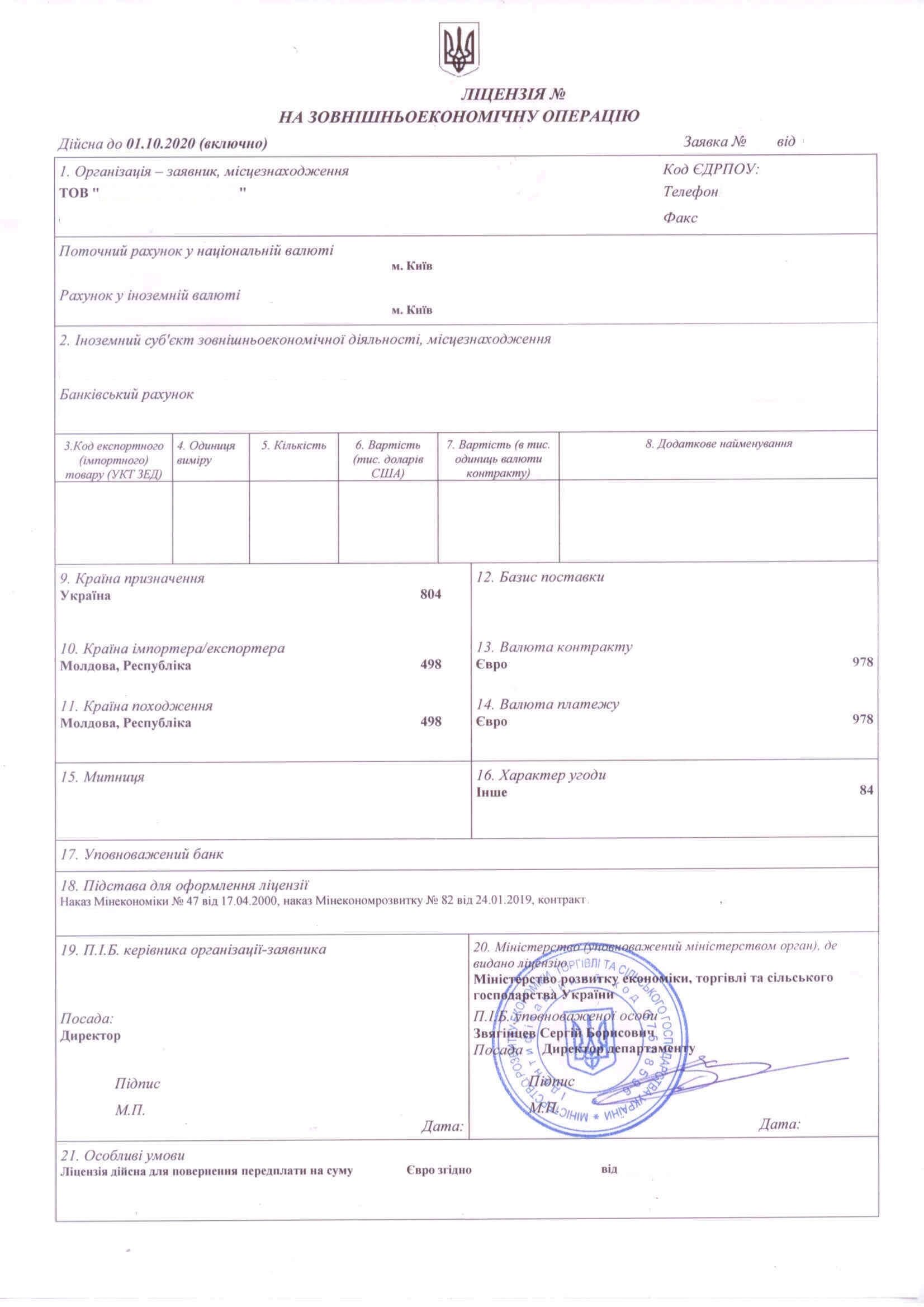
As for the licensing itself, the procedure for obtaining a freon import license may look straightforward on paper. In general, the process involves the following steps:
- As the importer, you submit an application, a cover letter, and a copy of the foreign economic contract together with all applicable annexes to the Ministry of Economy, Environment and Agriculture. There are two ways to submit the application: in paper form, either in person or by mail, or electronically through the Ministry's Electronic Services Portal.
- The Ministry of Economy, Environment and Agriculture then provides confirmation of the availability of a quota share or applicable limit. Based on this confirmation, the Ministry verifies whether the contract and the technical specifications of the substances comply with applicable legal requirements and makes a decision.
- The application is then reviewed, which may take up to 30 days.
However, the real difficulties begin where the theory ends. Based on our experience with numerous cases, we have identified the common mistakes that can have serious consequences for importers.

Common Mistakes in Freon Import Licensing
The standard approach of “let's submit the same documents as last year” can work against you, as application forms and requirements are periodically updated. Quite often, an importer may not even realize that their shipment is at risk. Mistakes can result in disrupted supply chains and potential contractual penalties from business partners.
To minimize these risks, it is essential to identify weaknesses in the documentation before submitting it to obtain an import license.
Incorrect Documentation for an Import License Application
The most basic, yet common, reason for documents being returned or a freon import license being refused is formal deficiencies in the application. The Ministry of Economy, Environment and Agriculture follows strict procedural requirements. For example, applicants often overlook the requirement to submit the application in two paper copies.
Typos in the applicant's or counterparty's details are also common. Even a single incorrect digit in the EDRPOU code or an inaccuracy in the foreign supplier's name may result in a refusal.
If you have already obtained a freon import license with an error in the description of the goods, it cannot be corrected. Ukrainian legislation does not provide for amendments to an issued license with respect to the goods covered by the license. In such a case, you need to apply for a new license, because the goods specified in the license do not correspond to the actual goods being imported. You will have to go through the entire process again: submit a new application, wait up to 30 days, and pay the application review fee again. In practice, a single omitted letter can cost you an entire month.
Errors in Foreign Trade Contracts
A freon import license is issued based on a foreign economic contract and one or more specifications, which must contain all required details. The most common problem areas include:
- Discrepancies between the description of the goods in the invoice and the specification. For example, the invoice may state that the refrigeration equipment is a particular brand manufactured in 2020, while the contract specification indicates 2021.
- Incorrect Incoterms 2020 terms. This may affect the determination of when title to the goods passes and, consequently, whether an import license is required.
Incorrect Classification of Goods Under UKT ZED Codes
An incorrect code is one of the most costly mistakes an importer can make. You may have already obtained the license, only to discover at customs that the goods do not correspond to the declared code. The result may be a refusal to clear the goods through customs.
Resolution No. 1795 significantly expanded the list of relevant codes compared with 2025. While the focus in the previous year was primarily on inorganic compounds, the 2026 list also includes codes 3824 99 92 90 and 3824 99 93 00, covering a broader range of organic chemical products.
Non-Compliance of Technical Specifications with 2026 Environmental Requirements
In 2026, the consumption of ozone-depleting substances is subject to a limit of 0.821 ODP tonnes. This limited volume is permitted exclusively for servicing purposes, effectively restricting the large-scale import of outdated refrigerants and encouraging the transition to more environmentally friendly alternatives.
Why is this important? Customs authorities verify not only the declared type of freon, but also whether each shipment complies with the applicable limits. Even a minor excess of controlled substances in the composition of a mixture may result in the shipment being deemed unlawful for import into Ukraine.
Legal advice! We recommend conducting a preliminary review of quality certificates before purchasing a shipment to avoid becoming the owner of goods that cannot legally be imported into Ukraine.
Exceeding the Established Quotas for Freon Imports
As a party to the Montreal Protocol, Ukraine receives an annual national quota for the import of controlled substances. Since ozone-depleting substances and fluorinated greenhouse gases are not produced in Ukraine, the country's consumption level consists entirely of imported volumes. Exceeding the established quota, even by 1%, may result in a refusal to issue an import license.
Importers most commonly make mistakes when:
- They apply for a volume exceeding the industry's annual needs without taking into account that the quota is allocated among all importers.
- They fail to account for the fact that licenses issued in 2025 that were not used remain valid until March 1, 2026, placing additional pressure on the quota available for the new year.
Successful case: Import of mobile air conditioners for the military: do I need a license
Legal Assistance with Obtaining a Freon Import License
The expansion of the list of goods subject to licensing, combined with strict environmental limits, makes handling the licensing process independently a risky proposition in terms of both time and money. Even a minor error can result in shipment delays, breached contracts, and unexpected financial losses. This is why it is worth working with experts who understand how regulators apply the relevant requirements in practice and can handle the process from start to finish.
The legal team at Pravova Dopomoga takes an expert approach based on extensive knowledge of the Ministry of Economy's licensing practice. We handle all communication with the regulatory authorities so that you receive the required result rather than a stack of documents accompanied by refusals.
To help your business navigate these regulatory requirements without unnecessary losses, we offer:
- a detailed review of your foreign economic contract and specifications before submission;
- an up-to-date database of UKT ZED codes reflecting all changes introduced by Resolution No. 1795, including new codes for organic products and machinery;
- real-time monitoring of available quotas to reduce the risk of refusal due to exceeding the permitted volumes;
- support through to obtaining the license, including document submission, monitoring each stage of the Ministry of Economy's review process, and obtaining the issued license.
Do not risk months of shipment delays at customs. Submit your request today and rely on professionals who know how to help you obtain the license on your first application!
Services on the topic of this material

Our publications on this matter
Our clients