

Foreign Trade Contract: How to Draft an Agreement That Protects Your Business

Reviews of our Clients
The document governing these relationships is a foreign trade contract. As a business owner or representative, you will need to sign one if your counterparty is located in another jurisdiction.
It may cover the supply of goods, the performance of work, consulting, marketing, IT, transportation or other services, the transfer of intellectual property rights, distribution, or a joint project.
This is more than a piece of paper to sign that specifies a price and a payment deadline. It is the main document that defines your relationship with your counterparty and protects you if a dispute arises. Such disputes can become considerably more complicated when, for example, the parties use different currencies or are located in different jurisdictions.
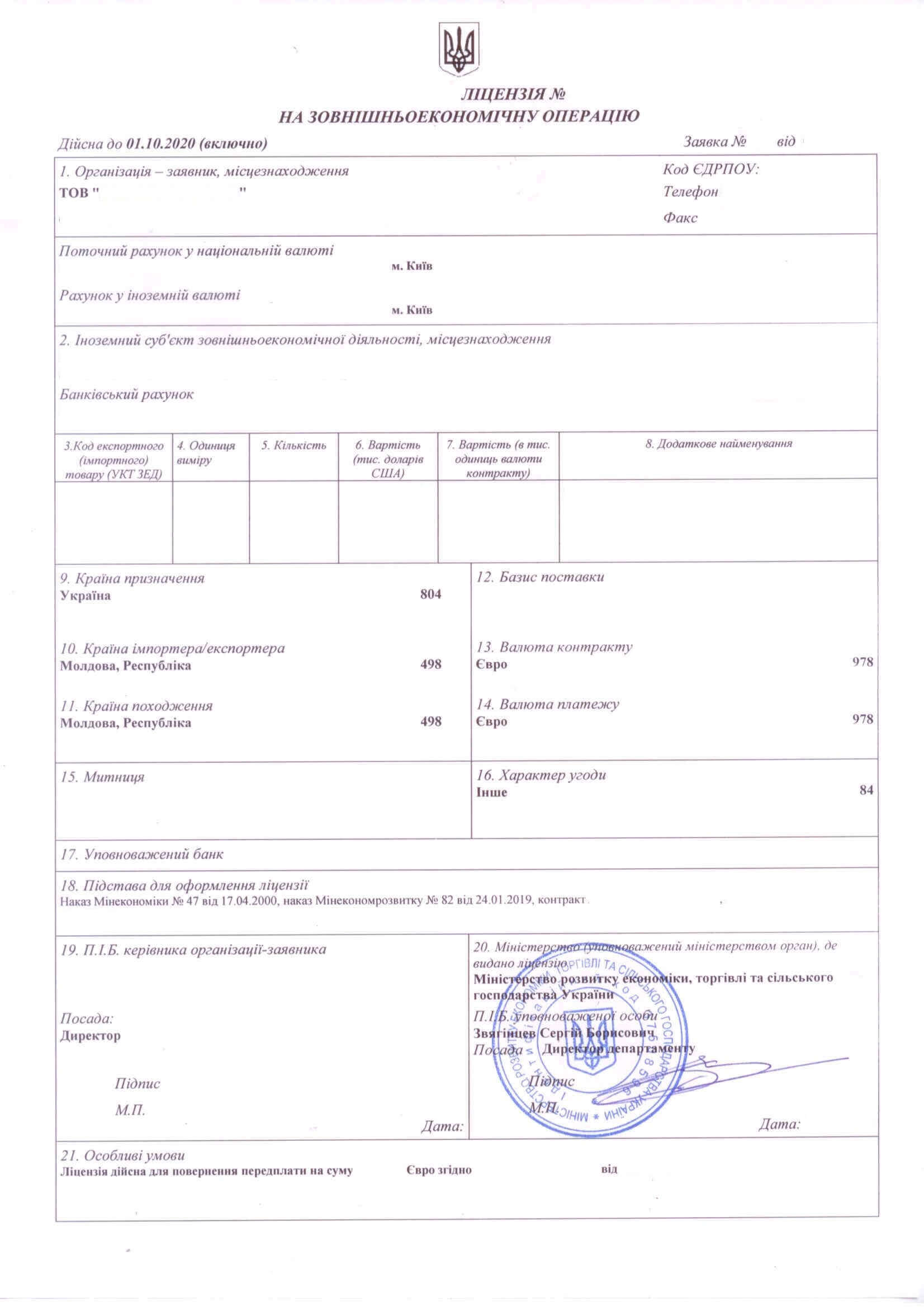
Careful drafting is especially important if the foreign trade transaction involves banking, customs, or permit procedures. For example, when importing goods that require a license, the details in the contract must match the invoice, technical documentation, and license application.
Our team not only provides professional foreign trade contract drafting services, but also helps obtain import licenses and provides other legal support for foreign economic activity. We will explain how to draft a foreign trade contract that protects your business.
If your focus is on the supply of goods and customs clearance, read more in our previous article: Essential Terms of a Foreign Trade Contract: How to Avoid Problems with Imported Goods Deliveries
Which Terms of a Foreign Trade Contract Are Critical?
A foreign trade contract may cover:
-
the export or import of goods;
-
the performance of work or a specific project;
-
the provision of services to a foreign client or the receipt of services from a nonresident;
-
agency, commission agency, or distribution arrangements;
-
the transfer of rights to software, designs, trademarks, or other intellectual property.
Since this contract will be your main means of protection, the following terms and provisions must be clearly defined.
Subject Matter of the Contract and Expected Outcome
The subject matter of a foreign trade contract must clearly define exactly what one party undertakes to transfer, perform, or provide to the other. For example, a supply contract must specify the goods, their quantity, completeness, technical specifications, and quality requirements. These details may be set out in a specification that forms an integral part of the contract.
If the contract covers services, simply naming them in general terms is insufficient. For example, the phrase “marketing services” does not establish whether the service provider must conduct market research, develop a strategy, set up advertising, or prepare a report.
You must specify:
-
the specific services to be provided;
-
the format and deadlines for their delivery;
-
the deliverables to be provided to the client;
-
the criteria for assessing proper performance.
For work, the contract must include terms of reference specifying the scope and stages of performance. The more precisely the parties define the subject matter of the contract, the fewer risks they will face during performance.
If the expected outcome is not documented, the client will find it difficult to prove that the counterparty failed to perform its obligations properly.
Price and Payment Terms
When the amount payable depends on the scope of work, hours spent, sales results, or other factors, the contract must provide a clear method for calculating it.
It is also important to specify which costs are included in the price. These may include bank fees, transportation, insurance, packaging, business travel, subcontractor costs, or taxes.
The payment terms must specify:
-
the amount and deadline for prepayment;
-
the conditions for the final payment;
-
the documents required for payment;
-
the party responsible for bank charges;
-
the procedure for refunding the advance payment if the contract is not performed.
For service or work contracts, payment should be tied to a specific milestone, report, certificate of completion, or delivery of the agreed result. Simply stating “payment after services are provided” is insufficient.
When agreeing on deadlines, the parties must also consider currency legislation. The Law of Ukraine “On Currency and Currency Transactions” and regulations of the National Bank of Ukraine provide for currency supervision of certain foreign trade transactions.
For example, a prepayment that remains outstanding for a long time without a clear performance deadline may expose a Ukrainian company to both commercial and currency risks.
Performance Deadlines and Acceptance Procedure
A foreign trade contract must distinguish between the overall term of the contract and the deadlines for performing specific obligations.
For the supply of goods, these may include:
-
the shipment date;
-
the delivery deadline;
-
a schedule for individual shipments.
For work and services:
-
the start date;
-
interim milestones;
-
the final deadline;
-
deadlines for reports and revisions.
The parties should agree at the outset on the documents that will confirm performance. For transactions involving goods, these may include:
-
an invoice (pro forma invoice);
-
transport documents;
-
an acceptance certificate;
-
certificates of quality or origin.
For services and work:
-
a certificate of completion;
-
a report;
-
technical documentation;
-
a delivered file;
-
access to a software product;
-
another deliverable.
The acceptance procedure must address all of the following:
-
the method of delivering the result;
-
the time allowed for its review;
-
the procedure for submitting reasoned objections;
-
the deadline for correcting defects;
-
the consequences of the client's failure to respond.
For example, the parties may agree that the result is deemed accepted if no reasoned objections are submitted within a specified period. However, this provision must not allow work to be automatically accepted when it has not actually been delivered to the client.
The right choices for your contract depend on how you and your counterparty organize your work and on the subject matter of the contract.
Drawing on more than 15 years of experience, we can recommend options that will both make your foreign trade contract an effective tool and help you work more efficiently with your counterparty.
Delivery Terms for Goods
If the contract covers goods, it must specify:
-
the place and deadline for delivery;
-
the mode of transportation;
-
the allocation of transportation costs;
-
insurance arrangements;
-
customs formalities;
-
the point at which risk transfers.
Parties often use Incoterms rules. However, simply including an abbreviation such as FCA, EXW, or DAP is insufficient. The contract must specify the exact place of delivery and the applicable edition of the rules.
Furthermore, Incoterms do not govern every aspect of a contract. In particular, they do not determine payment terms, liability for delays, quality requirements, or the transfer of title. These terms must be included in the contract itself.
If the delivery involves importing goods into Ukraine, the parties should also agree on the documents the seller must provide to the buyer for customs clearance and subsequent use of the products.
For example, a missing certificate of origin, packing list, invoice, or required conformity documents may delay customs clearance, generate additional storage costs, or make it impossible to sell the goods in Ukraine.
Quality, Warranties, and Intellectual Property
Quality requirements must reflect the subject matter of the specific contract.
For goods, the contract must specify:
-
technical specifications;
-
the warranty period;
-
completeness;
-
the procedure for identifying defects and submitting quality claims.
Warranties, Revisions, and Rights in a Foreign Trade Contract for Services
For work and services, the contract should specify:
-
requirements for the deliverables;
-
the permitted number of revisions;
-
deadlines for revisions;
-
the consequences of improper performance.
This is particularly important for IT, design, marketing, consulting, and other services that result in the creation of intellectual property. A foreign trade contract for services must expressly state who will own the economic rights to that intellectual property, when those rights transfer, and whether the fee for their transfer is included in the total price of the services.
Paying for the development of a website, software, logo, or advertising materials does not always mean that the client automatically acquires all rights to the work created.
Without an appropriate clause, a Ukrainian company may pay for the work but have limited rights to use it afterward.
Liability, Force Majeure, and Contract Termination
A foreign trade contract must specify the consequences of the main types of breach:
-
late delivery or payment;
-
failure to perform work;
-
inadequate quality;
-
failure to refund an advance payment;
-
failure to provide documents;
-
breaches of confidentiality or intellectual property rights.
Liability may include a fixed penalty, a late-payment penalty, compensation for damages, a refund of amounts paid, or the right to unilateral termination of the contract.
A force majeure clause must not be limited to a general list of extraordinary circumstances. It must specify the deadline for notifying the counterparty, the procedure for substantiating those circumstances, their effect on contract performance, and the maximum period of postponement.
Martial law, currency restrictions, or logistical difficulties do not automatically release a party from liability. The party must prove that the specific circumstance directly prevents it from performing a particular obligation.
It is also advisable to establish a procedure for ending the relationship:
-
the notice period;
-
grounds for unilateral withdrawal;
-
the procedure for paying for work actually performed and refunding the unused advance payment.
For example, a supplier receives an advance payment but fails to deliver the goods on time because its usual logistics route has closed, invoking force majeure only several weeks later.
If the contract does not specify a notification deadline, a maximum postponement period, and the buyer's right to terminate the contract and obtain a refund of the advance payment, the parties may dispute whether the supplier was entitled to postpone delivery, whether it must refund the money, and whether penalties are payable.
Governing Law and Dispute Resolution
Since the parties to a foreign trade contract are located in different countries, they must agree in advance on which country's law will govern the contract.
The Law of Ukraine “On Private International Law” allows parties to choose the law applicable to a contract with a foreign element. Without such a clause, the governing law will be determined under conflict-of-laws rules, which may create additional uncertainty.
The choice of foreign law should be well considered. A Ukrainian company must assess whether it understands the consequences of that choice and can obtain legal assistance in the relevant jurisdiction.
It is equally important to draft the dispute resolution procedure correctly. The parties may choose a national court or international commercial arbitration.
The contract must specify the exact name of the relevant body and the place where the dispute will be heard. For arbitration, the language of the proceedings and the number of arbitrators must also be specified.
An incorrect or contradictory clause may make it harder to protect the company's interests. For example, the contract should not give both a national court and an arbitral tribunal exclusive jurisdiction over the same dispute.
In this situation, a company may file a claim in a national court and spend time and money preparing the case, only for the counterparty to invoke the arbitration clause and object to the court hearing the dispute.
As a result, the company will have to initiate arbitration proceedings, pay new fees, and effectively start pursuing its claims all over again.
A Foreign Trade Contract for Obtaining an Import License
Special attention is required when a contract involves importing goods subject to licensing.
In this situation, the foreign trade contract serves both as an agreement between the parties and as part of the documentation used to obtain a license. Its terms must therefore be aligned in advance with the requirements of the relevant permit procedure.
This is particularly relevant to imports of ozone-depleting substances, fluorinated greenhouse gases, and certain goods and equipment that may contain them.
The contract must correctly specify the goods, their quantity, model, manufacturer, value, country of origin, delivery terms, and technical specifications. If the goods contain a controlled substance, its type and quantity must be stated.
The details in the contract must match the invoice, specification, technical documentation, and manufacturer's information.
Discrepancies in models, quantities, value, or composition may lead to additional requests for information and delays in obtaining an import license.
That is why it is advisable to check whether a license is required and what documents are needed before signing the contract.
This helps avoid having to renegotiate the contract with the nonresident and postpone the planned import.
Related reading: Selecting and Vetting a Counterparty When Entering into a Foreign Trade Contract

Common Mistakes When Entering into Foreign Trade Contracts
The most common mistakes include:
-
vaguely defined subject matter of the contract;
-
missing terms of reference or specifications;
-
unclear acceptance procedures and payment terms;
-
no mechanism for refunding advance payments;
-
failure to address intellectual property issues;
-
an inappropriate choice of governing law or dispute resolution body;
-
discrepancies between the contract and the invoice, technical documentation, or permit documents.
The consequences may include losing a prepayment, being unable to obtain the agreed result, delays in customs clearance, violations of currency legislation, difficulties obtaining a license, or having to pursue a complex dispute in a foreign jurisdiction.
These are all common mistakes that are difficult to identify and prevent unless you regularly draft such contracts professionally.
Why You Should Avoid Using Foreign Trade Contract Templates
A contract template does not account for:
-
the specifics of the transaction;
-
the counterparty's jurisdiction;
-
the subject matter of the relationship;
-
payment terms;
-
documentary evidence of performance.
A supply contract cannot be used for services without modification. Similarly, a standard consulting agreement is unsuitable for software development, technical work, or the transfer of intellectual property rights.
Even a professionally drafted contract used by another company may contain provisions that do not reflect the actual working arrangement or comply with Ukrainian currency, tax, customs, and permit requirements. A template can serve as a starting point, but every foreign trade contract must be tailored to the specific transaction and the parties' risks.
Related reading: An Opinion Extending Statutory Settlement Deadlines for Certain Goods Export and Import Transactions
Having a Lawyer Draft Your Foreign Trade Contract: Why It Matters for Your Business
Drafting a foreign trade contract is a distinct legal task that begins long before signing and involves more than translating a standard template into English.
During negotiations, a lawyer analyzes the planned transaction: the intended arrangement (supply, services, work, or transfer of rights), the payment currency and terms, whether the transaction requires licensing or other permit procedures, and the tax and currency implications for the Ukrainian party.
Based on this analysis, the contract is tailored to the specific transaction rather than the transaction being forced to fit the contract. This includes:
-
defining the subject matter of the contract so that it matches the specification, invoice, and, where necessary, license application;
-
structuring payment terms to comply with currency supervision requirements;
-
agreeing on governing law and a dispute resolution body that will effectively protect the client's interests, rather than merely appearing in the text as a formality;
-
vetting the counterparty and preparing a protocol of disagreements if the foreign partner provides the contract or draft.
The result is a contract that establishes clear ways to protect your interests before a problem arises: when you can suspend payment, demand a refund, terminate the contract, or take the matter to court or arbitration.
Our team supports the drafting of foreign trade contracts from transaction analysis through signing. Learn more about the service and pricing here.
Contact us for support with your foreign economic activity, starting with your foreign trade contract.
Services on the topic of this material
Our publications on this matter


Our clients

We are ready to help you!
Contact us by mail [email protected] or by filling out the form:
Other publications by the author

Stock balances in Form No. 1-OP should be reconciled not only with warehouse records but also with storage locations, product codes, and source documents. Specific rules apply to responsible storage, imports, and exports.

A foreign company may still trigger CFC reporting even if it had no operations or income. The key factors are Ukrainian tax residency, ownership or actual control, while CFC notices and annual reports follow different filing rules.

A tax authority may interpret a transaction differently only when an audit begins, after the exposure has accumulated for years. An individual tax consultation allows a business to obtain an official position in advance for its specific transaction model.

Returning to Ukraine is not required for divorce in most cases. Depending on whether the spouses have minor children and both agree to divorce, the process may go through Diia, the civil registry, or court, while child and alimony issues can be handled separately.
Our other authors