

Tax Authority Request for Information: How to Protect Your Business and Avoid an Audit
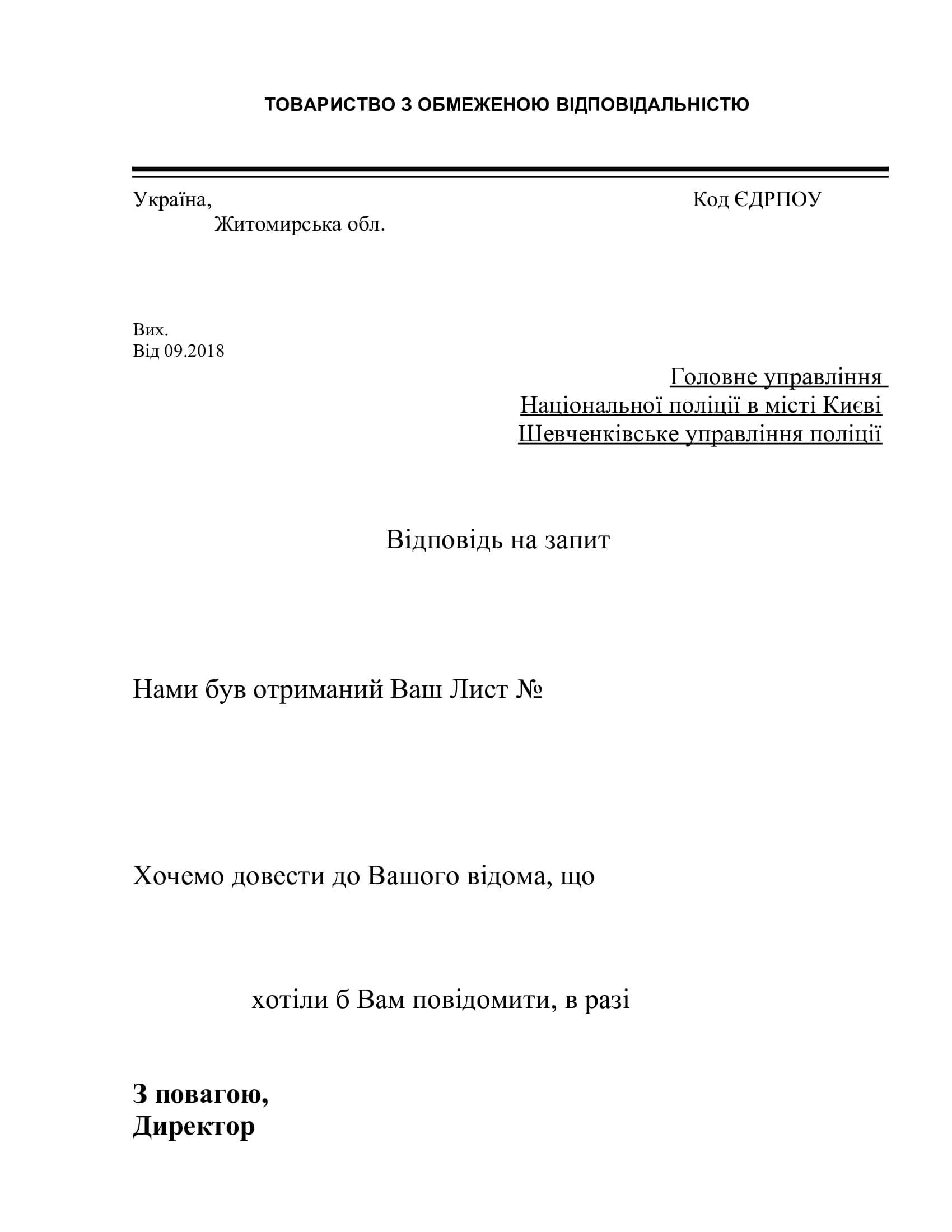
Reviews of our Clients
... our work on joint projects assured us of your high level of professionalism
Receiving a “letter of happiness” from the tax authority asking for explanations or copies of documents is something almost every business encounters. At first glance, a letter from the tax authority may look like routine paperwork. But for a practicing lawyer, such a request is a red flag. In most cases, it is the tax authority’s first step toward launching an unscheduled documentary audit.
In this article, we explain why you should not rush to copy your entire archive of documents, what risks may be hidden in your response, and how a properly reasoned refusal can help protect your business from unnecessary financial losses.
Why You Received a Letter from the Tax Authority: Hidden Risks
Article 73 of the Tax Code of Ukraine clearly defines the grounds on which the tax authority may send information requests. In practice, however, tax officials often use these requests as a tool to artificially create grounds for an audit. That is why it is important to understand why the tax authority sends such letters in the first place.
The most common reasons businesses receive requests from the tax authority are:
- The State Tax Service is looking for a basis to claim that the taxpayer failed to provide the full scope of documents, which may allow it to schedule an unscheduled audit (clauses 78.1.1 and 78.1.4 of the Tax Code of Ukraine).
- The tax authority wants to identify discrepancies by comparing your financial statements and analyzing inconsistencies in the reported figures.
- The tax authority is trying to establish facts that may indicate a violation of tax legislation.
Please note: a tax authority request is not just a request for information. It is a legal stage, and its outcome may determine whether a tax audit is initiated against your business in the near future.
You might also like: What to Do If You Receive an Act After a Desk Audit?

Taxpayer Response Options: From Ignoring the Request to Strategic Protection
Once a tax authority request for information is on your desk, you have several possible courses of action. Each of them carries its own consequences:
|
Course of Action |
Consequences for the Business |
|
Ignoring the request |
Guaranteed start of an audit and financial penalties. |
|
Providing all documents |
Most often, this still leads to an audit, because the documents give the tax authorities a new basis for finding issues. |
|
Written refusal without arguments |
Start of an audit and a fine for failure to provide copies of documents. |
|
Reasoned refusal |
The only safe approach as it creates a legal foundation for protection. |
A reasoned refusal is a step toward protecting your rights.
Many entrepreneurs are afraid to refuse the tax authority, believing that this will provoke the regulator. However, responding to a tax information request is not always safe. The legal practice of Pravova Dopomoha shows that if the request was prepared in violation of the requirements of Article 73 of the Tax Code of Ukraine, you have every right not to provide the documents.
Moreover, positive court practice is actively developing in favor of taxpayers, for example, case No. 420/13222/25. Courts are increasingly recognizing refusals to provide documents to the tax authority as lawful, and fines as unlawful, if the request itself did not comply with the legal requirements:
- Position of the tax authority: “The taxpayer’s arguments regarding the request’s non-compliance with Article 73 of the Tax Code of Ukraine are unfounded, and the request of the State Tax Service authority was drafted in such a way that the taxpayer could understand which potential violations of tax legislation the controlling authority was referring to.”
- Position of the court: “...a request may be sent only if the tax authority has identified real facts indicating a taxpayer’s violation of tax, currency, or other legislation, and not because there is a need to conduct a documentary review of business transactions in order to establish such facts.”
How to Check Whether a Tax Authority Request Complies with the Law
How can you tell that a tax authority request for information and copies of documents does not comply with the law? Such a request does not specify concrete facts indicating that the taxpayer has violated tax legislation. Instead, it refers to the need to examine the supply chain, interactions with “risky” counterparties, analysis of a particular industry or market segment, and similar general grounds. This type of request may serve as a basis for refusing to provide documents to the tax authority and excludes the taxpayer’s liability.
In today’s reality, where Ukraine is firmly following a European path of development, it is time to finally move away from the outdated “police state” mindset. An entrepreneur is no longer a powerless object of supervision. An entrepreneur is an equal partner of the state, whose rights are protected by law.
We help businesses move toward a new model of communication with state authorities: from fear and passive consent to civilized legal dialogue. A reasoned refusal to an unlawful request is not a conflict, but a sign of legal culture and a necessary step to protect your economic freedom and dignity.
How many days do you have to respond to a tax authority request? If the request is already on your desk, you have 15 business days to respond.
Successful case: Challenging a Tax Audit Report: Case of Canceling a UAH 2.5 Million Penalty
Tax Dispute Resolution: What You Get When Working with Pravova Dopomoha
When you contact us in time for assistance with a tax authority request, you receive not just a “response text”, but confidence in the result and protection against delays or fines. We offer turnkey support that includes:
- Expert audit of the received request
- Preparation of a reasoned response that neutralizes the grounds for an unscheduled tax audit
- Advice on the tax consequences of every word in your response
- Protection of your interests in court if audit orders or tax notices decisions need to be challenged
Do not allow a formal request to become the cause of real financial losses. Contact us now, know your rights, and protect them with the help of qualified lawyers.
Services on the topic of this material


Our publications on this matter


Our clients


We are ready to help you!
Contact us by mail [email protected] or by filling out the form:
Other publications

The procedure for unblocking tax invoices and adjustment corrections in court. Reversal of DPS commission decisions and preservation of working capital.

Procedures for a taxpayer upon receiving a request from regulatory bodies under Article 73 of the Tax Code of Ukraine. Risks of providing documents and legal grounds for a justified refusal.

Why incorrect wording of a service name in a Software Registrar of Settlement Operations (PRRO) leads to the loss of a VAT exemption. The difference between therapeutic manipulations and aesthetic procedures according to Tax Code norms.

Can a private institution provide medical care, both emergency and non-emergency ambulance, and what requirements does it have to comply with according to the law?
Our other authors