
Apostille or Consular Legalization: Which One to Choose for Your Documents?
Cost of services:

Reviews of our Clients
Any legal action abroad, whether opening a business, purchasing property, registering a marriage, obtaining a residence permit, or securing a work permit, starts with one simple but crucial question: Will your documents be recognized in another country?
Even if you have the original certificate, diploma, or power of attorney in hand, without proper international authentication these documents have no legal effect outside the country where they were issued. A mistake at this stage almost always leads to the same result: refusal by a bank, migration authority, or notary, along with lost time and additional costs.
One of the most common questions our clients ask is: "Do I need an apostille or consular legalization?" In this article, we explain the applicable rules for 2026 so you can clearly determine exactly what is required in your particular situation.
You might also like: Entry Rules to Ukraine for Foreigners in 2026: How to Avoid Refusals and Cross the Border Safely
What Is the Difference Between an Apostille and Consular Legalization, and Which to Choose?
The choice of procedure depends not on your citizenship, but on two key factors:
- Which country issued the document?
- For which country is the document intended - in other words, where will you be using it?
|
Method |
When it applies |
Key feature |
|
Apostille |
For countries that are parties to the Hague Convention (most EU countries, the United States, the United Kingdom, Turkey). |
A simplified stamp issued by a competent authority of the country where the document was issued. |
|
Consular legalization |
For countries that have not signed the Convention (UAE, most countries in Asia and Africa, for example, Algeria and Egypt). |
A complex multi-stage process: certification by the Ministry of Foreign Affairs + certification by the Consulate of the destination country. |
|
Without certification |
For certain countries only, based on bilateral agreements (for example Poland, Lithuania). |
Only a professional notarized translation is required. |
Please note: Even among Apostille countries there are exceptions; everything depends on the purpose for which the document will be used.
2026 Reform: Electronic Apostille Registry and Order № 3177/5
Since February 1, 2026, Ukraine has implemented a new procedure for affixing an apostille, approved by the Ministry of Justice of Ukraine’s Order № 3177/5 dated November 20, 2025. At the same time, the following are no longer in effect:
- the 2015 apostille procedure;
- certain rules on submitting signature and seal samples.
The procedure has been fully updated. What are the key changes?
- An apostille is issued exclusively through the Electronic Apostille Registry, which speeds up the process (up to 3 days) because all signature and seal samples are now stored in a unified electronic database.
- All steps are recorded digitally from submitting the application to receiving the result.
- Digital verification of authenticity.
- Each apostille has a unique number or QR code, allowing foreign authorities, banks, and notaries to verify it online.
- Uniform processing times.
- Apostille issuance or a motivated refusal is provided within 3 working days from the day following registration of the application in the registry.
Who Enters Data into the Electronic Apostille Registry?
The new procedure clearly defines responsibility:
- Ministry of Justice of Ukraine - Ministry officials
- Territorial bodies of the Ministry of Justice - notaries, civil registry employees, state registrars
- State Archival Service of Ukraine - archival institutions
- Courts of Ukraine - judges.
The registry records:
- signature samples;
- impressions of seals and stamps;
- public key certificate data.
Please note: If a signature or seal is missing from the registry, the apostille will not be issued, even if the document is formally authentic.
You might also like: Entry Ban to Ukraine for Foreigners: Risks and How to Avoid Them with Legal Assistance
How the Apostille Procedure Works
An apostille is always issued in the country where the document was originally issued. For Ukrainian documents, this means Ukraine. Documents that cannot receive an apostille include:
- Documents from Ukraine’s diplomatic missions abroad.
- Customs and commercial documents.
- Original passports, military IDs, employment record books, etc. (only a notarized copy is allowed).
The apostille is placed either directly on the document or on a separate sheet attached to the document.
How the Consular Legalization Procedure Works
Consular legalization applies to documents issued in countries with which Ukraine does not have bilateral or multilateral agreements recognizing documents without additional certification, as well as countries that are not parties to the Hague Convention.
Consular legalization can be carried out:
- In the country that issued the document.
- In the country where the document needs to be submitted.
- In a third country where the person is physically located.
In Ukraine, consular legalization of official documents issued by foreign authorities is carried out by the Consular Service Department of the Ministry of Foreign Affairs of Ukraine and by Ukrainian diplomatic missions abroad.
This is a complex and lengthy procedure, which can take from several weeks to several months. For this reason, consular legalization almost always requires professional assistance.
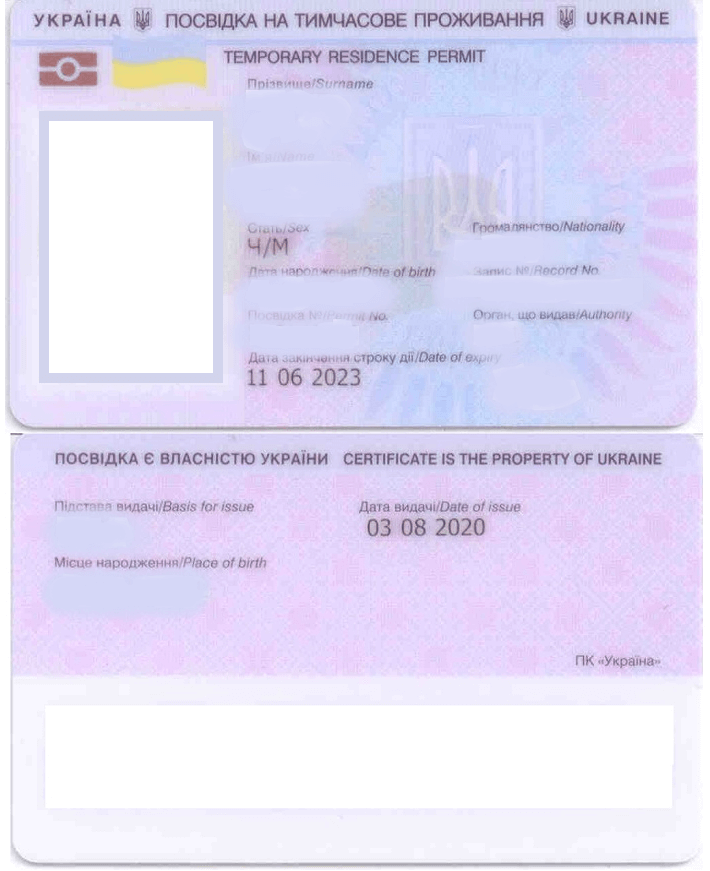
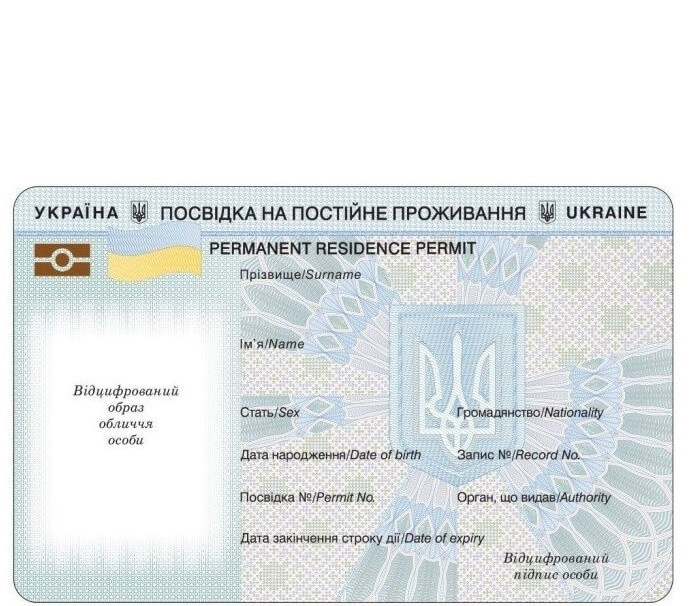
Additionally, it should be noted that originals and copies of passports, military IDs, employment record books, correspondence-type documents, firearm permits, vehicle registration documents, driver’s licenses, identity cards, residence permits, normative-legal acts, and official explanations are not subject to legalization.
Pitfalls: Where Problems Most Often Arise
- Old documents (USSR, outdated forms): an apostille cannot be applied to such documents; a new duplicate is required. For example, if a person was born in 1978 and their birth certificate was issued by the USSR, obtaining a document with an apostille first requires getting a duplicate of the birth certificate and then applying the apostille to it.
- Name discrepancies: even a single letter difference in translation can prevent opening a bank account or submitting documents for permanent residency. All entries in the document must be verified for consistency before submitting for legalization.
- Document validity period: some documents indicate a validity period. It is necessary to check that the document is still valid before legalization. For instance, in some countries a certificate of no criminal record may only be valid for one month.
- Double apostille: for certain countries (Italy, Spain, France, Switzerland, etc.), the following procedure may apply:
- Apostille on the original document (on the signature and seal of the issuing authority).
- Official translation.
- Notarial certification of the translation.
- Second apostille on the translation (on the signature and seal of the notary certifying the translation).
Notaries also verify translator credentials through the reference and information registry of translators.
You might also like: How a Foreigner Can Move to Ukraine: Legalizing Your Stay
Legalization of Documents: Professional Support and Guaranteed Results
We understand what it feels like when your plans to move, expand a business, or buy property are stalled because of a missing stamp or a minor translation error. You could spend weeks navigating the intricacies of the Hague Convention, standing in lines at ministries, and still face rejection from a foreign bank due to an “incorrect” legalization format.
Legal bureaucracy should never block your goals. That is why our team turns a chaotic administrative process into a predictable result, ensuring that your documents have legal force in any jurisdiction.
We assist clients with:
- Residence legalization: work permits, temporary or permanent residency.
- Business matters: company registration, opening bank accounts, powers of attorney.
- Family matters: marriages with foreigners, documents for children.
- Property and tax issues: transferring real estate, obtaining tax ID numbers via power of attorney.
We determine exactly which procedure applies to your case, prepare the documents, handle accurate translations, and take the process through to completion.
If you are unsure whether you need an apostille or consular legalization, contact us. We will review your case and help you complete the procedure successfully on the first attempt, without refusals or unnecessary costs.
Our clients