

What Documents Does a Private Psychiatrist Need
Reviews of our Clients
... our work on joint projects assured us of your high level of professionalism
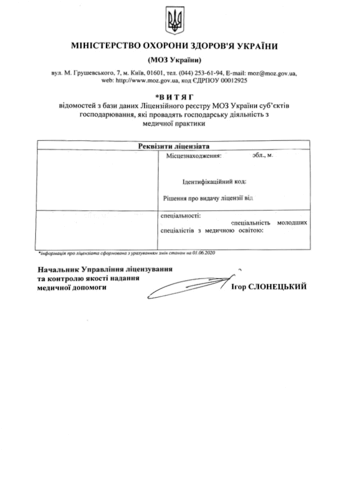
You have already obtained a license for your psychiatric office and are preparing for your first appointment. To receive patients, protect yourself and your patients during consultations, and conduct your practice in compliance with the law, you will need a set of documents and their templates.
There is no universal “document package for a medical office.” For a private psychiatrist registered as a sole proprietor, the minimum set depends on the consultation format, patients’ ages, the range of services, online consultations, the use of messengers and a medical information system, electronic prescriptions, the presence of employees, and the actual generation of medical waste.
For example, for a physician working independently, seeing adults in an office and online, and not performing procedures, the basic legal framework usually covers seven areas:
- medical practice license;
- rules for interacting with patients;
- specific consents for psychiatric care;
- medical records and the Electronic Health Care System (ESОZ);
- personal data protection;
- Continuous Professional Development (CPD) documents;
- statistical reporting.
However, each area includes both documents directly approved by the state and documents prepared by a lawyer for a specific practice model. These should not be confused.
Why You Cannot Simply Download a “Ready-Made Document Package”
One psychiatrist provides consultations only for adults. Another works with children, prescribes psychotropic medicines, hires an administrator, books patients through an online service, and accepts payments through a website. A third operates a medical center with several physicians and a contract with the National Health Service of Ukraine (NHSU). Formally, they work in the same field, but their documentation requirements and risks differ.
Therefore, the right starting point is not buying or downloading dozens of templates, but conducting a brief audit of the practice model. It answers three questions:
- Which official forms must be used without making unauthorized changes?
- Which internal documents need to be developed specifically for this practice?
- Which logs, orders, and regulations are unnecessary until the relevant process, employees, or equipment are in place?
You need to understand which documents you specifically need, based on your target audience and other aspects of your practice.
This approach reduces costs while ensuring there are no gaps that might come to light after a patient complaint, a medical data breach, or a request from a regulatory authority.
For more than 15 years, we have been preparing customized document packages that take into account the needs, specialization, and current circumstances of each medical institution.
Drawing on this experience, we have prepared these recommendations and a checklist at the end of the article to help you understand how to develop a similarly customized document package.
License and Documents Confirming the Actual Practice Model
Psychiatric consultations, diagnosis, and treatment prescriptions constitute medical practice. A sole proprietor may provide such services only on the basis of a license for the relevant medical specialty. Before obtaining a license, it is important not to advertise or sell psychological or psychotherapeutic services as medical appointments with a psychiatrist.
After the license is issued, the following must be consistent:
- the sole proprietor’s details and types of business activity;
- the specialty of “Psychiatry” and qualification documents;
- the address and operating hours of the medical practice location;
- the right to use the premises;
- the declared equipment and actual list of services;
- the information sign at the entrance;
- the information in the licensing register, medical information system, and Electronic Health Care System (ESОZ).
The Licensing Conditions for Conducting Business Activities in Medical Practice also require obtaining consent for medical intervention, maintaining primary medical records using forms approved by the Ministry of Health of Ukraine (MOH), and complying with the rules of ESОZ and personal data protection. Therefore, the license is not the end of the preparation process, but the legal foundation for the next areas.
If you are still preparing to obtain a license, we have described the entire process in detail in our previous article: How to Obtain a License for a Psychiatrist
Terms for the Provision of Paid Psychiatric Services
The law does not establish a universal contract for a private psychiatrist registered as a sole proprietor. However, written terms for the provision of services are one of the most useful protective documents. They do not replace medical consent or release the physician from liability established by law. Their purpose is to explain the organizational and financial rules in advance.
It is advisable to address the following in the document:
- in-person and remote consultations;
- appointment booking, lateness, rescheduling, and cancellation;
- payment, advance payment, and refund terms;
- boundaries for communication by phone and through messengers;
- the procedure for issuing prescriptions and electronic prescriptions;
- circumstances in which an online consultation should be terminated and an in-person or emergency consultation recommended;
- the procedure for providing medical information to the patient and third parties;
- the absence of any guarantee of a predetermined treatment outcome;
- rules for ending the professional relationship.
The statement “the physician is not liable for anything” does not work. The document should define the respective areas of responsibility of the physician and the patient without contradicting the law or professional obligations.
You might also like: Leasing Premises for Medical Practice: Ministry of Health Requirements and Lease Agreement
Which Consents Are Required Specifically for Psychiatric Practice
In psychiatry, a general statement that “the patient agrees to the consultation” is not sufficient. The Law of Ukraine “On Psychiatric Care” requires informed written consent. The person must receive an accessible explanation of the purpose, procedure, and duration of care, the diagnostic and treatment methods, possible side effects, and alternatives.
For outpatient practice, the key forms are those approved by MOH Order No. 970 dated September 15, 2016:
- No. 003-7/o, “Informed Consent of a Person to Undergo a Psychiatric Examination”;
- No. 003-8/o, “Informed Consent of a Person to Receive Outpatient Psychiatric Care.”
If the physician works with children or with persons who cannot provide informed consent independently, other forms and special rules on legal representation apply. Therefore, limiting the practice to patients aged 18 and over does reduce the documentation burden, but this restriction must be consistently reflected in advertising, appointment booking, and internal rules.
Please note! Official forms should not be “improved” by removing required fields. Instead, a separate, clear information document explaining the practice’s procedures, remote consultation format, and personal data processing can be added.

Medical Records, MIS, and ESОZ
A physician registered as a sole proprietor must maintain medical records in a way that clearly shows who sought care, what was established during the examination, what information was provided to the patient, what treatment was prescribed, and what recommendations were given. For a psychiatrist, it is particularly important to document examination findings, consent, diagnostic conclusions, prescriptions, follow-up consultations, and circumstances affecting patient safety.
Work in ESОZ is carried out through a medical information system (MIS) connected to the central database. For private practice, a physician registered as a sole proprietor must register separately as a healthcare provider, even if they are also employed elsewhere and already have an account in another institution’s system. Having or not having a contract with the National Health Service of Ukraine (NHSU) does not отменить licensing requirements regarding ESОZ.
An electronic record does not mean that all paper documents automatically disappear. For each form, its current instructions and the permitted method of completion must be checked.
Read more about registering a physician registered as a sole proprietor in ESОZ in our previous article.
Protection of Medical and Personal Data
Information about mental health, diagnoses, treatment, and prescribed medicines is classified as sensitive personal data. A separate “consent to the processing of personal data” does not resolve every issue and is not always the only legal basis for processing. The physician must determine the purpose, legal grounds, scope of data, retention periods, recipients, and protection measures.
For a sole proprietor working independently, one practical solution may be to establish a consolidated procedure for data processing and protection. It should describe:
- the handling of paper medical records, MIS, ESОZ, online appointment booking, and messengers;
- data access, backups, and document destruction;
- the transfer of information to other physicians, relatives, insurance companies, or government authorities;
- responses to accidental disclosure, device loss, or unauthorized access;
- the recording of data processing operations and the procedure for exercising patients’ rights.
The official procedure for notifications to the Ukrainian Parliament Commissioner for Human Rights classifies health status as sensitive data. The Commissioner must be notified within 30 working days of the commencement of processing that poses risks and of the person responsible for organizing data protection. For a sole proprietor without employees, the proprietor may perform these functions personally, but this arrangement should be properly documented.
If appointments are booked through a website or another online service and communication takes place through messengers or email, these channels must be included in the data processing map. Simply stating in a privacy policy that “we guarantee absolute confidentiality” is not sufficient.
You might also like: Medical Waste Processing Agreement: A Mandatory MoH Requirement from 2026
CPD: What a Private Physician Must Maintain
As of August 13, 2026, the certification of healthcare professionals has not yet resumed. MOH Order No. 650 dated April 16, 2025 provides for its resumption six months after the termination or cancellation of martial law. However, maintaining a personal educational portfolio and tracking Continuous Professional Development (CPD) points have not been suspended.
A physician registered as a sole proprietor should:
- maintain a separate portfolio for each calendar year;
- keep certificates and check whether they can be verified;
- record at least 50 CPD points per year, unless there is an objectively justified reason documented accordingly;
- certify their own portfolio for periods when they worked exclusively as a sole proprietor;
- keep separate records confirming professional experience and actual medical practice.
If a physician works only as a sole proprietor and is not an employee, the current Procedure No. 650 does not specify an employer to whom the physician must submit the portfolio annually. However, once certification resumes, the portfolio will need to be submitted to the relevant certification body. The submission procedure and transitional deadlines should be verified immediately before filing.
Statistical Reporting: Do Not Rely Solely on Whether You Have an NHSU Contract
Form No. 10, “Report on the Provision of Psychiatric Care to the Population”, applies, among others, to sole proprietors who hold a license and provided psychiatric care during the reporting year.
Under its current version, Form No. 17, “Report on Staff and Personnel”, also covers sole proprietors holding a medical practice license.
The absence of employees or an NHSU contract does not, in itself, exempt a sole proprietor from reporting if they fall within the specified group of respondents.
This does not mean that the list is limited to these two forms. Each year, it is necessary to check the current MOH orders, the groups of respondents, deadlines, and technical submission procedures, including the possible use of Form No. 20 and other reports based on actual activities. A regional health department may provide information about where and how to submit reports, but it cannot unilaterally waive a requirement established by a national regulatory act.
You might also like: Medical Marketing Without Fines: How to Manage Social Media Compliantly
Which Documents Are Not Automatically Required
A private psychiatrist without employees should not mechanically adopt the documentation package used by a large medical center. In particular, the following are not automatically required:
- personnel orders and policies for positions that do not exist;
- a separate register of employees with data access if only the physician has access;
- a dozen separate data protection policies when they can be combined into a single practical procedure;
- documents concerning procedures, medicines, or medical waste that are not actually involved in the specific practice model.
At the same time, the statement “I do not need this” must be based on verified facts. If an administrator has access to appointment records, another specialist works in the office, medicines are stored there, or used test systems, needles, or other waste are generated, the documentation package changes.
Useful tip: Download the private psychiatrist’s checklist before the first medical appointment to quickly check whether your documents, ESОZ, medical forms, reporting, and patient communication are ready for the launch of your practice.
If you do not want to guess whether you have prepared your documentation package correctly and want to be 100% ready to start operating, our team will take care of preparing a customized package for you.
Legal Support for Private Psychiatric Practice: How We Help
We begin with a brief audit of the planned practice: which patients the physician will see, where and in what format, and whether electronic prescriptions, employees, online booking, a website, messengers, an NHSU contract, medicines, or medical procedures will be involved.
After the audit, we determine the scope of the documentation package, prepare documents with the agreed details, and review them from a legal perspective. The client receives not an anonymous folder of templates, but a clear launch roadmap:
- a list of mandatory official forms with links to current sources;
- documents that need to be developed specifically for the client’s practice model;
- a list of unnecessary documents that the client does not need to pay for;
- terms for paid services and rules for remote communication;
- documents concerning the protection of medical data;
- a guide to registering with ESОZ and working through an MIS;
- advice on CPD and a reporting calendar.
We also provide implementation instructions explaining what to approve, what to sign with patients, what to maintain on an ongoing basis, and what to review when services, the team, or legislation changes.
If you are preparing to open a psychiatrist’s office or are already practising but are unsure whether your documentation reflects your actual processes, order a legal audit.
We will identify the critical minimum requirements, prepare customized documents, and explain how to use them in your daily work.
Answers to frequently asked questions
Can a psychiatrist start seeing patients before obtaining a medical practice license?
Not as a psychiatrist. Psychiatric examinations, medical diagnosis, and treatment prescriptions constitute medical practice and require a license. If the specialist also provides non-medical services, these must be clearly distinguished in terms of their content, advertising, and documentation.
Is one general patient consent form sufficient?
No. Special forms No. 003-7/o and No. 003-8/o have been approved for psychiatric examinations and outpatient psychiatric care. A contract or terms for paid services serve a different purpose and do not replace informed medical consent.
Must a physician registered as a sole proprietor use ESОZ without an NHSU contract?
Yes. ESОZ requirements arise from the Licensing Conditions and do not depend solely on funding under the medical guarantees programme. The physician registered as a sole proprietor chooses a connected MIS and registers as a separate healthcare provider.
Is it necessary to notify the Commissioner about patients’ medical data?
Yes. Health status is classified as sensitive data, and the official procedure provides for notification of risky processing and the person responsible within 30 working days of the start of such processing.
Where must a physician registered as a sole proprietor submit their CPD portfolio annually?
If the physician works exclusively as a sole proprietor and has no employer, Procedure No. 650 does not establish a separate annual recipient for the portfolio. The portfolio must be maintained, certified, and stored together with supporting documents for subsequent certification.
Services on the topic of this material
Our publications on this matter

Our clients
We are ready to help you!
Contact us by mail [email protected] or by filling out the form:
Other publications by the author

How to divorce a foreigner in Ukraine: when a joint application to the registry office is enough, when a court is needed, which court hears the case, what to do if the foreign spouse lives abroad, objects or cannot be found, and which documents to prepare.

Banks, neobanks or payment institutions, documents and proof of funds, video identification, Ukrainian rules on transfers and tax, and why banks refuse.

Employers in Ukraine can extend an employee's reservation while it is still valid or file a new reservation once it has expired or been cancelled: which Diia service to use, how to apply, review times and what happens to the employee in between.

A guide for a foreign spouse of a Ukrainian citizen: where to start, when the D-14 visa is required, which documents to file and why permits get refused.
Our other authors