

Transporting someone else's passport across border or documents
Cost of services:
Reviews of our Clients
... our work on joint projects assured us of your high level of professionalism
“Please send my passport by bus,” “My friend is traveling to Poland, maybe they can bring the documents,” “I urgently need the original for my residence permit in Ukraine.” Today, such requests have become a familiar part of life for thousands of people handling documents between different countries.
Some people are abroad and cannot personally submit their passport for a visa or permanent residence permit. Others, on the contrary, are in Ukraine and waiting for documents from relatives or lawyers in another country. Foreign nationals apply for residence permits in Ukraine, Ukrainians obtain immigration statuses and legalization abroad, and documents constantly “travel” between countries through friends, bus drivers, acquaintances, or couriers.
At first glance, there seems to be nothing unusual about this. People are simply trying to resolve bureaucratic matters faster. However, few people stop to consider whether transporting someone else’s passport across a border is actually legal. Can a person who agrees to help face problems at customs or during a document check?
In reality, this common practice may involve far more legal risks than it initially appears. And that is exactly what we will discuss below.
Legal Framework: What Does the Law Say About Transporting Someone Else’s Documents Across Border?
Many people are genuinely surprised when they are asked at the border, “Why are you transporting someone else’s passport?” After all, it may seem that there is nothing illegal about it. A person is simply helping deliver documents to an acquaintance or relative. However, from a legal perspective, a passport is not an ordinary item. It is an official document with a special legal status.
What Does Ukraine Law on Documents Transportation Say?
In Ukraine, the main legal act governing this area is the Law of Ukraine “On the Unified State Demographic Register and Documents Confirming Ukrainian Citizenship, Identity or Special Status”. This law regulates the procedure for issuing, using, sending, and withdrawing passport documents.
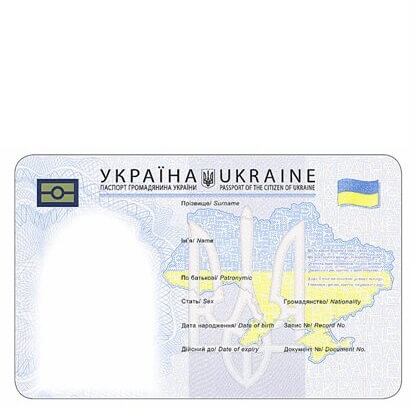
In particular, Article 21 of this Law expressly provides that a Ukrainian citizen’s passport is a document that proves the holder's identity and confirms Ukrainian citizenship. In addition, the passport itself contains the official statement: “The passport of a citizen of Ukraine is the property of Ukraine.”
This is an important point that many people underestimate. In practice, the state does not treat a passport as private property, but as an official document subject to a special legal regime. This is why transporting someone else’s passport across border may potentially attract the attention of border guards or customs authorities.
At the same time, Ukraine law transporting someone else's passport across border does not contain a direct prohibition on carrying or transporting another person’s passport across the border. However, the issue lies elsewhere: the law also does not establish a clear and legally secure procedure for private individuals to carry out such transportation.
This legal uncertainty creates a “gray area” in which any attempt to independently transport documents may be interpreted by border or customs authorities as suspicious activity. If you are transporting documents in person, you should be prepared for increased scrutiny from control authorities, especially when leaving Ukraine or entering European Union countries, including Poland, Germany, the Czech Republic, and the Baltic states.
In some countries, the presence of another person's passport among your belongings is highly likely to trigger a verification procedure. Customs and border officers may need to make sure that the documents are not connected with unlawful migration, human trafficking, or the creation of fraudulent stories for obtaining asylum. A simple explanation such as “someone asked me to deliver it” may therefore trigger a more detailed inspection.
You might also like: How to Obtain Ukrainian Citizenship by Descent: Changes in 2026

Passport Logistics: Can You Transport Someone Else’s Passport Across Border?
After learning that Ukrainian law does not contain a direct prohibition on transporting someone else's passport, people usually ask the next question: so, can you actually transport someone else's passport across the border? In practice, yes. The cross-border transportation of documents takes place on a regular basis.
Relatives may send foreign passports for visa applications. Foreign nationals may send documents to obtain a residence permit in Ukraine or in an attempt to acquire Ukrainian citizenship based on territorial origin through a grandmother or grandfather. Ukrainians living abroad may receive their new documents or powers of attorney through acquaintances. In this case, the key risk factor is not the document itself, but the surrounding circumstances: who is transporting it, how many documents they are carrying, and how the purpose of the transportation is explained.
It is important to distinguish between an internal passport and a foreign passport.
Difference Between an Internal Passport and a Foreign Passport
For border control authorities, the type of document is crucial:
- Internal passport (an ID card or passport booklet) usually raises fewer questions during international transportation because it is not used directly to cross the border. Border control authorities generally treat it with less scrutiny.
- Foreign passport is viewed much more sensitively by border control authorities because this document provides access to international travel, visa applications, residence permits, and changes in immigration status. Having someone else's foreign passport among your belongings may always be viewed as a potential immigration fraud risk.
Number of Documents
Another important factor is the number of documents. Transporting someone else’s passport across border when it involves a single passport belonging to a relative is generally viewed differently from transporting several passports belonging to other people or a package of documents belonging to multiple individuals. In the latter case, the authorities may suspect unlawful intermediary activities, immigration schemes, or the use of other people's documents. Particular caution is advisable when:
- the passport is transported without written confirmation from its owner;
- the document is being transferred for payment;
- the person transporting it is not a relative or official representative of the owner;
- the documents are intended for visa applications, asylum, or legalization of residence;
- the passport contains valid visas, residence permits, or immigration service stamps.
If a batch of documents belonging to other people is discovered during a customs inspection of luggage, the customs authorities may draw up a report on a violation of customs rules, while the documents themselves may be seized for examination or transferred to law enforcement authorities (the National Police) to determine whether they are counterfeit or connected with the unlawful transportation of persons across the border. In such a situation, the person transporting the documents may face lengthy questioning and delays at the border.
Questions to Be Prepared for at the Border
If you nevertheless decide to transport a passport yourself or send it through a close relative, representative, or another person, the carrier should have clear, well-supported, and documented answers to the following questions from border control officers:
- Who is the owner of this passport, and where is the owner currently located? (You should provide a copy of the person's current immigration status document or visa.)
- Why is the document being transported across the border? (For example, for a visa application, in which case official confirmation from the consulate or visa center should be provided.)
- What is the relationship between the passport owner and the person transporting it? (It is advisable to have documents confirming the family relationship.)
- Has the owner voluntarily consented to the transportation of the passport?
If the answers appear unconvincing or contradictory, border control officers may request additional explanations. We will discuss the available options for transporting documents across the border in a separate section of the article.
You might also like: Immigration Lawyer in Ukraine: When You Need One and How They Can Help
Other Documents: Certificates, Extracts, and Documents Proving Origin
While people usually understand that passports are sensitive documents, many are much more casual about birth, marriage, or death certificates and archival extracts. They often give them to acquaintances, put them in parcels, or simply do not consider them documents that could raise questions at the border. This is a serious mistake.
These documents are now particularly important in migration and immigration procedures. They are often used for:
- obtaining territorial origin citizenship grandparents;
- confirming ethnic or national roots;
- repatriation;
- obtaining a residence permit;
- confirming family relationships in consular procedures.
This particularly often concerns documents belonging to grandparents or parents. That is why original historical documents literally “travel” between countries today. It is important to understand that although certificates are not equivalent to passports, they are still official documents. Some of them, especially archival originals or reissued certificates, may be critically important for obtaining citizenship or legalizing immigration status.
Risk of Losing Unique Archival Originals
In practice, the greatest risks arise when it comes to transporting original old documents. Unlike a modern foreign passport, which can be reissued by the migration authorities, old certificates, such as Soviet era documents, or archival records often exist in only one copy, the sole paper original. If such a document is lost while being transported across the border, restoring it may be extremely difficult or even impossible.
This particularly applies to archival extracts, church parish register records, old birth certificates, and certificates issued by state archives. For many families, such documents are effectively the key to the citizenship acquisition procedure or to proving their origin.
You might also like: Apostille or Consular Legalization: Which One to Choose for Your Documents?
Ways to Transport Documents Across Border and Main Risks
When documents are urgently needed in another country, people very often choose not the legally safest option, but the one that seems fastest and simplest. As a result, passports, certificates, extracts, and other official documents are regularly handed over to acquaintances, international bus drivers, or random fellow travelers. Formally, this may look like ordinary personal assistance, but in practice, each of these methods carries its own risks, some of which are not only organizational but also legally significant.
Transporting a Passport Across Border by Relatives or Acquaintances
This option may seem like the safest because there is trust between the people involved and it is possible to explain exactly who owns the documents and why they are being transported.
If a close relative or acquaintance transports the documents, this may indeed reduce the number of questions at the border, but it does not eliminate the risks entirely. The document may still be lost or damaged, and the person transporting it may not always understand how to properly explain its origin during an inspection. Particular attention should be paid to situations where one person is transporting documents belonging to several different people, as this may appear less like an ordinary personal favor and could attract additional attention from the authorities.
Sending Documents Through International Bus Drivers
This method remains one of the most common ways of sending documents, although in practice it is a risky approach. In many cases, it is done informally, without any receipt or other proof of the transfer. The arrangement is simple: an envelope is handed to the driver at the bus station for a small fee. To the people involved, this may seem like a convenient way to quickly transport an envelope across the border.
However, from both a legal and practical perspective, this is the least secure option:
- Complete lack of liability. The driver does not provide a fiscal receipt, waybill, or written acknowledgment. Legally, they may bear no responsibility for the safety of your passport or certificate. If the envelope is lost inside the bus or handed to the wrong person, you may have no way to prove what happened.
- Customs risk. During a customs inspection of a bus, the driver's belongings and undeclared parcels may be subject to thorough inspection. If customs officers find a package containing multiple passports or original documents without their owners present, this may raise additional questions about the purpose of the transportation. In some cases, the driver may even be suspected of illegally transporting documents, while the documents themselves may be seized and sent for examination. Recovering them can be an extremely difficult process that may take months.
Sending Documents Through Random Fellow Travelers (BlaBlaCar and Similar Services)
There is also a practice of sending documents through so-called intermediaries, where individuals or small services offer to arrange delivery between countries. Such offers are most often found in messaging apps or immigration communities. The problem is that these arrangements generally provide no guarantees of safety.
Overall, the situation is similar to using bus drivers, but the personal factor makes it even more risky. You are handing over a vital document to someone whose identity may be limited to a name in an app and a phone number. For example, if problems arise at the border, such a fellow traveler may simply leave your envelope at the border crossing point to avoid personal trouble with border control authorities. This is not the only, nor the worst, scenario you should be prepared for if you decide to have documents transported across the border by a fellow traveler.
Official Postal and Courier Services
This is the most formalized and, in general, safer method of delivery, but it is subject to the strict internal rules of individual service providers. Not all carriers allow passports or original documents to be sent. In some cases, such shipments may be held by customs or require additional confirmation of their contents. That is why, before sending any documents, you should always check the rules of the specific carrier and the requirements of the destination country, as they may differ significantly.
Does a Notarized Power of Attorney Help When Transporting Documents?
There is a common misconception that having a notarized power of attorney makes transporting someone else’s documents completely legal and eliminates any questions at the border. In reality, this is not entirely the case.
It’s important to understand that a power of attorney is not a permit to transport a passport across the border and does not eliminate potential questions from border control or customs authorities. It merely confirms that the document owner has authorized another person to act on their behalf, for example, to submit or receive documents or represent their interests before government authorities. In other words, a power of attorney serves as an instrument of representation, not as a “pass” allowing documents to be transported without inspection.
At the same time, having a notarized power of attorney may significantly reduce the risks, particularly when transporting someone else’s passport across border (or other documents) is carried out by a lawyer or official representative who can clearly explain the purpose of the transportation. Even in such cases, border authorities have the right to ask additional questions about the origin of the documents, the relationship between the individuals, and the grounds for transporting them. Therefore, a power of attorney should be viewed not as a guarantee of safe transportation of documents through customs, but as an additional argument supporting the legality of the actions.
Ultimately, every method of transporting documents across the border involves a certain level of risk. The difference lies only in how controllable that risk is, whether the route of the documents can be confirmed, and whether the person transporting them can explain and substantiate their origin if an inspection takes place.
Legal Assistance with the Preparation and Legalization of International Documents
When documents need to be urgently transferred between countries or prepared for an immigration or consular procedure, the problem often involves more than just delivery. The difficulty may arise at the stage of determining whether the original document is actually required, how the transfer should be properly arranged, and how to do so without creating risks at the border or during a future legalization process.
We help establish a safe and legally sound approach to handling documents in international situations. In particular, we can assess your specific circumstances and advise whether copies, electronic extracts, or notarized duplicates can be used instead, so that original documents do not have to be transported across the border unnecessarily. When an original is required, we explain how to arrange its transfer in a way that minimizes the risks of loss, delay, or questions from border control authorities.
We also provide advice on preparing powers of attorney for representation, preparing documents for submission to consulates, immigration authorities, or government agencies in other countries, as well as on the proper use of translations, apostilles, and legalization.
Instead of entrusting your most important documents to strangers, choose a safe and lawful solution. Get legal assistance from the lawyers of Pravova Dopomoga and be confident in the safety and legality of every step.
Services on the topic of this material

Our publications on this matter

Our clients