

Medical Center Rebranding: Which Documents Must Be Updated Without Risking the License
Cost of services:
Reviews of our Clients
…we can confidently recommend the lawyers of Law firm «Pravova dopomoga» as reliable legal partners on the matters of medical practice licensing and other procedures related to the Ministry of Health of Ukraine.
... Having used the services of the Law Firm "Pravova dopomoga", we managed to solve our problems, as well as found a qualified and reliable partner.
While marketing teams are approving a new logo and ordering signage with the clinic's new name, the legal aspects of rebranding are often left until later. In healthcare, this can be a costly mistake.
Regulatory authorities are not concerned with the philosophy behind your new brand. For the Ministry of Health, a change to the name of a medical institution constitutes a change to the information in its licensing records, triggering a series of mandatory actions: updating the relevant information, amending registry records, and revising internal documentation. If deadlines are missed or even one element of the licensing records is overlooked, a medical center may face fines, suspension of access to the eHealth system, or suspension of its medical practice license.
This article provides a practical checklist for clinic owners: which documents need to be updated following a rebranding, what deadlines apply, and how to implement the changes without disrupting patient care.
Scenario No. 1: Changing the Commercial Name of a Healthcare Institution
The most common and, at first glance, simplest type of rebranding in the healthcare sector is when the legal entity or sole proprietorship remains unchanged, but the clinic completely changes its signage, positioning, and the name by which patients know it.
For example, LLC “MEDGARANT” previously operated under the name “Health Clinic” and is now rebranding as “Medicine Clinic.”
Owners often assume: “If the legal entity and EDRPOU code remain the same, there is no need to change any documents.” This is a major mistake. In the healthcare sector, the commercial name is part of the official name of the healthcare institution, and changing it triggers a specific set of mandatory legal and administrative steps.
Order on Changing the Name of the Healthcare Institution
Any commercial name of a clinic should be formally approved through an internal corporate document. The founder or head of the healthcare institution should issue an official order approving the new name of the healthcare institution (or its branch). This order serves as the legal basis for all subsequent steps.
You might also like: MoH Inspections and License Changes: How to Protect Your Medical Business in 2026
Notification to the Ministry of Health of Ukraine: Mandatory Step with a Strict Deadline
The healthcare institution's name is included in its licensing records. Changing the name therefore constitutes a change to the information submitted when obtaining the license. Accordingly, under the applicable Licensing Conditions, the healthcare institution must notify the Ministry of Health of Ukraine of such changes within 30 calendar days from the date of the relevant order.
What are the consequences of missing or ignoring this requirement? The clinic may receive an order from the Ministry of Health to remedy violations of the Licensing Conditions or, if the regulator's requirements are not fulfilled or material violations are identified, face suspension of its medical practice license.
Updating Internal Documentation and the Consumer Information Corner
Patients should not be misled by outdated information. The information displayed on the clinic's signage must fully match the information in its internal documentation. The following should therefore be updated without delay:
- the consumer information corner (up-to-date information about the LLC/sole proprietorship and the new name of the healthcare institution);
- medical service agreements and Informed Voluntary Consent forms for patients (Form No. 003-6/o);
- official letterhead bearing the name of the healthcare institution.
Updating Information in the eHealth System
The medical information system (MIS) uses your clinic's name in prescriptions, electronic referrals, and medical certificates. Once the Ministry of Health approves the changes, the healthcare institution's new name should be promptly updated in the eHealth system. Otherwise, inconsistencies may arise: a patient visits “Medicine Clinic,” while the electronic referral or medical record still displays the former name, “Health Clinic.” This may result in complaints to the National Health Service of Ukraine (NHSU) and regulatory scrutiny.
Important for protecting the trademark! If you have chosen a new name for your clinic, you should promptly apply for trademark registration. Without a registered trademark (or at least an application establishing your priority date), you risk a competitor registering a similar name first. In that case, the entire rebranding process may have to be repeated.

Scenario No. 2. Major Rebranding: Corporate and Licensing Changes
This is the most radical and legally complex type of rebranding. In this case, the business does not simply change its signage but changes the name of the legal entity recorded in the Unified State Register (for example, LLC “MedGarant” becomes LLC “Eva Clinic”) or changes its legal form entirely.
From the state's perspective, such changes fundamentally alter the legal status of the business. This triggers a substantial chain of corporate, tax, licensing, and administrative steps, where even a minor error can disrupt the clinic's operations.
Below is the sequence of steps that should be taken in such a case.
State Registration and Tax Authorities
The process begins with the minutes of the participants' meeting and amendments to the company's constitutional documents (Charter) in the Unified State Register. The company's tax records must also be updated, and its cash registers (RRO/PRRO) must be re-registered.
If you continue issuing patient receipts under the former company name after the official name change has been registered, this may constitute a violation of the applicable rules governing settlement transactions.
Updating the Ministry of Health License: The Main Pitfall
A medical practice license is linked to the company's EDRPOU code and legal name. The name and legal form are among the key details recorded in the official Licensing Register maintained by the Ministry of Health of Ukraine. Accordingly, any change to an LLC's name requires the relevant information to be updated in this state register.
Deadline: one month from the date the changes are entered in the Unified State Register. This requirement is established by the Law of Ukraine "On Licensing Types of Economic Activity."
Please note! A major rebranding often involves changes to other corporate information as well. The key rule is that any changes affecting your company must be formally reported to the Ministry of Health. A change of registered address, appointment of a new director, or even a change to the official telephone number or email address specified in the licensing records may require a separate notification of changes within the applicable 30-day period.
Updating Contracts and Internal Documents
The LLC's new name must be reflected across all internal documentation. The clinic's legal team may therefore need to update a substantial number of documents:
- Employment matters: issue an internal order confirming the company's name change, make the corresponding entries in employees' employment records, and update the staffing schedules.
- Patient agreements: approve an updated public offer or new templates for individual agreements. Existing forms should no longer be used once the company's name has been officially changed.
- External contracts: enter into supplemental agreements reflecting the updated company details with landlords, medical equipment suppliers, utility providers, and partner laboratories.
A Complete eHealth System and MIS Update
Changing the legal entity's name creates inconsistencies in the eHealth system that must be corrected through the medical information system (MIS). Another important and often overlooked step is the reissuance of qualified electronic signatures (QES) for the director and each doctor. The previous company name is embedded in the existing signatures, so they can no longer be used after the name change.
Legal Note on Changing the EDRPOU Code
If the clinic's rebranding involves establishing an entirely new legal entity with a new EDRPOU code, the existing medical practice license cannot simply be reissued or amended. The new company must obtain a medical practice license from scratch before it can begin providing medical services.
You might also like: Medical Facility Reorganization and Medical License: Apply for a New One or Update the Existing License
Risks of Violating Licensing Requirements When Changing the Name of a Healthcare Institution
Rebranding a medical business involves significant expenses for design, signage, marketing, and related activities. These investments may not pay off if documentation errors prevent the clinic from operating fully under its new brand. This is often the result when a clinic attempts to handle the licensing updates required following a change of name without specialized legal assistance, relying solely on an in-house lawyer or medical director. As a result, medical centers may encounter common bureaucratic obstacles.
The cost of lacking specialized experience in medical licensing is almost always the same: financial losses and regulatory sanctions.
A Cycle of MOH Rejections and Direct Financial Losses
Even a minor technical error in a notification of changes, such as an incorrect new registered address, an inaccurate description of the updated legal form of the LLC, or a discrepancy in the date of the order approving the institution's name change, may result in the Ministry of Health rejecting the submission.
Correcting these errors and resubmitting the documents can take weeks. While this administrative process continues, the business incurs direct financial losses. You may have already invested in marketing, signage, and new stationery, but the clinic may not be able to fully operate under its new brand until the changes have been officially approved by the regulator.
Significant Financial Penalties
Ukrainian legislation provides for significant penalties for violations of the requirements governing business activities in the healthcare sector. If you have already changed the name or legal form of the business in the Unified State Register and begun treating patients but have failed to properly or timely notify the MOH, the following penalties may apply:
- for providing incomplete or late information about changes, such as failing to submit documents on time regarding a change of name or director, a fine of 500 to 1,000 non-taxable minimum incomes of citizens;
- for providing inaccurate information, such as inadvertently stating an incorrect date of the general meeting minutes approving the name change in documents submitted to the MOH, the fine may be significantly higher, from 1,000 to 2,000 non-taxable minimum incomes of citizens.
Suspension of the License
Missing the 30-day deadline or having discrepancies between the information recorded in the register and the clinic's actual operations may provide grounds for the MOH to suspend the license. For an operating clinic, even a few days of an official prohibition on providing medical services can result in reputational and financial losses that are difficult to recover.
Revocation of the License
If a clinic fails to comply with an official order from the MOH to remedy licensing violations, or if its management fails to submit the required documents within the applicable deadline following such an order, the Ministry may apply the most severe measure: revocation of the medical practice license. In such a case, the business may have to cease its medical activities. Returning to the market would then require going through the licensing process again from the beginning.
You might also like: Suspension and Termination of a Medical License: What Is the Difference?
Legal Support for Rebranding a Medical Center: Change the Name Without Unnecessary Risk
Updating a medical practice license as part of a rebranding is not a process where you want to learn through trial and error. A single rejection by the MOH can mean weeks of delays and a real risk of penalties. We can take care of the entire process for you.
What our services include:
- Corporate change audit. We assess your specific situation, whether it involves changing the commercial name, renaming the LLC, or changing the legal form, and develop a tailored step-by-step action plan.
- Document preparation. We accurately prepare and compile the documents required by the MOH. This helps avoid discrepancies in dates, names, and company details that could result in the documents being returned without consideration.
- Support through completion. We monitor the progress of the application and the official Licensing Register of the MOH. If the licensing authorities raise any questions, we address them directly. Our work is completed only once all updated information has been properly reflected in the system.
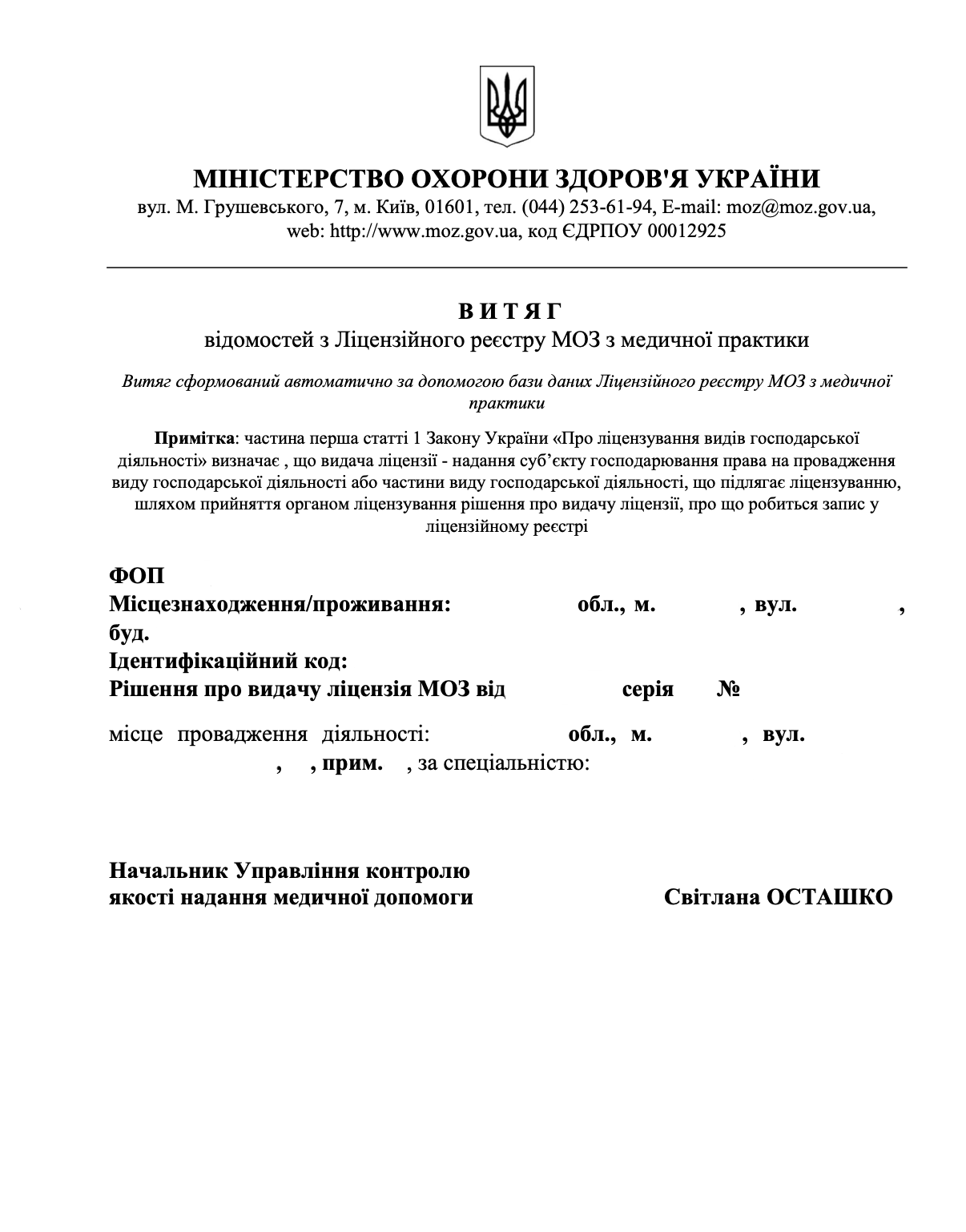
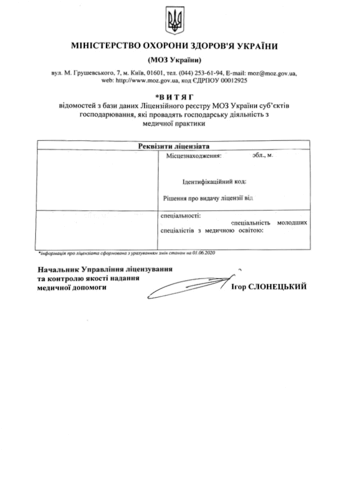
- Official registry extract. Once the changes have been successfully recorded, we provide you with an official extract from the Licensing Register. This serves as important documentary evidence of the updated licensing information for dealings with patients, banks, and tax authorities.
- Digital and paperwork updates. We assist with properly updating your information in the eHealth system, advise on the prompt reissuance of qualified electronic signatures for your staff, and prepare updated, legally compliant templates for patient agreements and consent forms under the new brand.
Do not let paperwork get in the way of relaunching your medical business. Contact us, and we will handle the necessary changes on time, without unnecessary stress or disruption to patient care.
Services on the topic of this material

Our publications on this matter


Our clients