

Exclusion from Military Registration by Age: Age Limits and After 60
Cost of services:
Reviews of our Clients
... our work on joint projects assured us of your high level of professionalism
Exclusion from military registration on age grounds means ending a person's registration as someone liable for military service when they reach the maximum age for remaining in the reserve pool. For most men, that age is 60; for general and flag officers, it is 65. The rule on automatic exclusion has been in effect since October 2, 2025.
According to the Ministry of Defense, since September 2026, the Unified State Register of Conscripts, Persons Liable for Military Service, and Reservists, known as “Oberih” (the Register), has automatically checked dates of birth and military ranks every day and excluded people from military registration on the day they reach the maximum age.
Below, we explain what to do if your status does not change that day, what exclusion means for you, and what to do if you were excluded on age grounds before 2014 but have now been registered again.
Maximum Age for Remaining in the Reserve Pool: Current Limits
The maximum age for remaining in the reserve pool is set by Article 28 of the Law of Ukraine “On Military Duty and Military Service”. The reserve pool is divided into two categories, and the upper age limit for the second category is the age at which a person is excluded from military registration. This is also known as the maximum age for military registration.
|
Personnel |
Maximum age for remaining in the reserve pool |
|---|---|
|
Enlisted personnel, sergeants, and senior noncommissioned officers |
60 years |
|
Junior officers (lieutenant through captain) |
60 years |
|
Senior officers (major through colonel) |
60 years |
|
General and flag officers (generals and admirals) |
65 years |
The law currently sets no separate limits for women: the former provision setting ages of 40 and 50 for women liable for military service was removed in 2018. These limits are current as of October 20, 2026.
Important! Do not confuse the maximum age for remaining in the reserve pool with the maximum age for military service (Article 22 of the same law). The latter applies to people serving in the military and is lower for contract service members, ranging from 45 to 60 depending on their personnel category. The law also refers to Article 22 for the military reserve, so reservists have their own age limits. If you are neither serving nor in the military reserve, only the limits in the table above (Article 28) apply to you.
How Exclusion Works Now: Automatically, Without an Application
The procedure for exclusion from military registration on age grounds changed on October 2, 2025: since then, no application has been required. Cabinet of Ministers Resolution No. 1203 of September 25, 2025 revised paragraph 35 of the Procedure for Organizing and Maintaining Military Registration, approved by Resolution No. 1487: a person is excluded in the Register on the day they reach the maximum age. In September 2026, the Ministry of Defense announced that the Oberih Register had begun doing this automatically.
If you are employed, your employer marks your entry in its individual military registration lists as “Excluded from military registration on age grounds” within seven days. We explain how employers should maintain these lists in our article on military registration at a company.
If you reached the maximum age earlier, before automatic exclusion was introduced, check your status in Reserve+. If it still says “Registered,” follow the same steps outlined below. Under Article 37 of the Law and paragraph 79 of Procedure No. 1487, the territorial recruitment and social support center (TCC) must exclude anyone who has reached the maximum age, regardless of when they reached it.
For everyone else, this means one simple thing: on your 60th birthday (65th for general and flag officers), the status in your electronic military registration document should change automatically. If it does not, take action instead of waiting.
What to Do If You Were Not Excluded Automatically
- Open Reserve+ the day after your birthday: the app should send you a notification about the status change. If your status still says “Registered,” log out, log back in, and refresh your document (the “+” button next to your name → “Refresh document”).
- If your status still has not changed, submit a written application to your TCC requesting exclusion from military registration on age grounds. The legal basis is point 4 of part six of Article 37 of the Law and paragraph 35 of Procedure No. 1487. You may send the application by mail with an inventory of enclosures: you do not have to attend in person, as paragraph 81 of the Procedure expressly states.
- In your application, also ask the TCC to check your date of birth and military rank in the Register and correct any error. Automatic exclusion works only if these details are correct: your rank determines whether your maximum age is 60 or 65.
- Attach copies of your passport and military registration document to the application.
- If the TCC does not respond or refuses, challenge its inaction in court (more on this below).
Procedure No. 1487 does not set a specific deadline for responding to this type of application. The general deadline under Article 20 of the Law “On Citizens' Appeals” applies: up to one month, or no more than 15 days if no additional review is needed.
Consider going to court if you have not received a response one month after the TCC received your application (the date appears on the postal delivery confirmation). If the TCC has notified you in writing that it is continuing its review, go to court after 45 days.
If your military ID says “Excluded” but Reserve+ says “Registered,” the problem is usually in the Register's data. You can also request corrections through Reserve+ itself (Services → Correct data online), but this does not replace an application to the TCC. We explain how to correct your data in a separate article, “Your Military ID Says ‘Excluded,’ but Reserve+ Says You Are Liable for Military Service: How to Correct Your Data.”
What Happens to Your Military ID
A person excluded on age grounds keeps their military registration document. The final paragraph of part six of Article 37 of the Law expressly states that only the exclusion details are entered in the document. Keep your paper military ID—you may need it as evidence if the Register malfunctions. In the electronic document, your registration status changes. You do not need to undergo a military medical commission examination to be excluded on age grounds: the sole basis is your date of birth.
Exclusion and Removal from Military Registration Are Different
What people commonly call “removal from military registration on age grounds” is legally exclusion. Removal from military registration means a change in where a person is registered or a temporary departure from registration: the person has moved and registered at their new place of residence, has been conscripted or accepted into military service, has begun serving a criminal sentence, or has joined the operational reserve. Their military obligations remain.
Exclusion means that a person ceases to be liable for military service altogether. The grounds are age, medical unfitness (determined by a military medical commission), termination of citizenship, or death. The Supreme Court also emphasized this distinction in its ruling of April 9, 2026, in case No. 280/6524/24. That is why it is important to write specifically “exclusion,” rather than “removal,” in your application and court claim.

What Exclusion Changes: Mobilization, Summonses, and Travel Abroad
A person excluded from military registration on age grounds moves into retirement (Article 32 of the Law). This has several consequences:
- They are no longer subject to mobilization: mobilization applies to people liable for military service, and they no longer have that status.
- They no longer have to report in response to summonses or update their military registration details.
- If you had a deferment or a reservation, you no longer need it after exclusion: according to the Ministry of Defense, they are canceled automatically in the Register.
- Travel abroad: during martial law, restrictions under the Rules for Crossing the State Border by Citizens of Ukraine (Cabinet of Ministers Resolution No. 57) apply to men under 60. After turning 60, you therefore do not need specific grounds to leave the country, and you should carry a paper or electronic military registration document at the border. If you are still under 60, an earlier exclusion on age grounds does not give you the right to leave: under the Supreme Court's position, you are back in the reserve pool.
Exclusion does not undo earlier events: being placed on a wanted list at the TCC's request and a fine imposed for violating military registration rules before you reached the maximum age do not disappear automatically.
Removal from the wanted list is a separate procedure: until the TCC withdraws its request to the police, the police may stop you and take you to the TCC. After exclusion, therefore, ask the TCC in writing to withdraw its request. We explain the process step by step in our article on removal from the TCC wanted list.
Exclusion alone does not cancel an existing fine order: you must comply with it or challenge it if the appeal deadline has not yet expired.
Excluded Before 2014: Being Registered for Military Service Again
Before the spring of 2014, the maximum age was considerably lower. Under the version of Article 28 in effect on January 1, 2014, people were excluded from military registration at the following ages:
|
Rank |
Maximum age before 2014 |
Who is affected now |
|---|---|---|
|
Enlisted personnel |
40 years |
Those born on or before March 31, 1974, who are still under 60 |
|
Sergeants and senior noncommissioned officers |
45 years |
Those born on or before March 31, 1969, who are still under 60 |
|
Warrant officers and naval warrant officers |
50 years |
No one: they are already over 60 |
|
Junior officers (lieutenant through captain) |
50 years |
No one: they are already over 60 |
|
Major, lieutenant colonel |
55 years |
No one: they are already over 60 |
|
Colonel |
60 years |
The same limit as today |
|
General and flag officers |
65 years |
The same limit as today |
The dates in the third column apply only to enlisted personnel, sergeants, and senior noncommissioned officers: they correspond to the day before Law No. 1169-VII of March 27, 2014 took effect (April 1, 2014), raising their maximum age to 50. Warrant officers and officers excluded on age grounds before 2014 are not registered again: they are already over 60. Later, Law No. 1604-VII of July 22, 2014 set the current age limit of 60.
Men excluded at ages 40–45 had no dealings with the TCC for many years. During mobilization, they began to be registered again and saw “Registered” in Reserve+. This affects those who have not yet turned 60: as of October 2026, mainly men born between late 1966 and March 1974 who previously held enlisted ranks.
What the Supreme Court Decided
The Administrative Court of Cassation within the Supreme Court sided with the TCC in its ruling of April 9, 2026, in case No. 280/6524/24. The claimant had been excluded from military registration on age grounds in 2011 and registered again in 2024.
The court concluded that the increase in the maximum age to 60 applies to everyone who had not yet reached the new age limit when the changes took effect, regardless of whether they had previously been excluded. These people are considered reinstated in the reserve pool and must be registered for military service.
The court rejected the argument that the law was being applied retroactively (Article 58 of the Constitution): the disputed registration took place in 2024, when the new limits were already in effect. A summary of the ruling is available on the Supreme Court's website.
Under part five of Article 242 of the Code of Administrative Procedure, courts must take the Supreme Court's conclusions into account. A candid assessment is therefore that a previous exclusion on age grounds alone, without other circumstances, now rarely offers a prospect of winning a case.
When Going to Court Still Makes Sense
Discuss a claim with a lawyer if, in addition to your earlier exclusion, you have another, independent ground:
- You have already turned 60 (65 for general and flag officers), but the TCC has not excluded you.
- You were registered with an incorrect rank or date of birth, causing the age limit to be calculated incorrectly.
- You were previously excluded not only on age grounds but also for medical unfitness, and that ground remains valid.
- The TCC registered you without any decision, and your request for the grounds has gone unanswered.
How to Challenge Registration: From an Application to Court
The steps in this type of dispute progress from the least confrontational approach to court proceedings:
|
Step |
What to do |
Purpose |
|---|---|---|
|
1 |
Gather your documents: military ID with the entry, passport, and an extract from Reserve+ |
Establish your rank, exclusion date, and current status |
|
2 |
Submit a request to the TCC, either through a lawyer or in your own name, asking for the grounds for your registration |
Obtain the decision or order to be challenged |
|
3 |
Apply for exclusion from military registration or correction of your data |
Give the TCC an opportunity to correct the error without court proceedings. A refusal or failure to respond will provide grounds for a claim |
|
4 |
File a claim against the TCC in the district administrative court seeking exclusion from military registration |
Have the TCC's actions or inaction declared unlawful and obtain an order requiring exclusion |
|
5 |
Appeal the first-instance judgment and, if necessary, pursue a cassation appeal |
Obtain a different judgment |
|
6 |
Check that the judgment has been implemented |
Ensure that the TCC actually updates the Register |
The deadline for filing a claim is six months from the day the person learned or should have learned that their rights had been violated (part two of Article 122 of the Code of Administrative Procedure). The court determines when the person learned of the violation, so keep a Reserve+ screenshot showing the date of the status change and the envelope or letter containing the TCC's response.
Filing a claim does not suspend the TCC's actions: while proceedings are underway, the person remains registered and retains all related obligations, including responding to summonses. To protect them during this period, an application can be made to the court for interim relief (Articles 150 and 151 of the Code of Administrative Procedure), but such requests are not always granted.
A court judgment requires the TCC to take a specific action, most often to exclude the person from military registration and record this in the Register. It does not automatically cancel earlier fines, orders, or wanted-list entries. These should therefore be addressed through separate requests for relief in the claim or challenged separately. We explain how to deal with a wanted-list entry in our article on removal from the TCC wanted list.
You can file a claim by mail or through the Electronic Court system. To use Electronic Court, you need a qualified electronic signature (QES); Diia.Signature is one example.
In 2026, the court fee for an administrative court claim seeking one form of relief is UAH 1,331.20. If you file through Electronic Court, it is UAH 1,064.96. Certain categories of people are exempt from the fee; they are listed in Article 5 of the Law “On Court Fees”.
When to Contact a Lawyer
If your status has not changed after you reached the maximum age, the TCC has not responded to your application, or you were excluded before 2014 but have now been registered again, have your documents reviewed before going to court. Following the Supreme Court's ruling, these cases are harder to win, and it is important to determine whether you have an independent ground for a claim.
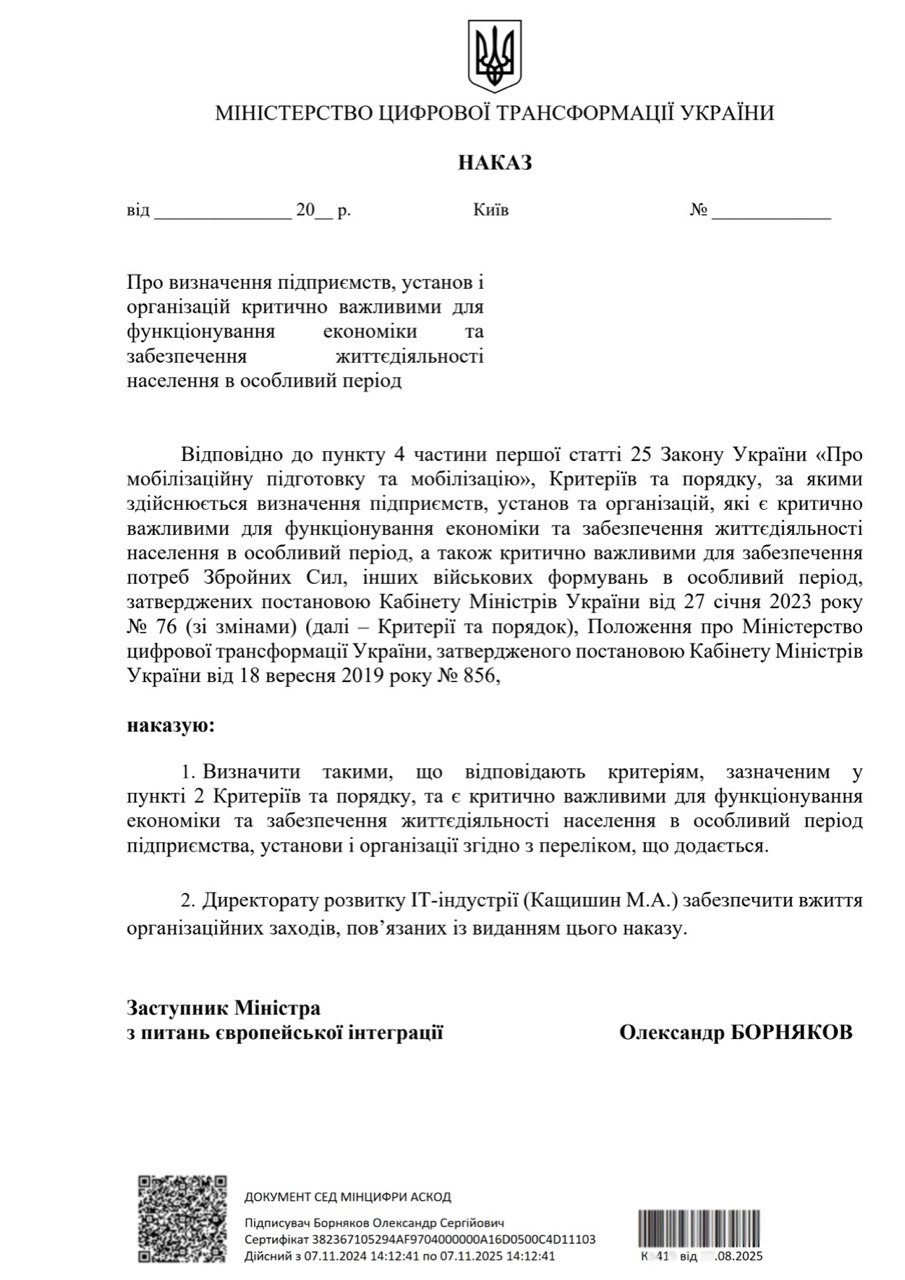
If you have no such ground, you remain liable for military service. Another lawful way to protect yourself is to secure a reservation through your employer if the company has critically important enterprise status. Your employer can entrust this work to our lawyer specializing in employee reservations, who will determine whether the company meets the reservation requirements, whether you are eligible, and prepare the documents for submission. You can find the scope of this assistance on our page about reservation of employees liable for military service.
Are you under 60, registered again by the TCC, and employed by a critically important enterprise? Ask your employer to complete the form on our website or call us. We will check whether reservation is possible and explain where to start.
Answers to frequently asked questions
At what age are people excluded from military registration?
Usually at 60; for generals and admirals, at 65. The limits are set by Article 28 of the Law “On Military Duty and Military Service.”
Do I need to visit the TCC to be excluded?
No. The Oberih Register automatically excludes people from military registration on the day they reach the maximum age. The rule has been in effect since October 2, 2025, and the Ministry of Defense introduced daily automatic checks in September 2026. An application is needed only if automatic exclusion has failed, and you can submit it by mail. The TCC makes the exclusion entry in your paper military ID, so if you need that entry, you will have to take the ID there yourself. This is not required for exclusion itself: your exclusion status appears in the electronic military registration document in Reserve+ or Diia (in Reserve+, it is called “Excluded from registration”), and you can present that document during a check.
I am already 60, but Reserve+ still shows that I am liable for military service. What should I do?
First, refresh your document in Reserve+. If your status has not changed, submit a written application to the TCC requesting exclusion on age grounds, with copies of your passport and military ID. If there is no response within one month of the TCC receiving the application, or if you receive a refusal, the TCC's inaction can be challenged in administrative court.
I was excluded on age grounds in 2010 but have now been registered again. Is this lawful?
Under the Supreme Court's ruling of April 9, 2026, in case No. 280/6524/24, yes, if you are still under 60: the court considers these people reinstated in the reserve pool. There is a prospect of success in court if another ground exists, such as incorrect data, medical unfitness, or having already reached the maximum age.
Can I travel abroad after exclusion on age grounds?
Yes, if you are already 60: wartime travel restrictions apply to men under 60. Take your paper or electronic military registration document with you. If you were excluded on age grounds before 2014 and are still under 60, you cannot leave without a separate qualifying ground: you are back in the reserve pool.
Services on the topic of this material
Our publications on this matter


Our clients


We are ready to help you!
Contact us by mail [email protected] or by filling out the form:
Other publications by the author

How to divorce a foreigner in Ukraine: when a joint application to the registry office is enough, when a court is needed, which court hears the case, what to do if the foreign spouse lives abroad, objects or cannot be found, and which documents to prepare.

Banks, neobanks or payment institutions, documents and proof of funds, video identification, Ukrainian rules on transfers and tax, and why banks refuse.

Employers in Ukraine can extend an employee's reservation while it is still valid or file a new reservation once it has expired or been cancelled: which Diia service to use, how to apply, review times and what happens to the employee in between.

A guide for a foreign spouse of a Ukrainian citizen: where to start, when the D-14 visa is required, which documents to file and why permits get refused.
Our other authors