

How to Obtain a Veterinary Practice License in 2025: Requirements, Documents, Deadlines
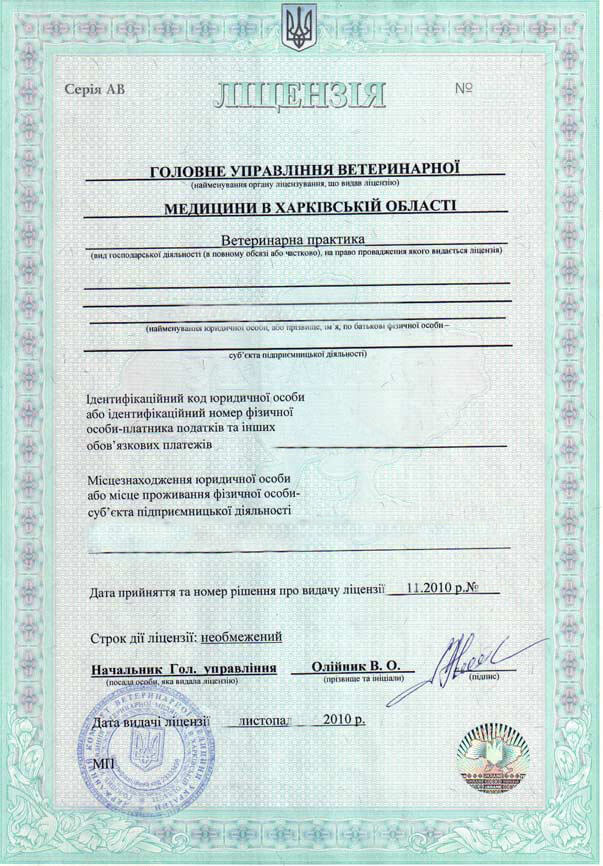
Reviews of our Clients
... our work on joint projects assured us of your high level of professionalism
Would you entrust your pet’s treatment to professionals without a license? For an owner, a pet is part of the family, so they want qualified professionals who take responsibility for its care. A veterinary practice license confirms that professionals have the required education, the facility operates under established requirements and is subject to inspections, and violations carry legal liability. You cannot legally treat animal patients without a license.
If you are opening a veterinary clinic, outpatient facility, or station, or practicing as a veterinarian registered as a sole proprietor, this article is for you. We explain how to obtain a veterinary practice license: the requirements for premises and staff, the documents to submit, how to avoid unnecessary licensing delays, and when you can begin seeing your first patients. If you would rather not handle the veterinary licensing process yourself, we can help you obtain a veterinary practice license.
Key points at a glance:
- the license is obtained by a legal entity or a sole proprietor who is a veterinary medicine specialist;
- applications are submitted to the State Service of Ukraine on Food Safety and Consumer Protection (SSUFSCP), either on paper or electronically through the Diia portal;
- the licensing authority has 10 business days to make its decision;
- the government fee equals one subsistence minimum for able-bodied persons and is paid only after a decision to issue the license;
- the license has no expiration date.
Related reading: How to Complete the Documents for a Veterinary Practice License Correctly
Veterinary Practice Licensing Today: Declaration or License?
For a period during martial law, veterinary practice could be started without a license by filing a declaration under Resolution No. 314 of the Cabinet of Ministers of Ukraine dated March 18, 2022. That option has been unavailable since January 31, 2026: according to the SSUFSCP, everyone providing veterinary services must obtain a license.
Two legal instruments govern licensing. The Law of Ukraine “On Licensing of Types of Economic Activity” No. 222-VIII dated March 2, 2015 identifies veterinary practice as an activity requiring a license and establishes the licensing procedure. The Licensing Conditions for Conducting Business Activities in Veterinary Practice, approved by Resolution No. 896 of the Cabinet of Ministers of Ukraine dated November 4, 2015 (the “Licensing Conditions”), set out requirements for premises, equipment, and staff, as well as the list of required documents.
Who Needs a Veterinary Practice License, and Why?
A license to conduct veterinary practice is mandatory for any business providing veterinary services in Ukraine. It is also commonly called a veterinary services license. The Law of Ukraine “On Veterinary Medicine and Animal Welfare” defines veterinary practice as a business activity involving services related to the prevention, diagnosis, and treatment of animal diseases and veterinary consultations.
This covers any medical care for animals, including consultations, therapy, diagnostics, surgery, dentistry, vaccinations, and other specialized services. It also covers grooming when the animal receives procedures to prevent or treat disease in addition to coat care. Grooming alone does not require a veterinary practice license.
This requirement applies to:
- private veterinarians planning to operate independently as sole proprietors;
- legal entities opening veterinary clinics, outpatient facilities, or stations, regardless of the size of the facility or its form of ownership.
A veterinarian working under an employment contract at a facility that already holds a license does not need a separate license. The license belongs to the operating legal entity or sole proprietor, not to each employee. By contrast, a veterinarian treating animals in their own name must obtain their own license. If a company wants to treat its own animals at an on-site veterinary station, read our separate article about a veterinary station at a business.
Why does this matter? Providing services without a license is unlawful and may result in:
- a fine of 1,000 to 2,000 tax-exempt minimum individual incomes, equivalent to UAH 17,000–34,000 (Part 1 of Article 164 of the Code of Ukraine on Administrative Offenses). If the violation is repeated within a year or generates income on a large scale (UAH 17,000 or more, as defined in the note to Article 164 of the Code), the fine is UAH 34,000–85,000;
- confiscation of production equipment, raw materials, and money obtained as a result of the violation: confiscation may be imposed in the first case and is mandatory in the second;
- suspension of operations until a license is obtained;
- loss of confidence among potential clients.
Read more about the consequences of operating without a license in our article “Can You Provide Veterinary Services Without a License?”
Obtaining a veterinary practice license makes your work lawful and protects both your business and your reputation.
Veterinary Licensing Conditions: Requirements for Facilities and Staff
To obtain a veterinary practice license, your facility and staff must meet the requirements established by the Licensing Conditions.
Type of Facility: Clinic, Outpatient Facility, or Station
The requirements that apply depend on the type of facility, so determine this first. The Licensing Conditions recognize three types: veterinary clinics, veterinary outpatient facilities, and veterinary stations.
- A veterinary clinic provides outpatient or inpatient care, so animals can stay at the facility for treatment.
- A veterinary outpatient facility provides outpatient care only.
- A specialist working from a veterinary station provides treatment and preventive care through visits to farms.
The Licensing Conditions do not recognize a separate facility type called a “veterinary office.” What is informally called a veterinary office must be classified as either an outpatient facility or a veterinary station for licensing purposes.
Education and Continuing Professional Development
People who directly provide veterinary services must have a qualification at the junior specialist, bachelor’s, or master’s level in Veterinary Medicine. A sole proprietor must personally be a veterinary medicine specialist, while a legal entity must have such specialists on its staff.
Specialists must complete continuing professional development at least once every five years. This is evidenced by a certificate of professional development issued by an appropriate educational institution. We discuss staffing requirements for veterinary facilities in a separate article.
Premises
A veterinary clinic must be located in a separate building that is not part of the residential housing stock. The Licensing Conditions also allow outpatient facilities and veterinary stations to occupy isolated built-in or attached premises on the first floor of a building, provided they have a separate, independent exit.
The premises may be owned, leased, or occupied under another lawful right of use; the Licensing Conditions permit all three arrangements. The right to use the premises must be documented and valid on the application date.
The required rooms depend on the type of facility and are specified in paragraphs 19 and 20 of the Licensing Conditions.
- A veterinary station needs a specialist’s workstation and areas for storing medications and instruments, sterilization, and housekeeping supplies.
- A veterinary outpatient facility needs a consultation room, medication and instrument storage, a sterilization room, a reception area, a holding pen, and a treatment room (operating room).
- A veterinary clinic must also provide accommodation for sick animals and/or an isolation unit.
The Licensing Conditions do not prescribe a separate equipment list for each room. Instead, they require the facilities, equipment, and other resources necessary for your services. Equipment, instruments, and measuring devices must be kept in good working order, and measuring devices must also undergo periodic verification.
An expert accessibility assessment for people with reduced mobility is not listed among the documents required for a license, but obtaining one can still be worthwhile: legislation is evolving toward European standards. If you are renovating or remodeling the premises now, plan an accessible entrance from the outset; changes later will cost more.
For more about floor space, premises, and staff, see our articles “Floor Space Requirements for Veterinary Facilities” and “Staffing and Premises Requirements.”
Related reading: Accessibility Assessment for People with Reduced Mobility: Why Is a Report Important?

Documents Required to Obtain a License
Paragraph 7 of the Licensing Conditions establishes an exhaustive list of documents for a license application. The licensing authority may not require any other documents. The list includes:
- an application for a license to conduct business activities in veterinary practice;
- information from the applicant confirming the availability of facilities, equipment, and other resources necessary to conduct veterinary practice;
- information from the applicant on the availability of specialists with the education and qualifications required to conduct veterinary practice;
- certified copies of documents confirming the specialists’ education and qualifications, including diplomas and professional development certificates;
- an inventory of the documents submitted with the license application, in two copies.
The Licensing Conditions do not expressly require notarization. Applicants may certify copies themselves by writing “True to the original,” adding their signature, first and last name, and the date. A notarized copy is also acceptable and removes the risk of unnecessary questions from the licensing authority.
Only a sole proprietor who has declined a taxpayer registration number for religious reasons must provide a copy of their passport. The application, both information forms, and the document inventory must use the templates in the annexes to the Licensing Conditions.
Important: the Conditions are amended from time to time, so before applying, check the list against the current version of Cabinet of Ministers Resolution No. 896 dated November 4, 2015.
How to Obtain a Veterinary Practice License: Filing Procedure and Processing Time
The procedure is the same for a clinic, an outpatient facility, and a veterinary station. The first three steps are your responsibility and take the most time.
- Determine the type of facility and bring the premises, equipment, and staff into compliance with the Licensing Conditions. Your documents must describe the actual situation on the submission date, not future plans.
- Complete the application and the information forms on facilities and equipment and on specialists, and prepare certified copies of the specialists’ education and qualification documents.
- Submit the documents to the SSUFSCP in person, by mail with an inventory of enclosures, or electronically. The SSUFSCP resumed electronic submission of applications through the Diia portal on August 20, 2026.
- Within three business days, the authority checks whether there are grounds to leave the application unprocessed pending correction, for example, an incomplete package or a document that does not follow the required form.
- Once a complete and properly prepared application package has been submitted, the licensing authority has 10 business days from receipt of the application to decide whether to issue or refuse the license. Preparing the documents and premises, however, will likely take considerably longer.
- The decision to issue the license is published on the SSUFSCP website, and a record of it is entered in the licensing register on the next business day after the decision. The decision takes effect on that day, and you may begin treating patients.
- Pay the license issuance fee, as explained in the next section.
Before issuing a license, the authority examines the submitted documents and information in state registers. This is no reason to embellish the facts: discrepancies between the application and the facility’s actual condition are grounds for refusal, and a new application after such a refusal may be submitted no earlier than three months later.
License Fee and Validity
A one-time license issuance fee equals one subsistence minimum for able-bodied persons in effect on the date of the licensing decision. As of January 1, 2026, that amount is UAH 3,328. You do not need to pay in advance: the law prohibits demanding payment before the decision to issue the license. Payment must be made no later than 10 business days after the decision is entered in the licensing register. The payment details are stated in the decision itself.
A veterinary practice license is issued for an unlimited term and does not need renewal. It remains valid as long as you comply with the Licensing Conditions and notify the authority of changes within one month after they occur.
Potential Pitfalls and How to Avoid Them
The licensing process has pitfalls that can cause significant delays. The most common are an incomplete document package, documents that fail to meet prescribed requirements, or mistakes in the application or information forms. A facility may also fail to meet the requirements, or its staff may lack the necessary qualifications or proof of them. The result may be a refusal or an application left unprocessed pending correction.
The difference between these outcomes matters. An application is left unprocessed pending correction when the problem lies in the documents themselves: some are missing or incorrectly prepared. After correcting the deficiencies, the applicant resubmits the application with only the documents that caused it to be held. A license is refused when the facility fails to meet the Licensing Conditions or the submitted information is found to be inaccurate.
To avoid these problems, review the package before submitting it: confirm that all documents are included, they contain no mistakes, and the facility meets the Licensing Conditions.
Another potential problem arises after the licensing decision: payment. If you miss the payment deadline, the licensing authority suspends the license. The suspension decision takes effect after 10 business days, and the suspension continues until payment is made, but for no longer than two months.
You cannot operate while the license is suspended. The law imposes the same liability as for operating without a license. If the problem is not resolved within that period, the license is terminated. We explain how to close a practice properly in our article on cancellation of a veterinary license.
How We Help in Common Situations
- Incorrect information in an application. An incorrect address for a veterinary outpatient facility can delay licensing and postpone its opening. In this situation, we compare the stated details with the premises documents, correct the mistake, and check the rest of the package. This helps resolve discrepancies before submission.
- Application left unprocessed pending correction. If a business owner omits required fields from an information form, the application may be left unprocessed pending correction. This can jeopardize the planned opening date. We review the authority’s comments, complete the missing information, and support resubmission. Correcting the deficiencies allows the licensing application to return to consideration.
- License refusal. Premises, equipment, or staff qualifications that fail to meet the Licensing Conditions may result in refusal and delay the opening. We examine the grounds for refusal and determine which deficiencies must be corrected and which objections may be challenged. After verified violations have been remedied, we prepare a new application and support its review. Article 13 of the Licensing Law provides for reapplication after such deficiencies are corrected.
- Suspension for nonpayment. Missing the license issuance fee deadline may result in suspension and an involuntary break in operations. We check the decision, payment details, and payment confirmation and help resolve the nonpayment. Once payment is made, we file an application to reinstate the license with proof of payment. Operations may resume only when the relevant decision of the licensing authority takes effect: payment alone is not enough (Article 16 of the Licensing Law).
What It Looks Like in Real Cases: Examples from Our Practice
The authority asked for a new lease agreement. An entrepreneur contacted us while opening a veterinary outpatient facility for his wife, a veterinarian. We prepared the application, staff information, and details of the facilities and equipment, and submitted the package to the SSUFSCP.
During the review, licensing officials called the clients and recommended signing a new lease because the original agreement predated the entrepreneur’s registration as a sole proprietor. They also asked for changes to certain wording in the information forms. The Licensing Conditions do not require this: the premises must be owned, leased, or otherwise lawfully occupied, regardless of the date of the agreement.
We clarified the authority’s objections and decided not to spend time disputing them. We rewrote the information form as requested, the client signed a new lease, and we submitted corrected documents. The license issuance decision was made five business days later.
“Wrong form” on the current templates. A veterinarian contacted us; she wanted to start work on a new project as quickly as possible. We prepared and submitted the application package, but it was not included in the next order granting licenses: the licensing authority called the client and said the document was in the “wrong form.”
We contacted the authority and established that the templates had not changed. The authority wanted a standard administrative notation removed from the forms, even though it had never previously been removed, and asked that information be entered only on the designated lines. Other clients of ours received the same comments during those weeks.
We chose not to argue, so as not to delay the license. That same week, we prepared revised forms and delivered them personally to the SSUFSCP. The decision to issue the license followed four business days later. We then provided the authority with confirmation that the license issuance fee had been paid.
A professional development certificate was missing. A veterinarian sought a license for his outpatient facility. During our document review, we noticed that he had a diploma but no certificate of continuing professional development.
We advised him to obtain the missing certificate rather than submit an incomplete package. While he arranged it, we prepared the other documents. Once the certificate was available, we filed the application with the SSUFSCP, and the license was issued within a week. The client paid the issuance fee, and we sent the receipt to the authority.
Obtaining a Veterinary Practice License with Legal Support
Most of the pitfalls described above can be identified before filing: information that conflicts with the premises documents, the wrong facility classification, or a specialist without a professional development certificate. That is why we do most of our work before submission, checking the documents and preparing the package. If the authority raises questions during its review, we clarify what it requires and address the comments without losing time.
Since 2006, Pravova Dopomoga has helped businesses start operating legally, grow, and avoid unnecessary bureaucratic complications. Assistance with veterinary licensing is one of our areas of specialization.
We understand the Licensing Conditions, the mistakes applicants commonly make, and how the licensing authority reviews documents in practice. We therefore prepare packages to get through the procedure without unnecessary delays, and if questions arise during the review, we promptly clarify and address them.
We handle the entire process, from reviewing documents and advising on premises requirements to filing the application and communicating with the licensing authority. You will not need to navigate the rules and risks on your own, leaving you more time to care for animals.
Our fee covers document review, preparation of the application and information forms, submission, and support through the licensing decision. It depends on the scope of assistance, the number of practice locations, and whether additional advice is needed to prepare the premises. The duration of our support depends on document readiness, how quickly the documents are provided, and when the licensing authority issues its next order. In our cases, the time from the initial inquiry to the licensing decision has ranged from two or three weeks to two months.
To prepare the documents, we need the information used in the application and the two required forms:
- applicant details: whether it is a legal entity or a sole proprietor, and the addresses of all locations where animals will be treated;
- the services you plan to provide, including whether animals will stay for inpatient treatment;
- proof of your right to occupy the premises, whether through ownership, a lease, or another form of lawful use, and a floor plan to determine the facility type;
- a list of equipment and instruments;
- specialists’ diplomas (including the sole proprietor’s own diploma, where applicable) and professional development certificates.
Submit an inquiry today for legal advice or our turnkey veterinary licensing service. Fill out the form on this page or call us.
Answers to frequently asked questions
Can I obtain a license for empty premises, or must the equipment already be in place?
No, empty premises are not sufficient. In the information form covering facilities and equipment, you must describe what is actually available on the date of submission. If the information does not match the actual conditions, the license will be refused, and you will not be able to reapply for at least three months.
What equipment is mandatory for a veterinary clinic?
The Licensing Conditions do not prescribe one universal list of devices. They require the facilities and equipment necessary for the services you provide, equipment and instruments kept in good working order, and periodic verification of measuring devices. A clinic may have an X-ray room or an ultrasound examination room, but the Licensing Conditions do not require either. The equipment needed depends on the type of facility and the services offered.
Are there experience requirements for veterinarians?
The Licensing Conditions do not impose any minimum work-experience requirement. A qualification in Veterinary Medicine and continuing professional development at least once every five years are required.
How long is a veterinary practice license valid?
The license has no expiration date and does not need renewal. However, changes to the information submitted when obtaining it must be reported to the licensing authority within one month.
Do I need a veterinary practice license to sell veterinary medications?
A veterinary practice license is not sufficient for this purpose; it covers only services provided to animals. The law requires a separate license for retail sales of veterinary medicines. Until March 1, 2028, however, the government is temporarily not checking whether sellers hold that license.
Services on the topic of this material

Our publications on this matter


Our clients
We are ready to help you!
Contact us by mail [email protected] or by filling out the form:Other publications by the author

We explain when and how to properly make changes to a veterinary practice license in accordance with Ukrainian law.

Detailed information on mandatory medical licensing, setting up a medical office, and registering a healthcare worker in a school or kindergarten.

Learn about the risks and financial losses that arise from delaying inheritance registration and how to protect your property.

SOPs are the foundation of safe and licensed medical operations. How to create and implement them — in our article.
Our other authors