

Bought a Licensed Electricity Company in Ukraine: What to Do Next
Reviews of our Clients
... our work on joint projects assured us of your high level of professionalism
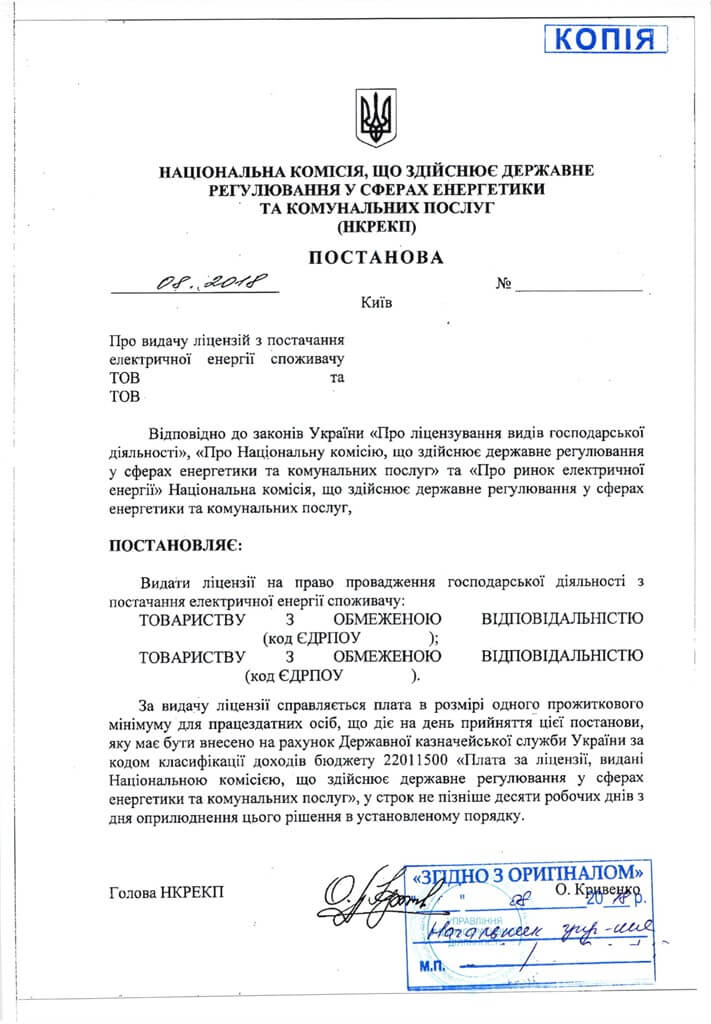
Buying an existing limited liability company (LLC) with a valid electricity supply license allows you to avoid going through licensing from scratch and significantly shorten the path to market entry. You acquire a company that is essentially ready to operate, without having to navigate registration, preparation of incorporation documents, or even obtaining a license.
But a license is only the foundation. Before your company can actually begin operating after the acquisition, you need to update the necessary information, define how it will operate in the market, enter into the required agreements, and establish operational and regulatory processes.
At a minimum, the company needs to be brought into line with its new corporate structure and the new owner’s business model. At the most, you need to complete every step required for it to become a market participant and achieve the goals you set.
We register companies like these for sale. In other words, we handle the entire registration process on the client’s behalf to deliver an established company whose corporate and regulatory history we know. Naturally, we also understand what needs to happen next—from a change of ownership to being fully ready to serve clients.
If you are still deciding between obtaining a license from scratch and buying an existing company, we compared these options in our article “Buying a Company with an Electricity Supply License or Registering a New One.”
This article gives you a precise checklist of what to review and do after buying a company with an electricity supply license before considering your market entry complete.
What Changes Must Be Reported to NEURC After a Company Is Sold?
After a change of ownership, you need to check which details about the licensee have changed and need to be updated.
This primarily concerns:
- the members (participants) and the size of their shares;
- ultimate beneficial owners;
- the director and other individuals whose information was submitted to the Regulator;
- the company’s name and registered address, if they have changed;
- other information included in the documents submitted to obtain the license.
The Licensing Conditions require the National Energy and Utilities Regulatory Commission (NEURC) to be notified of relevant changes within the prescribed deadlines. After the transaction, it is therefore important to go beyond recording the new owner in the Unified State Register and review all the information held by the Regulator.
If the company is registered as a wholesale energy market participant, its REMIT registration must be reviewed separately to ensure it is up to date. This is a separate regulatory framework with its own rules and deadlines for updating information.
Is a License Alone Enough to Start Supplying Electricity?
No. An electricity supply license authorizes the company to supply electricity to consumers, but it does not automatically mean the company is ready to operate.
Before operations actually begin, you need to check or arrange the following:
- up-to-date corporate and licensing information;
- the company’s status as a market participant;
- an EIC code;
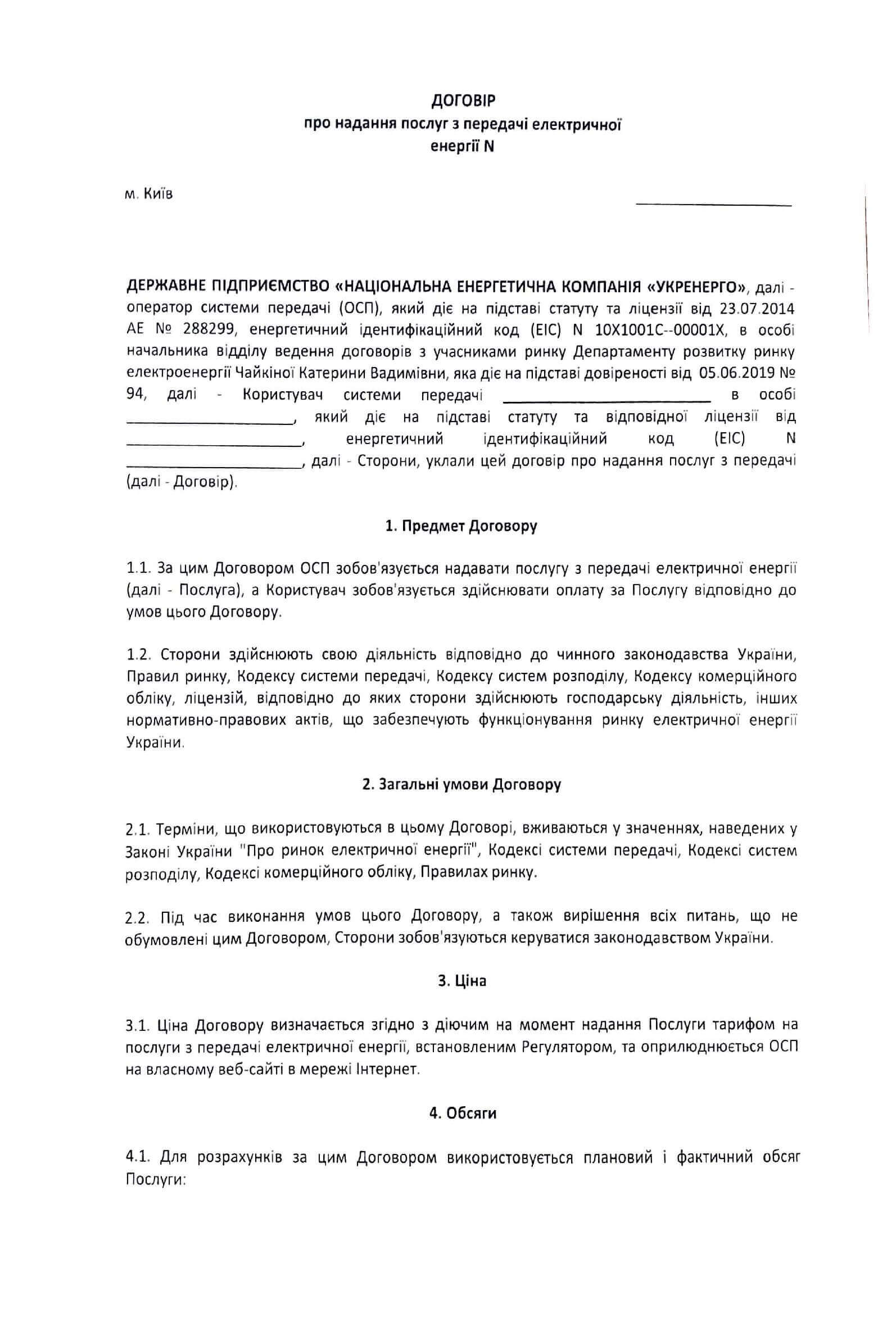
- the necessary market agreements;
- an electricity procurement model;
- balance responsibility and imbalance settlement;
- coordination with NPC Ukrenergo and distribution system operators;
- compliance with current requirements for a current account with a special use regime;
- documents for working with consumers;
- a settlement and reporting system.
You can use this proven checklist to prepare your company or, if you do not intend to navigate these complex details yourself, entrust the entire process to our lawyers.
You can find the cost of completing market entry and preparing the company to operate here or ask our customer service team.
What Registrations and Agreements Are Required to Enter the Electricity Market?
The specific registrations and agreements required depend on how the new owner plans to operate.
You need to determine:
- where the company will purchase electricity;
- who will assume balance responsibility;
- how imbalances will be settled;
- which market segments the company will participate in;
- how coordination with system operators and data exchange will work.
You can then establish which existing agreements and registrations the company can continue to use and what needs to be arranged for its new operating model.
REMIT requires a separate review. If the company will trade in wholesale energy products, you need to check its registration as a wholesale energy market participant and its ECRB code.
Keep in mind that the EIC code and ECRB code are different identifiers associated with different market and regulatory procedures.
Related reading: Battery Energy Storage Systems (BESS) in Ukraine: Licensing, an Agreement with Ukrenergo, and Electricity Market Entry

What Needs to Be Done with the Supplier’s Website, Documents, and Commercial Offers?
A licensed company should already have its own website, since information about it is submitted when applying for the license.
After a change of ownership, there is therefore no need to create the website from scratch. You need to check that it works and update its information.
In particular, it should provide:
- company details;
- license information;
- contact details;
- communication channels for consumers;
- procedures for handling inquiries, complaints, and claims;
- other information the electricity supplier is required to publish.
The new owner also defines their own commercial model: which clients the company will serve, how prices will be set, payment procedures, and other supply terms.
Agreements, commercial offers, and other documents for working with consumers are prepared in line with this model.
The buyer is therefore under no obligation to continue someone else’s electricity sales model. They build their own using an already licensed company.
Read more about website requirements here: Electricity Supplier Website Requirements
How to Arrange Operations with the Market Operator and NPC Ukrenergo
After acquiring the company, you need to understand its current status in relation to key market participants.
For NPC Ukrenergo, review:
- the company’s registration as a market participant;
- its EIC code and whether its information is up to date;
- its market roles;
- its current agreements;
- its balancing arrangements;
- access permissions and authorized individuals.
The need to work with JSC Market Operator is assessed separately.
If the business model involves direct participation in the day-ahead market or intraday market, the company needs the relevant agreements and access permissions. If electricity procurement is arranged differently, the way the company interacts with these entities will also differ.
The key question here is therefore not “What does an electricity supplier generally need?” but “What does this particular company need to support the new owner’s operating model?”
Related reading: Entering the Balancing Market: Legal Aspects of Creating a Balancing Group
What Reporting Obligations and NEURC Requirements Apply Once Operations Begin?
An electricity supplier needs to start tracking its reporting obligations immediately after the company is acquired, rather than waiting for its first client.
Some reporting obligations arise simply from the company’s status as a licensee or market participant. The relevant reporting forms must be filed even if the company has not actually conducted any business, in which case zero figures are reported.
The new owner therefore needs to establish immediately which reports apply to the company, when they must be filed, and who is responsible for them.
The main forms can be grouped by reporting frequency.
Monthly, the company files form No. 3-NEURC-Monitoring-Supply, a report on electricity purchase and sales volumes.
Quarterly filings include:
- No. 1-NEURC-Income, a report on net revenue;
- No. 2-NEURC-Monitoring-Supply, a report on consumer characteristics;
- No. 9-NEURC-Monitoring-Supply, a report on payments for electricity consumed;
- No. 12-NEURC-Monitoring-Supply, a report on retail market prices;
- No. 14-NEURC-Supply-Quality, a report on commercial quality indicators, if applicable to the company’s activities;
- No. 20-NEURC, a report on payment of the regulatory fee;
- quarterly financial statements.
Annually, electricity suppliers file, among other documents:
- No. 1-NEURC-Monitoring-Supply, a report on the supplier’s general characteristics;
- No. 4-NEURC-Monitoring-Supply, a report on contractual relationships;
- No. 10-NEURC-Monitoring-Supply, a report on payment methods and billing;
- No. 11-NEURC-Monitoring-Supply, a report on consumer inquiries and complaints;
- annual financial statements.
Separate forms also cover quality of electricity supply and consumer compensation. Depending on the company’s actual activities, it may need to submit the relevant information on compliance with quality standards and registers of compensation paid.
If the company trades in wholesale energy products, it also has a separate set of REMIT reporting obligations for the relevant transactions and orders.
In practice, it is enough for the new owner to take three steps right away:
- create a reporting calendar;
- designate responsible individuals;
- determine which systems and documents will provide the data for each form.
The technical procedures for submitting reports should be checked against current NEURC requirements, as electronic submission channels and systems are gradually changing.
Regulatory reporting is part of an electricity supplier’s ongoing operations. It is best to set it up at the outset, before the company has clients, sales volumes, and overdue filings.
Read more about electricity market reporting here.
When Is an Acquired Company Actually Ready to Supply Electricity to Clients?
The test is straightforward: the company must be able to enter into an agreement with a client, purchase the required volume of electricity, arrange its supply, handle settlements, and fulfill the associated regulatory obligations.
To achieve this after a change of ownership, the company must have:
- updated the necessary corporate and regulatory information;
- defined its procurement and balancing model;
- established the necessary market relationships;
- prepared documents for working with consumers;
- updated its website;
- set up settlement, accounting, and reporting processes.
The new owner must also define their own commercial terms: whom they will sell electricity to, how they will set prices, and the terms on which they will work with clients.
Only then can the business be described as more than an LLC with a license: it is a company ready to begin actual operations.
Buying a Company with a License Is Only the First Step
An existing LLC with a valid license can significantly shorten the path to market entry. After acquisition, however, the company needs to be adapted to the new owner’s business model.
For companies that we sell, the buyer immediately receives information about the company’s corporate and regulatory history and current status, along with an understanding of the next steps.
If needed, we guide the entire process, from formalizing the change of ownership and updating information to completing the necessary registrations and preparing agreements and documents to begin operations.
As a result, the client receives more than an LLC with a license: they gain a clear path from acquiring the company to serving their first actual client.
If you want a company that is ready to operate in the electricity market, contact us!
Services on the topic of this material
Our publications on this matter


Our clients

We are ready to help you!
Contact us by mail [email protected] or by filling out the form:
Other publications by the author

The owner and director do not need to return to Ukraine to liquidate an LLC. The process can be handled through a representative and liquidator if the power of attorney and foreign documents are prepared correctly.

A full teaching staff, library, and some facilities do not always need to be in place when the application is filed. The key is knowing what must be ready from the start and what can be completed later through written commitments.

Selling ownership rights can provide a faster exit, while liquidation ends the company itself. Debts, assets, contracts, and potential liabilities can make the difference between these options critical.

Importing ozone-depleting substances, fluorinated gases, or equipment containing refrigerants requires more than a standard license application. We explain how to get registered and prevent shipment delays at customs.
Our other authors