
Renunciation and Loss of Ukrainian Citizenship: Cases and Status Termination Strategies
Cost of services:
Reviews of our Clients
... our work on joint projects assured us of your high level of professionalism
Termination of Ukrainian citizenship has become a strategic issue for thousands of Ukrainians who have built new lives abroad because of the war. It is a necessary legal step toward obtaining citizenship of another country, formalizing their status, doing business, or optimizing their tax burden.
For over 15 years, the lawyers at Pravova Dopomoga have specialized in procedures for renunciation and loss of Ukrainian citizenship, providing immigration law support throughout these processes. We understand that every case has its own story and requires a strategy: which option is more beneficial in the specific circumstances—voluntary renunciation or the loss procedure?
In this article, we examine two of our Clients’ cases. The first involves the standard citizenship renunciation procedure. The second illustrates a strategy based on loss of citizenship as a more appropriate alternative. Both stories demonstrate that the outcome depends on choosing the right legal approach, rather than following a standard procedure.
Interesting: Giving Up Ukrainian Citizenship During the War: Is It Possible?
How to Renounce Ukrainian Citizenship: The Route for Those With Formalized Permanent Residence Abroad
Before turning to the first case, it is important to understand the basics. Renunciation of Ukrainian citizenship (Article 18) is governed by the Law of Ukraine “On Citizenship of Ukraine” and allows a person to voluntarily renounce citizenship if certain conditions are met, namely:
- formalized permanent residence abroad (PMP) or registered remaining in a foreign country for permanent residence;
- citizenship of another country or an official guarantee of acquiring it;
- no criminal proceedings or conviction.
Failure to account for these conditions often leads to rejection before a person can even submit their documents to the Ukrainian consulate. Our first case is a clear illustration.
Case 1: Seven Years in Germany and an “Invisible” Barrier
Our Client, a Ukrainian woman who had been living in Germany with her minor son for seven years, contacted us. During that time, she had fully settled into life there, built a career, and eventually obtained German citizenship.
When the time came to formally complete the renunciation of Ukrainian citizenship, she approached the Ukrainian consulate, confident that her German passport was an “automatic” basis for doing so. However, the consulate would not even accept her documents.
The problem was that the Client had not properly formalized her departure from Ukraine for permanent residence abroad. For the Ukrainian state, she was still officially living in Ukraine. This meant that she was not legally entitled even to submit an application under Article 18. Her attempts to resolve the issue on her own only complicated matters, since formalizing permanent residence abroad while already in Germany is a separate, complex procedure.
An immigration lawyer at Pravova Dopomoga took the following steps:
- Legal audit. We checked all registers and the Client’s immigration history to identify any “loose ends” that could prevent a change in status.
- End-to-end formalization of permanent residence abroad. We guided the Client through the procedure for registering her remaining abroad for permanent residence directly in Germany, so she did not have to return to Ukraine to complete administrative procedures.
- Preparation of the document package. We prepared a complete set of documents for renunciation, taking into account all the new requirements for 2026 (4 copies, compliant photographs, and apostilles).
- Comprehensive support. We handled all communication with the consul, the Ministry of Foreign Affairs of Ukraine (MFA), and the Commission on Citizenship under the President of Ukraine, tracking the case through to the issuance of the presidential decree.
As a result, the procedure was successfully initiated on the first attempt. The Client gained a real opportunity to terminate her citizenship without repeated document submissions or years of wasted time.
Read also: Departure from Ukraine for Permanent Residence Abroad: How to Confirm the End of Tax Residency
Stages of the Procedure: How It Worked in Our Case
This case illustrates how documents move through the government system.
Stage 1. Submitting Documents to the Ukrainian Consulate
This is the first and most important screening stage. We prepared the following for submission:
- applications—2. Under the latest amendments, they must be submitted in 4 copies;
- photographs in the required format and quality, meeting current standards;
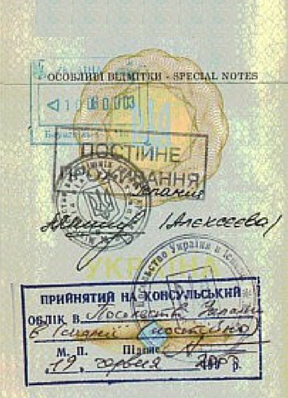
- a Ukrainian international (foreign travel) passport with a stamp confirming remaining abroad for permanent residence in Germany;
- a document confirming the acquisition of German citizenship.
Since the child was renouncing citizenship together with his mother, we prepared an equivalent set of documents for him. The main condition here is that the child must have the same permanent residence abroad status. There was another important legal detail in this particular case: the child was under 14. This made preparing the document package much simpler, since the law does not require a personal application from a child of that age.
Professional note: If the document package contains even a minor error, the Ukrainian consulate returns it for correction. The law allows only 2 months to resolve the issue. If that deadline is missed, the entire process is canceled, and the consular fee is not refunded.
Stage 2. Checks of the Submitted Documents
When we handle a case, we know that each of the 4 copies of your application goes to a different agency. Each authority carries out checks within its area of responsibility. The documents go through review and approval by the following authorities:
- The Ministry of Foreign Affairs of Ukraine (MFA). The MFA acts as the main coordinator. It checks whether your permanent residence abroad status meets the legal requirements and whether all foreign documents have been properly prepared.
- The Ministry of Internal Affairs of Ukraine (MIA). Interpol is involved at this stage, and checks are made for an unexpunged criminal record, open criminal cases, or “wanted” status. If you appear in law enforcement databases, the procedure may be suspended.
- The Security Service of Ukraine (SBU). The SBU checks your access to state secrets. Even if you worked in public service many years ago, the SBU must confirm that you do not hold classified information and that your renunciation of citizenship does not pose a threat to national security.
Once the checks are complete, the case materials are forwarded to the Commission on Citizenship under the President of Ukraine. This is the final collegial body, and it prepares a draft decision.
The President of Ukraine personally makes the final decision by issuing the relevant presidential decree. You officially cease to be a Ukrainian citizen only after the President signs it.
As for timing, review of the documents by the consular office and the MFA should take no more than 8 months. In practice, this deadline is generally met if the documents have not been returned for correction.
For the Office of the President of Ukraine, the time limit is 12 months. However, the Commission’s workload and the complexity of the approval process may extend this period.
That is why our support continues until the presidential decree is issued: we monitor the Client’s case to keep it from stalling.
Also of interest: Immigration Lawyer in Ukraine: When You Need One and How They Can Help

Case 2: Loss of Citizenship (Article 19)
The second case demonstrates a different approach. Loss of Ukrainian citizenship (Article 19) is often a faster and procedurally simpler mechanism. It applies when a person voluntarily acquires another citizenship after reaching adulthood, provided that the person will not become stateless.
Our Client already held a Slovak passport but was preparing for the lengthy renunciation procedure under Article 18, including formalizing permanent residence abroad. After analyzing the situation, we concluded that the loss-of-citizenship procedure was more appropriate. The lawyers at Pravova Dopomoga:
- analyzed the grounds on which the Client had acquired foreign citizenship;
- initiated the loss procedure;
- prepared a legal position for the migration service;
- provided support throughout the process and handled communication with government authorities.
As a result, the procedure went ahead without the need to formalize permanent residence abroad, significantly reducing the time required.
Risks That Most Often Block the Procedure
Our immigration lawyer’s experience shows that most delays and refusals arise from “loose ends” people leave in Ukraine and failure to meet the requirements. The most common issues are:
- failure to formalize departure for permanent residence abroad;
- tax debts in Ukraine;
- serving as the director of a company with tax liabilities;
- open enforcement proceedings;
- security clearance for access to state secrets.
That is why we conduct a preliminary legal audit before submission to minimize the risk of refusal.
How We Choose the Right Strategy for Termination of Citizenship
There is no universal approach to citizenship matters. A solution that works for one Client may result in years of delays or an outright refusal for another. That is why we start by developing a legal approach before submitting documents.
Our work involves building a legal position that will withstand scrutiny by the MIA, the SBU, the MFA, and the Commission. Before recommending renunciation or loss of citizenship, we conduct a comprehensive analysis of:
- the country of residence and its requirements for termination of previous citizenship;
- the date and grounds for acquiring foreign citizenship;
- tax status in Ukraine and abroad;
- business structures, corporate rights, and status as a director or beneficial owner;
- open enforcement proceedings or litigation;
- possible restrictions related to martial law;
- potential grounds for refusal or suspension of review.
We assess both the formal legal criteria and how the law is applied in practice. What a legal provision “allows” does not always pass smoothly through the government procedure. Conversely, a well-developed legal position can significantly shorten the process.
When working with us, you receive comprehensive oversight of the process:
- a strategic consultation with an immigration lawyer to determine the best approach;
- an in-depth legal audit of documents and legal status;
- preparation of a complete document package free of procedural risks;
- development of a legal position in complex or unusual cases;
- support at the Ukrainian consulate and communication with government authorities;
- oversight of checks at every level;
- monitoring of the case until the presidential decree is issued.
Need to renounce Ukrainian citizenship or go through the loss procedure? Book an initial consultation. We will analyze your situation, identify the most appropriate legal mechanism, estimate realistic timelines, and develop a personalized strategy that accounts for all the risks.
Services on the topic of this material

Our publications on this matter


Our clients
We are ready to help you!
Contact us by mail [email protected] or by filling out the form:Other publications by the author

An analysis of the reasons why EU entrepreneurs are obtaining Ukrainian citizenship in 2026. We cover exclusive access to the land market, tax advantages of Diia.City, and participation in large-scale reconstruction projects with internal player status.

A legal analysis of the procedure for lifting migration restrictions for foreigners through administrative and judicial appeals of decisions made by the migration service, the Security Service of Ukraine (SBU), and border guards.

Analysis of situations where formal errors by the migration service become a barrier for foreign businesses and families. An examination of real mechanisms for overcoming bureaucratic resistance to return to Ukraine.
Answers to the most popular questions from foreigners regarding their stay in Ukraine in 2026. How to exchange a permit without leaving the country, which grounds remain valid, and how to avoid deportation.
Our other authors