

Updated Rules for Reserving Conscripts in 2026: What Has Changed
Cost of services:
Reviews of our Clients
... our work on joint projects assured us of your high level of professionalism
This article was prepared in February 2026. Newer articles on this topic: 45-day temporary reservation and repeat reservation and extension of reservation.
In 2026, the procedure for reserving employees liable for military service through the Diia portal for critically important enterprises underwent significant changes. These changes directly affect how employers retain key employees and how businesses manage risks associated with mobilization.
In particular, a temporary 45-day reservation from the date the employment agreement is signed was introduced for defense enterprises, and the time limits for reviewing applications and the procedure for canceling an existing reservation have changed.
As a result, employee deferments from mobilization have become more sensitive to timing and procedural requirements, so enterprises need to respond promptly to changes and adapt their internal processes. Ignoring the new reservation rules may result in the loss of deferments, difficulties with submitting repeat reservation applications for specialists, and risks to business operations.
In this article, we examine the main changes to the procedure for reserving employees liable for military service and explain how enterprises can avoid losing deferments. Drawing on our legal expertise, this article will help business leaders understand the steps involved, minimize the risk of refusals, and establish a workflow that meets the new rules.
Read also: Is It Possible to Reserve 100% of Employees? Key Rules for Businesses
Who Is Affected by the New Rules for Reserving Employees Liable for Military Service?
The updated reservation rules apply to people liable for military service who have employment agreements with:
-
public authorities and local self-government bodies;
-
structural units of the National Police, the State Emergency Service of Ukraine (SES), prosecution offices, courts, and similar bodies;
-
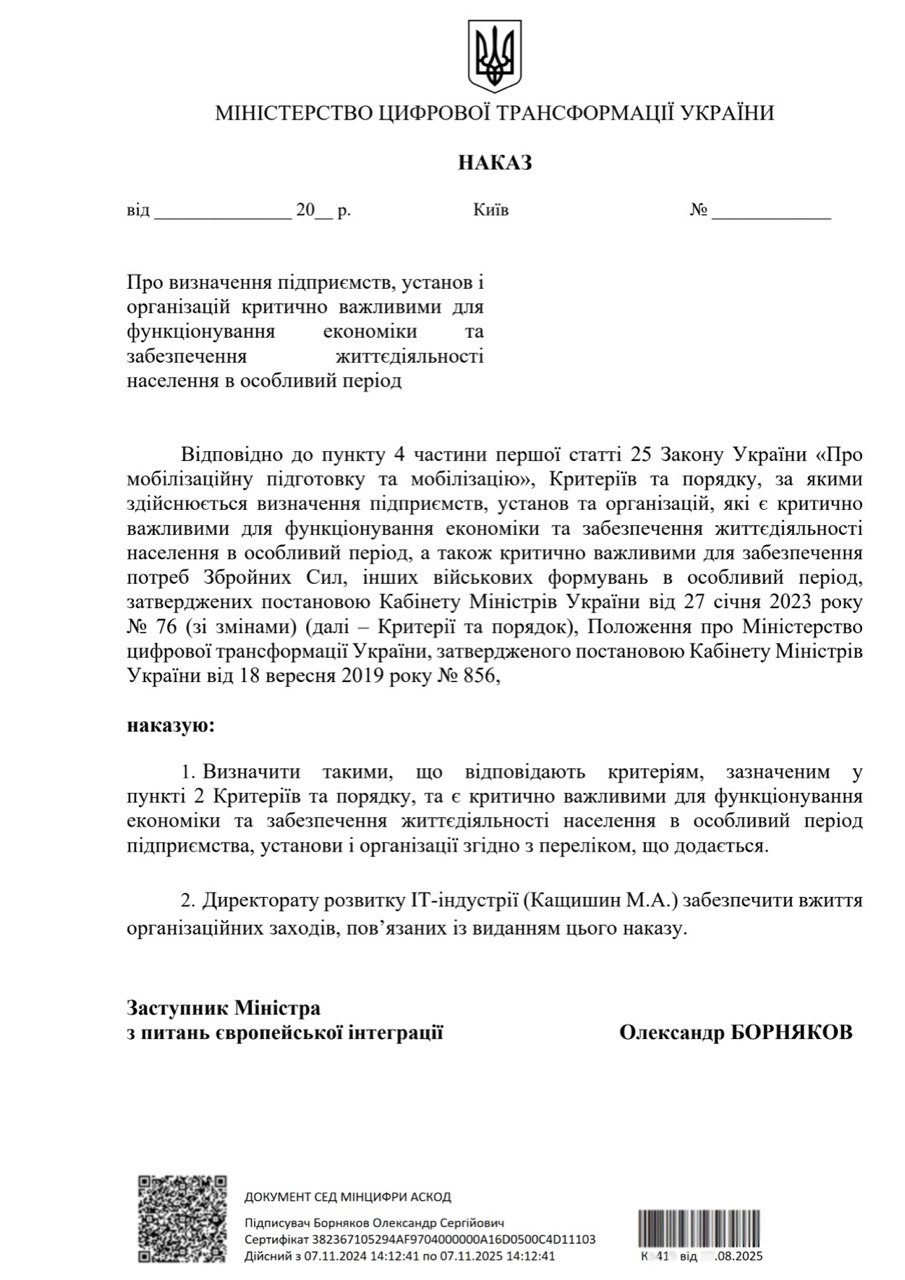
enterprises critically important to the operation of the Armed Forces of Ukraine;
-
institutions critically important to the national economy;
-
mine action operators;
-
UN specialized agencies and international judicial bodies;
-
the Ukrainian Red Cross Society and other Ukrainian nongovernmental organizations.
Important: These rules do not apply to employees of the Security Service of Ukraine (SBU) or other intelligence agencies.

Employee Reservation Rules 2026: What Has Changed?
In 2026, lawmakers did more than clarify individual elements of the reservation procedure. They restructured its key mechanisms, focusing on deadlines, oversight, and employer responsibility. These changes have the greatest practical impact on businesses.
Temporary 45-Calendar-Day Reservation for Defense Enterprises
Alongside the general deferment period of up to 12 months, a temporary reservation has been introduced for no more than 45 calendar days from the date the employment agreement is signed. It is intended for employees who have military registration violations and cannot be reserved under the regular rules.
This type of reservation does not depend on how many employees have already been reserved, but it is available only to defense industry enterprises and to enterprises critically important to meeting the needs of the Armed Forces of Ukraine or other military formations. Enterprises that are critically important only to the economy cannot use it.
If more than 45 days have passed since the agreement was signed, a temporary reservation for that employee is no longer possible. Only a regular reservation remains, once the employee resolves the violations. The same person can receive this type of reservation no more than once per calendar year.
Read also: How Can an Enterprise Obtain Critically Important Enterprise Status to Reserve Employees?
Reservation of Employees with Unresolved Military Registration Issues
Since December 2025, an employee with military registration violations can be reserved temporarily, for no more than 45 calendar days from the date the employment agreement is signed. This type of reservation is available to enterprises recognized as critically important to meeting the needs of the Armed Forces of Ukraine or other military formations, or as critically important to the functioning of the economy and to ensuring the livelihood of the population in the defense industry sector. The same employee can be reserved this way no more than once per calendar year. A repeat reservation the following year is possible if all conditions are met, including the 45-day period from the date the employment agreement is signed. In practice, the application goes through only if the employee is listed in the register of persons liable for military service. The employee remains liable for the registration violation. To learn how to apply, read our article “45-Day Reservation in Ukraine”.
Application Review Times: Temporary 24 Hours Until February 1, 2026
From December 9, 2025, to February 1, 2026, a temporary simplified procedure applied to critically important enterprises: reservation applications were reviewed within 24 hours instead of the usual 3 days (72 hours). Since February 1, new reservations have again been reviewed within 72 hours. Extensions of existing reservations and temporary 45-day reservations are still reviewed within 24 hours: the employee is automatically transferred to special military registration within 24 hours of the list being created in the Diia portal.
Cancellation of Reservations Without a Mandatory Break
The mandatory 5-day break between applications for cancellation of reservations has also been abolished: first temporarily, until February 1, 2026, and permanently from July 3, 2026 (Cabinet of Ministers Resolution No. 862). As a result, critically important enterprises may submit a new application as soon as Diia processes the previous one.
This change is essential for managing reservation limits and promptly replacing reserved employees within the permitted quotas. Read also: Employee Reservation Quotas: How to Calculate the Limit and Increase It to 100%
Common Mistakes Companies Make When Reserving Employees Liable for Military Service Through Diia
The most common mistakes arise from treating data preparation for reservations through the Diia portal as a formality. Companies view the procedure as a technical task rather than a legally significant process with clear consequences. Those consequences extend well beyond a technical rejection: they directly affect the ability to retain an employee and continue reserving others.
Companies often initiate employee reservations without first reviewing military registration documents, which leads to cancellation of the deferment at the verification stage. Missing the 45-day period from the date the employment agreement is signed now creates a separate category of risk: after that, a defense enterprise can no longer temporarily reserve an employee with registration violations.
There are also cases of applications being submitted without adequate confirmation of critically important enterprise status, or where the enterprise’s actual activities do not meet the declared criteria. Another risk factor is improper use of the reservation cancellation mechanism, particularly submitting applications without considering the consequences for subsequent reservations of other employees or analyzing the impact on the overall limit.
Together, these mistakes lead not only to the loss of reservations but also to increased scrutiny from state supervisory authorities. To avoid these mistakes, follow our step-by-step guide on how to reserve employees through Diia.
When Legal Support for Employee Reservations Is Essential
Legal support is advisable at every stage of the reservation process, but it becomes essential in cases involving:
-
obtaining critically important enterprise status for the first time;
-
reserving large numbers of employees;
-
reserving people with unresolved military registration issues;
-
cancellation of reservations and submission of new applications;
-
inspections or previous refusals through the Diia portal.
In these situations, any technical or legal error can have systemic consequences for the entire company.
Legal support in these cases not only minimizes the risk of refusals but also helps establish the company’s legal position in light of current practice in applying mobilization legislation.
Success story: How to Renew an IT Company’s Critical-Importance Status: A Diia City Resident’s Case
What We Offer and Why Businesses Choose Us
Our firm provides comprehensive legal support for reserving employees liable for military service, taking into account all legislative changes and how they are applied in practice.
We begin with a preliminary legal review of the enterprise and its employees’ military registration data. This helps identify risks before an application is submitted and avoid cancellation of deferments later. Our lawyer supports the client at every stage:
-
preparing documents;
-
creating lists in the Diia portal;
-
handling cancellation of reservations;
-
submitting new applications with due regard to limits and oversight requirements.
Our approach is practical and systematic. We not only help ensure that data is entered correctly but also develop a solution that withstands inspections and increased scrutiny from government authorities. This is why companies turn to us when retaining key employees is essential to business continuity during a critical period.
Engage our legal support for reserving employees liable for military service and ensure your team’s stability in 2026. Learn more about our service here.
Services on the topic of this material
Our publications on this matter


Our clients


We are ready to help you!
Contact us by mail [email protected] or by filling out the form:Other publications by the author

Closing an NGO requires more than a resolution by its members. Voluntary dissolution involves corporate documents, creditors, assets, tax obligations, nonprofit status, and the final termination of the entity in the registry.

CPD providers process doctors’ data for registration, training, assessment, and certification. The key is to determine when GDPR applies, when consent is required, and how websites, CRM systems, and online forms should be structured.

Changes to an NGO’s objectives, governance structure, membership rules, or general meeting procedures may require a new charter version. The decision must be properly adopted and the amendments registered.

A sole trader, an LLC, or VAT registration can produce very different tax outcomes for an online school. The right structure depends on clients, turnover, growth plans, and the actual format of educational services.
Our other authors