

Solar Power for Business: Self-Consumption or Electricity Sales

Reviews of our Clients
Interest in renewable energy projects in Ukraine continues to grow. For some, this is an opportunity to supply their own business with electricity. For others, it is a promising investment project, while some consider electricity sales a separate business activity.
However, almost every potential investor faces the same challenge: finding a clear answer to the question of what exactly is required to legally enter the electricity market.
Is building a solar power plant enough? When do you need to obtain a license? Is a license to supply electricity always required? Is it better to establish a new company or acquire an existing business? And ultimately, will the project pay off?
Our experience shows that most of these questions should be addressed before the first investment is made. This is precisely why preliminary legal advice is important: not to start preparing documents immediately, but to understand how the chosen business model works and which legal requirements apply to your specific project.
You migt also like: How to Start Business Operations in Ukraine’s Electricity Market and Choose the Right Model
Legal Audit of a Solar Power Plant Business Model and the Acquisition of an Established Company
An entrepreneur approached us who, together with their partners, was considering implementing a solar power plant project. The plan was to use the electricity generated at a commercial property, and the question also arose as to whether it could be sold to other consumers.
At the time of the consultation, the Client did not have a clear understanding of which licenses might be required, whether they needed to become a participant in the electricity market, or how to structure the future business as a whole.
Another issue was the establishment of a legal entity. Instead of registering a new company, the Client was considering the option of acquiring an existing company, preferably one with an established business history. They explained this decision for several reasons. First, the project was being implemented jointly with partners, so acquiring an existing legal entity seemed more convenient. Second, the plan was to seek bank financing in the future to purchase equipment, and in some cases, a company with an established operating history may have an advantage over a newly incorporated legal entity when negotiating with a bank.
At first glance, the request seemed fairly straightforward: is it worth acquiring a company, and what needs to be done to launch this type of business?
In practice, however, answering this question required an analysis of a much broader range of issues. The choice of business structure directly affects whether it is necessary to obtain an electricity generation license, whether a license to supply electricity will be required, whether the company must register to participate in the relevant segments of the electricity market, and whether it must enter into contracts with the transmission system operator, the market operator, and other market participants.
That is why the consultation began with an analysis of the proposed business model.
How the Solar Power Plant Business Model Affects Licensing
In practice, entrepreneurs very often start with the wrong question: “Which license do I need to obtain?” Instead, a lawyer will almost always ask a different question: “What exactly do you plan to do with the electricity you generate?” At first glance, the difference seems minor. However, the answer determines almost the entire subsequent process.
For example, one solar power plant owner uses all the electricity generated exclusively for their own production needs. Another sells it to an electricity supplier. A third plans to supply electricity directly to end consumers. Formally, all three cases involve the same type of solar power plant, but the legal requirements for these business models may differ significantly.
That is why there is no universal answer to the question: “What licenses are required for a solar power plant?” You must first determine the operating model and then assess which permits and procedures are required in your specific case.
Nevertheless, there are general rules every investor should know before starting a project. One of them concerns the electricity generation license.
What Capacity Must a Solar Power Plant Have for a License to Be Required?
Ukrainian legislation provides that an electricity generation license is mandatory if the installed capacity of a power facility exceeds 5 MW. This is an important point to consider because of a common mistake.
Some investors say, for example, that they plan to generate 10 MW per month or 5 MW per day. This wording is technically incorrect. A megawatt (MW) is a unit of power, not a measure of the amount of electricity generated. Therefore, when determining whether a license is required, the relevant factor is the installed capacity of the generating equipment, not the projected volume of electricity production.
At the same time, it would be a mistake to conclude that if a power plant's installed capacity does not exceed 5 MW, no further legal issues will arise.
In fact, this only means that, in a particular situation, the company may not need a license specifically for electricity generation. However, this does not rule out the need to complete other procedures or obtain additional permits, depending on how the company plans to operate in the market.
That is why we always recommend assessing the project as a whole rather than focusing on a single criterion: installed capacity.
When Does a Solar Power Plant Owner Need an Electricity Supply License?
Owning a solar power plant does not automatically make a company an electricity supplier. Nor does every solar power plant owner intend to supply electricity to end consumers.
A business may generate electricity exclusively to meet its own needs or sell it under a business model that does not involve electricity supply activities. That is why determining whether a company needs to obtain an electricity supply license always begins with an analysis of its planned business model.
However, if a company intends to operate specifically as an electricity supplier, enter into contracts with consumers, and sell electricity to them, the appropriate license is mandatory.

When Are Both Electricity Generation and Supply Licenses Required?
In practice, there are situations where a business needs more than just an electricity generation license or an electricity supply license.
If a company not only generates electricity but also sells it directly to end consumers as an electricity supplier, it must obtain authorization for two separate licensed activities. In this case, the company needs to:
- obtain an electricity generation license (if it is mandatory for the particular facility);
- obtain a license to supply electricity to consumers;
- complete the procedures required to operate fully in the electricity market.
This is where many businesses begin to realize that obtaining a license is only the beginning, not the end of the process. Having a license to conduct electricity-related activities does not automatically mean the company can start operating.
After obtaining the necessary licenses, the company faces several additional tasks:
- entering into the required contracts;
- completing the procedures for joining the relevant market segments and platforms;
- organizing cooperation with other market participants;
- establishing the company's internal processes;
- complying with regulatory requirements and other obligations.
This is precisely why many companies choose comprehensive legal support rather than assistance with obtaining a license alone.
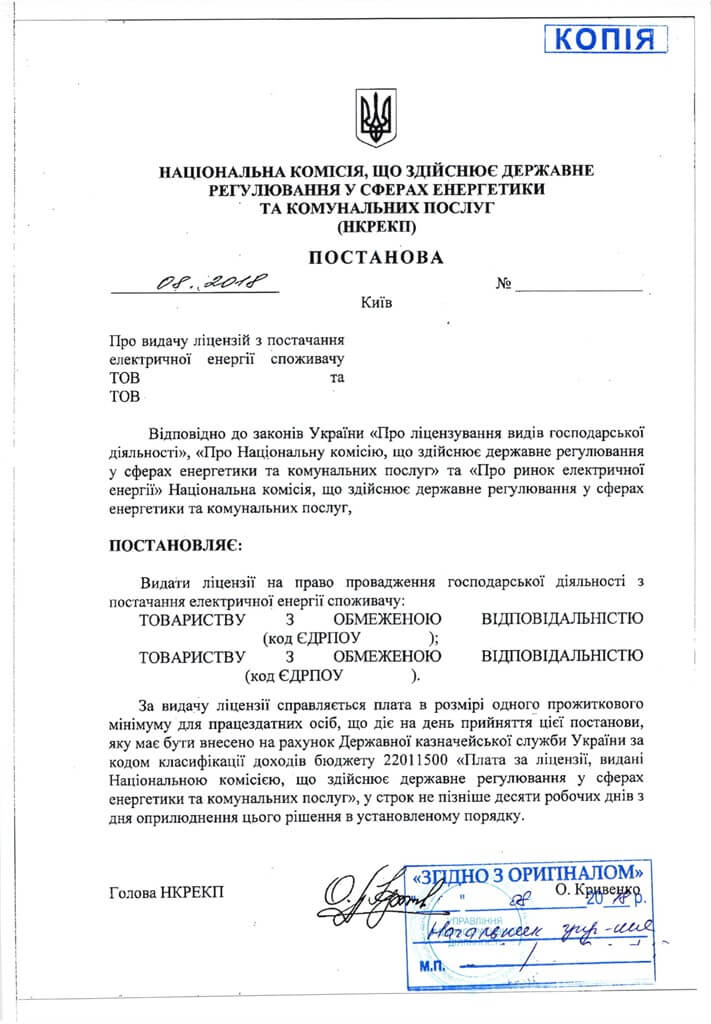
Lawyers who regularly work with energy legislation can help not only prepare documents for the National Energy and Utilities Regulatory Commission (NEURC), but also establish a clear sequence of steps so that the company can begin full operations without unnecessary delays after obtaining its license.
You might also like: Website Requirements for an Electricity Supplier: Preparing IT Infrastructure for Licensing
What Did the Client Gain from the Initial Legal Consultation?
First, we advised the Client against acquiring an existing company because, in this case, it would not solve the underlying issues. Why does acquiring an existing company not automatically resolve regulatory issues? Acquiring an established company is often seen as a way to “bypass bureaucracy” or accelerate entry into the energy market. However, even if the company already exists, the key question remains the same: is it ready to operate under the specific business model?
In practice, acquiring an energy company may save time on registration procedures, but it does not eliminate the need to establish the correct legal and regulatory framework for its operations. As a result, our Client gained:
- avoided unnecessary expenses that would not have helped achieve the desired outcome;
- an understanding of how the electricity market in Ukraine works in practice;
- an assessment of whether the chosen business model was suitable for the project;
- clarity on whether an electricity generation license, an electricity supply license, or both were required;
- a preliminary assessment of the scope of regulatory procedures involved;
- an understanding of whether acquiring an existing company made sense or whether it would be better to build the business structure from scratch.
This allowed the Client to make further decisions based not on assumptions, but on a clear understanding of the legal requirements, financial implications, and steps needed to implement the project.
Legal Support for Energy Projects and Solar Power Plant Development
Over the years, we have helped dozens of companies enter the electricity market, from the initial idea to full-scale operations. Our experience shows one thing: those who try to navigate this process on their own most often make mistakes not when applying for a license, but much earlier, during the planning stage. These mistakes are the most costly.
Licensing, participation in the electricity market, reporting to the National Energy and Utilities Regulatory Commission (NEURC), and the choice of business structure are all parts of the same system. Addressing these issues after investments have begun is significantly more expensive than dealing with them beforehand.
That is why legal support in the energy sector is not simply a document preparation service. It is a comprehensive process that helps businesses understand how to implement a project in compliance with legal requirements before making any investments.
Our legal team supports companies at every stage of entering the electricity market, including:
- initial consultation and selection of a business model;
- analysis of the required permits and other authorizations;
- acquisition of existing companies for energy projects where this is appropriate and can simplify the process;
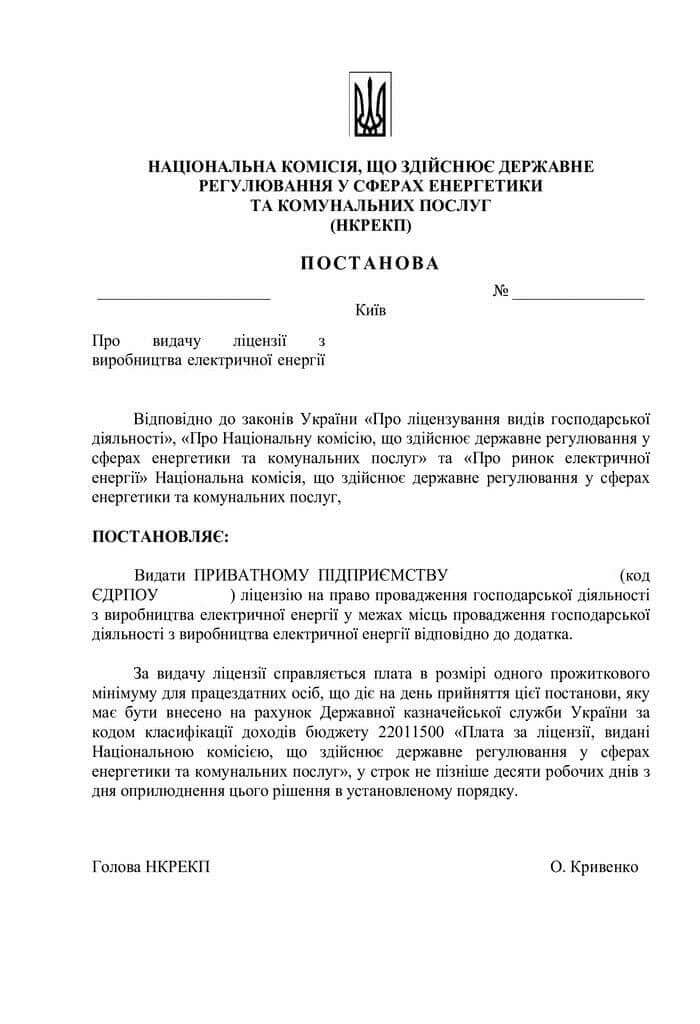
- obtaining electricity generation and/or supply licenses;
- registering companies to participate in the electricity market;
- ongoing legal support for business operations, including reporting to NEURC.
If you are still considering whether to invest in a solar power plant, do not start by preparing documents. Contact us and begin your project with a comprehensive legal consultation.
Services on the topic of this material
Our publications on this matter


Our clients
We are ready to help you!
Contact us by mail [email protected] or by filling out the form:
Other publications by the author

A valid electricity supply license does not mean the supplier is ready to serve its first customer. Market participation, imbalance arrangements, contracts, DSOs, website, reporting, and internal processes must also be checked.

The license is only the starting point. The new owner still needs to update company data, verify market registrations and contracts, and set up the website, balancing, and reporting before serving the first customer.

The owner and director do not need to return to Ukraine to liquidate an LLC. The process can be handled through a representative and liquidator if the power of attorney and foreign documents are prepared correctly.

A full teaching staff, library, and some facilities do not always need to be in place when the application is filed. The key is knowing what must be ready from the start and what can be completed later through written commitments.
Our other authors